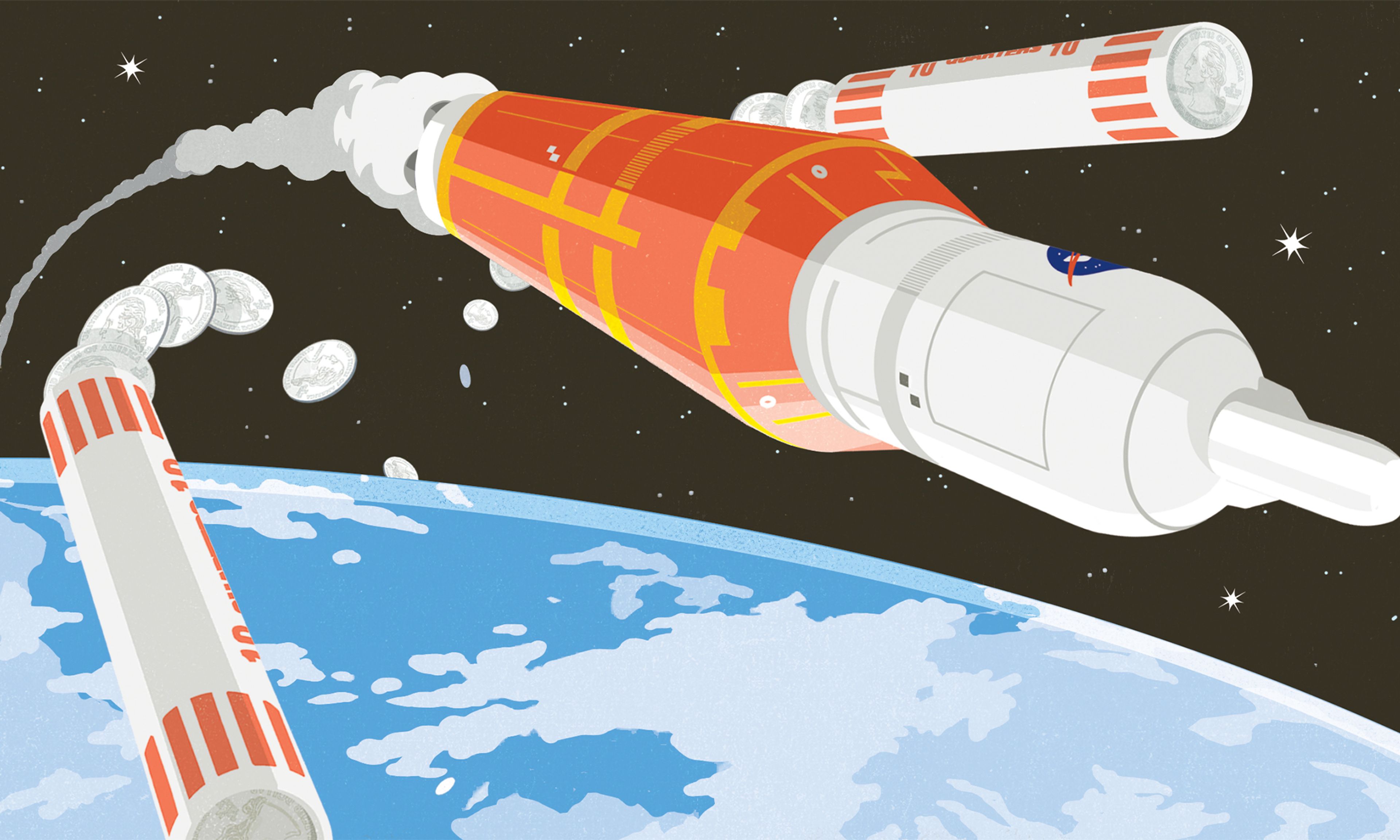
In the eight years between JFK’s 1961 mandate for the moon and Neil Armstrong dirtying his boots with lunar dust, NASA was a machine. A team of 400,000 Americans built the world’s most powerful rocket, miniaturized electronics to fit inside it, and taught astronauts to navigate nearly a quarter of a million miles from Earth.
Their years of work culminated on July 20, 1969, when Armstrong announced, “The Eagle has landed.” Clad in white shirts and ties, the men in NASA’s control room resumed breathing and broke into smiles. One young scientist leaned forward in his chair, slack-jawed, and stared up at spacecraft data coming in from the moon. He shook his head in disbelief. NASA had accomplished the near-impossible.





Comments