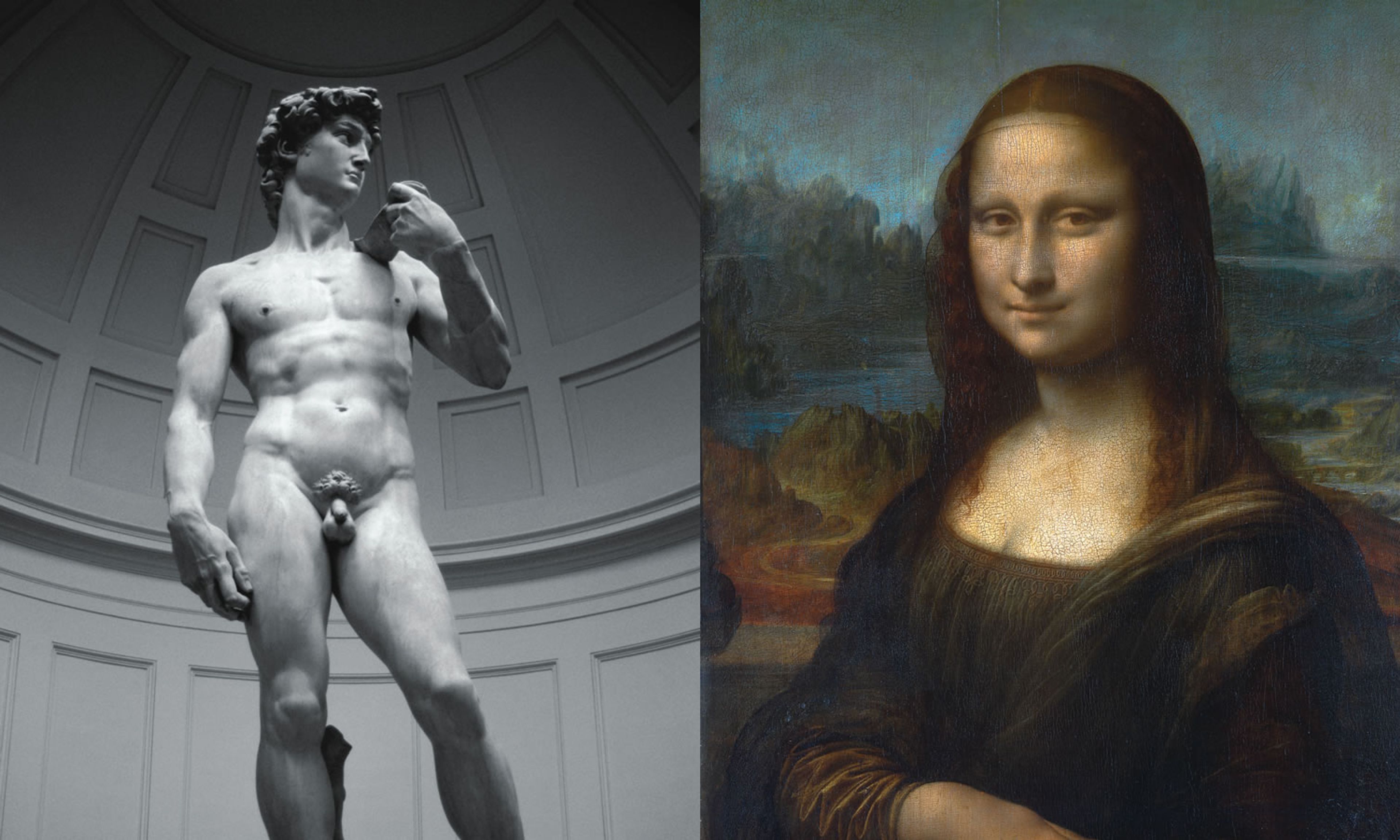
Of the seminal years in the civilization of the West, 1503 rarely gets a mention, but in codifying and cementing the trajectory of the Renaissance artist it hardly has an equal. During the course of this year in the city-state of Florence, two extraordinary, canon-defining works were being created less than a mile from each other: Michelangelo’s David (1501–04) and Leonardo da Vinci’s Mona Lisa (1503). Michelangelo and Leonardo publicly and disdainfully loathed each other and so had no sense of collaboration. There may seem to be little common ground between the colossal public statue and the diminutive domestic portrait. But between them, they redefined the role of the artist in the West’s canon, and the ramifications of that are with us to this day. While endless ink has been spilled analyzing the undeniable artistic beauty of both masterpieces, less attention has been paid to the remarkable fact that they were created in the same place and in the same year.
Neither project seemed particularly promising on the surface. While Michelangelo would later claim that he had raced back to Florence from Rome when the fledgling Florentine republic announced that it would be commissioning a new work to be hewn from a giant block of marble in its possession, the fact of the matter was that the block, while indeed large, had defied several generations of sculptors who had chipped away at its base but never managed to execute a successful composition. The 28-year-old Michelangelo, despite his recent success in Rome with the Pietà, had certainly never attempted anything on this scale, and there was no particular reason to think he would succeed where others had failed.











Comments