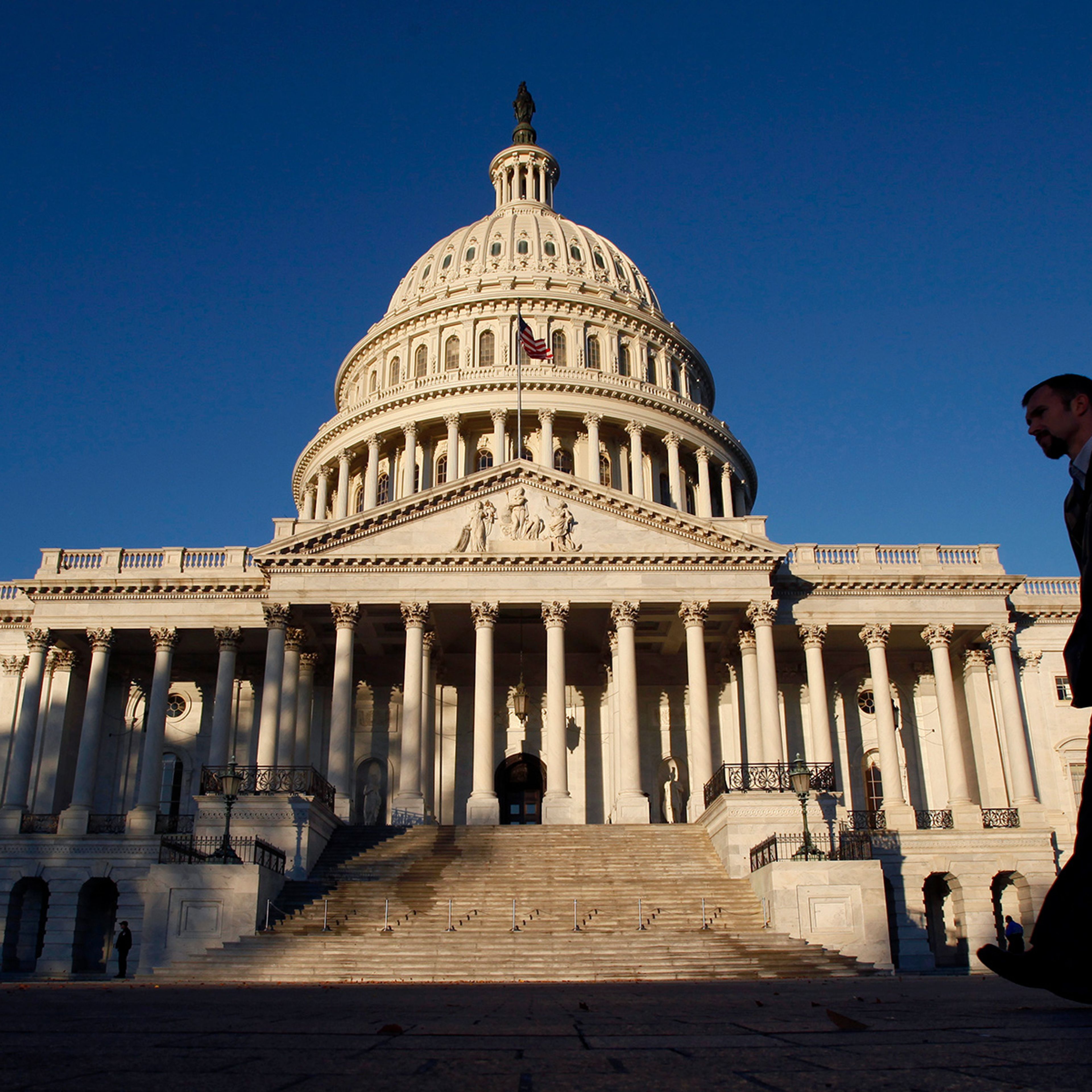
President Ford was not quite accurate when he said, through his press secretary, that the 94th Congress did nothing in its first month. Actually, the Congress did just what Congresses usually do, and precisely what any reasonable person would have expected this Congress to do. A reasonable person remembers this old rule: if you visit the parks of the world’s capitals, you will see a lot of statues erected to honor the people who made the crucial decisions in history. But nowhere will you see a statue erected to a committee. And Congress is a 535-member committee. Its forte is making simple declarative statements: “yes” or “no,” especially “no.” In recent years its proudest moments (meaning the moments when it felt proudest) involved saying “no” to two Supreme Court nominees, “no” to the SST, “no” to bombing in Indochina. Now the 94th Congress, which advertised itself as a startlingly new creature, has shown itself willing to say “no” to Mr. Ford’s proposed increase in the cost of food stamps, and to say “no” to his proposed tax on imported oil, and to say “yes” to tax cuts even larger than those Mr. Ford proposed. Exhausted by these rigors Congress went off on vacation, in honor of Mr. Lincoln.
We now have congressional government in the sense that Congress has the power and the will to stop presidential initiatives across the full range of domestic and foreign policies. A cascade of simple declarative judgments, however emphatically rendered and eloquently argued, does not constitute a policy. But it constitutes an effective anti-policy. As a result, Mr. Ford’s appalling budgetary projections already are (if you will pardon the expression) inoperative. Things will be worse— much worse—than he has said they will be.




Comments