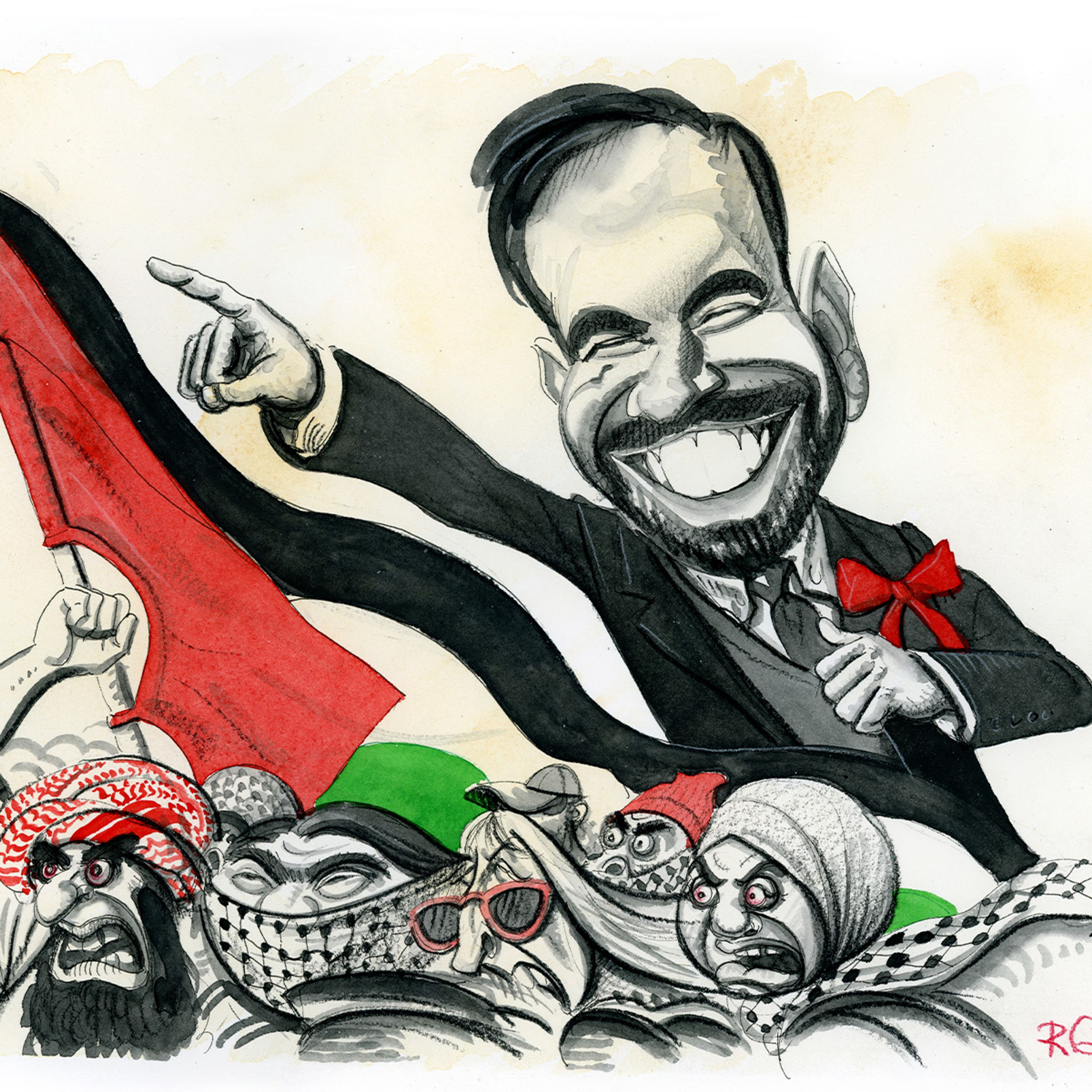
wHEN the Arab—Israeli conflict flared again, the reaction on campus was dramatic. It could have been expected to be anti-Israel, and severely so; but it was even more anti-Israel than usual. It was more anti-Semitic, too. (Sadly, these two “anti-”s seem to be going together more and more lately.) Also unusual, however, was the response of pro-Israel students and faculty, chiefly Jews: They were more determined, less cringing, more defiant than in the past. More willing to talk back, and to fight back. A writer in the Israeli daily Haaretz sensed that an “awakening” was going on, and that a period of “passive vulnerability” was expiring. This sense is widely shared. Moreover, Jews on campus are reconsidering their politics and alliances. The word “realignment” is being spoken a lot. Many students and teachers are undergoing “second thoughts,” to use the phrase of Peter Collier and David Horowitz, who took a sharp turn from ’60s radicalism. “After 9/11, everything changed,” people say. Some things actually may be.
The press has been full of anti-Israel and anti-Semitic acts from campus lately, of which some of the “highlights” are these: bricks through windows of Hillel centers (Hillel being the international college Jewish organization); swastikas painted on Hillel walls and doors; the word “Zionazi” coined and sprayed; anti-Jewish libels, ancient and modern, spread through student newspapers and websites; jeering anti-Israel demonstrations on, of all days, Holocaust Remembrance Day; retrospective praise for the Nazis. (As in the Middle East itself, enemies of Israel on campus have trouble deciding whether the Israelis are Nazis, or the Nazis are to be hailed.) The worst case occurred at San Francisco State University, where a group of Jewish students, who had participated in a peace rally, had to be escorted to safety by police, from a howling, hate-spewing mob. (Sample screams: “Get out or we will kill you!” and “Hitler didn’t finish the job!”)




Comments