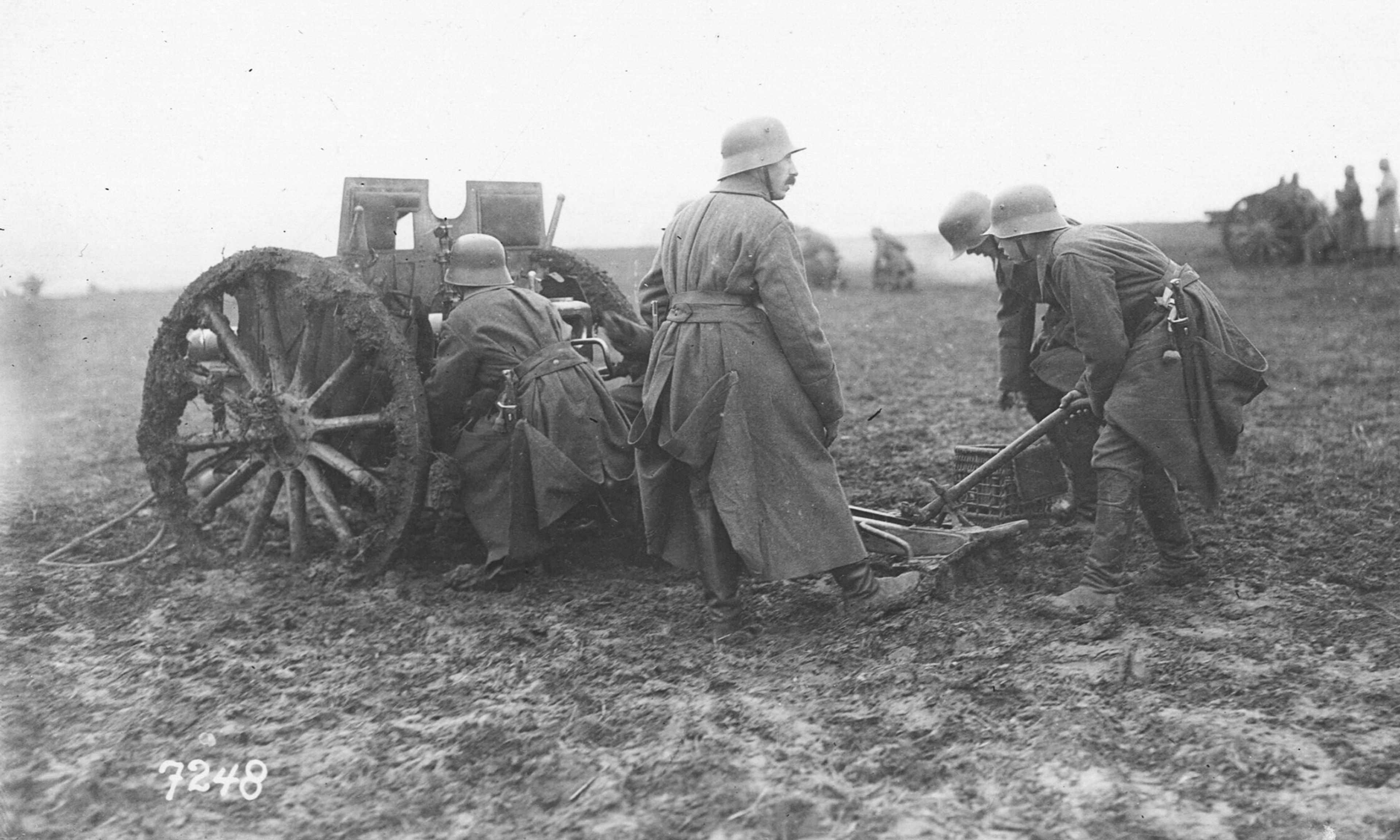
The impending centenary of World War I is, in Europe at least, already unleashing an impassioned debate about the causes and consequences of this unprecedented man-made cataclysm. The rising tide of academic relativism has tended to encourage the view that everybody was to blame, and hence nobody in particular. This line goes down well with those who were blamed at the time. Hence the Germans have lauded the Australian historian Christopher Clark, who teaches at Cambridge, for his book The Sleepwalkers, which diffuses responsibility for the outbreak of war fairly evenly among the statesmen of the Great Powers. The Harvard-based Scottish historian Niall Ferguson goes further: He blames the British for getting involved at all. With Britain as a neutral bystander, Germany and its Austro-Hungarian ally would have quickly triumphed over France and Russia, he argues, and there would have been no need for American intervention. Europe would have evolved into a German-dominated trading bloc, not unlike today’s European Union, but without Communism, Nazism, or World War II. It has been left mainly to historians of an older generation, such as Sir Michael Howard, to fight a rearguard action on behalf of Britain’s decision to resist German aggression in 1914.
The latest historian to throw his hat into the ring is a young Irishman, William Mulligan, with The Great War for Peace. His title recalls the name by which this vast conflict was known by the British, and it’s also a reminder of the slogan by which they justified it: It was “the war to end all wars.” Mulligan’s thesis is that the Great War was not merely the “seminal catastrophe” of the 20th century, as George Kennan called it, but also the furnace in which the modern conception of peace, underpinned by institutions to enforce human rights and international law, was forged. For Mulligan, it was essentially a war of ideas: “People were fighting for the power to define the new European order.”









Comments