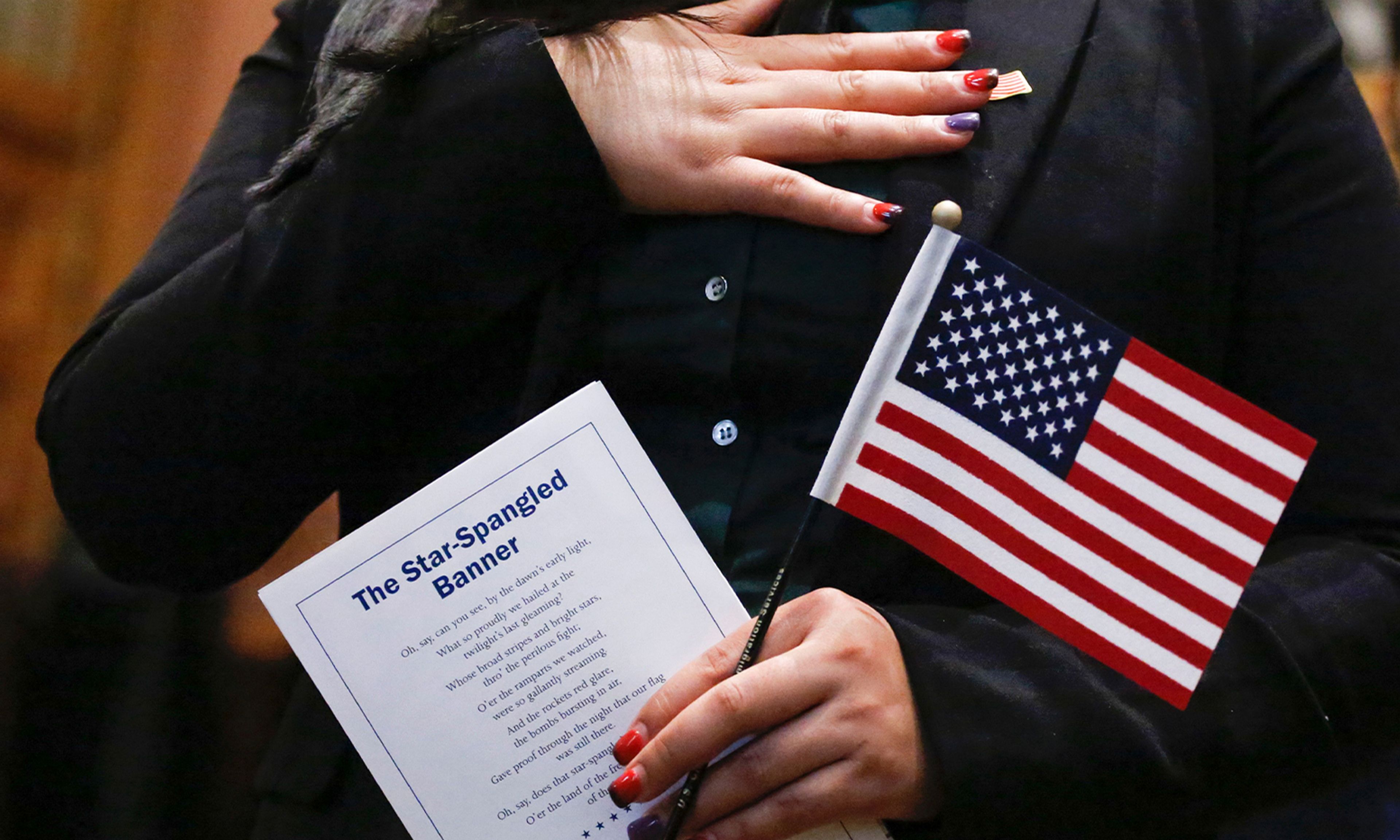
On the eve of America’s 250th anniversary, Vivek Ramaswamy offered up a definition of what it means to be an American. “Americanness,” he wrote in the New York Times, “isn’t a scalar quality that varies based on your ancestry.” Rather, “you are an American if you believe in the rule of law, in freedom of conscience and freedom of expression, in colorblind meritocracy, in the U.S. Constitution, in the American dream, and if you are a citizen who swears exclusive allegiance to our nation.”
As a strong advocate of the notion that America, in a meaningful sense, represents an idea, I found a lot to like in this explication. Nevertheless, I think that it’s missing a crucial word: “good.” What Ramaswamy, the former Republican presidential candidate now running for governor of Ohio, describes is a good American, an ideal American, an American as Americans are imagined in our founding documents. It is true, in my estimation, that to be a good American is to believe in the rule of law, and in freedom of conscience and expression, and in colorblind meritocracy, and in the Constitution, and in the American dream, and to swear exclusive allegiance to our nation. It is not true, however, that the Americans who do none of these things aren’t American. An American who opposes the First Amendment or wishes to implement a caste system or loathes the U.S. Constitution is a bad American, certainly. But he is still an American — with the same rights and status as everyone else. To adapt Ramaswamy’s rubric: At the fundamental level, Americanness isn’t a scalar quality that varies based on your commitment to noble ideals.











Comments