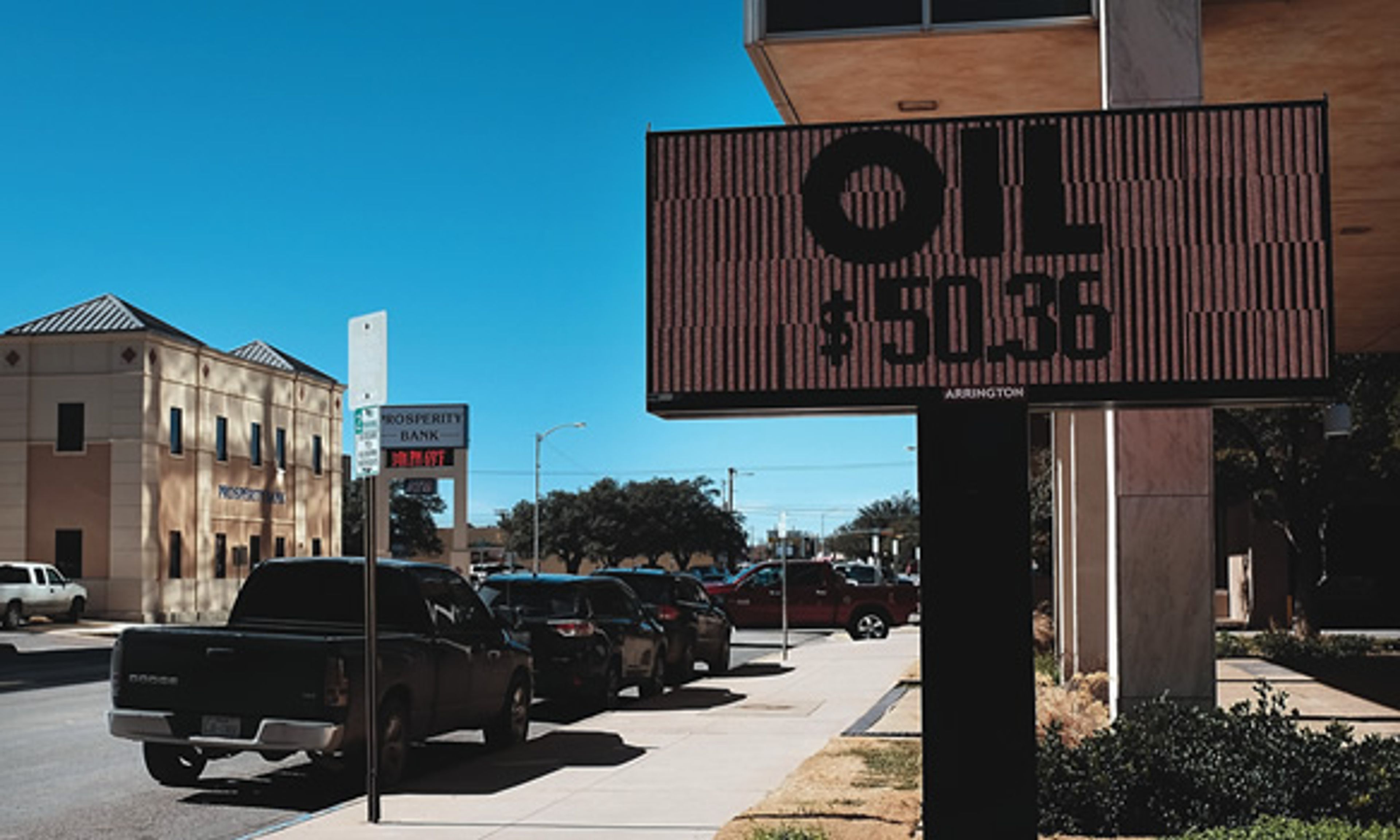
There are historical episodes, such as the siege of the Alamo, that Texans like to remember. And then there are those that we don’t. Among the latter is the 1980s. At the beginning of the decade, the state was flush with oil money, and, for the first time in its history, as rich, seemingly, as the rest of America. Richer, apparently: The OPEC embargo that had devastated the national economy during the 1970s had had the opposite effect in Texas, where soaring oil prices fueled a decade of growth and ambitious acquisition. But when oil prices collapsed, so too did the state’s newly built façade. In 1981, the price of oil hit a new record, at $37 a barrel. By 1986, it had fallen to about $10. Half of Texas’s oil and gas workers lost their jobs. More than 1,000 rigs shut down. Tax receipts plunged. The state fell into recession. And it was quickly clear that people had written a lot of checks they wouldn’t be able to cash if the oil stopped flowing. By the end of the decade, Texas had also seen a housing bust, and it led the nation in bank failures — a fact that was frequently and loudly mentioned in Congress in the debate over the savings-and-loan bailout.
Texans remember the 1980s. Those who lived through that period as adults remember it in traumatic detail. When oil prices began to slide last summer, these memories started becoming more vivid: the jobs lost, the houses foreclosed on, the friends who moved away, the peanut-butter dinners. In June 2014, crude oil was trading around $106 a barrel. By December, prices had fallen by half, and by January 2015, spot prices for West Texas Intermediate, a kind of crude oil, had dipped below $50, a sort of psychological Rubicon for millions of Texans.










Comments