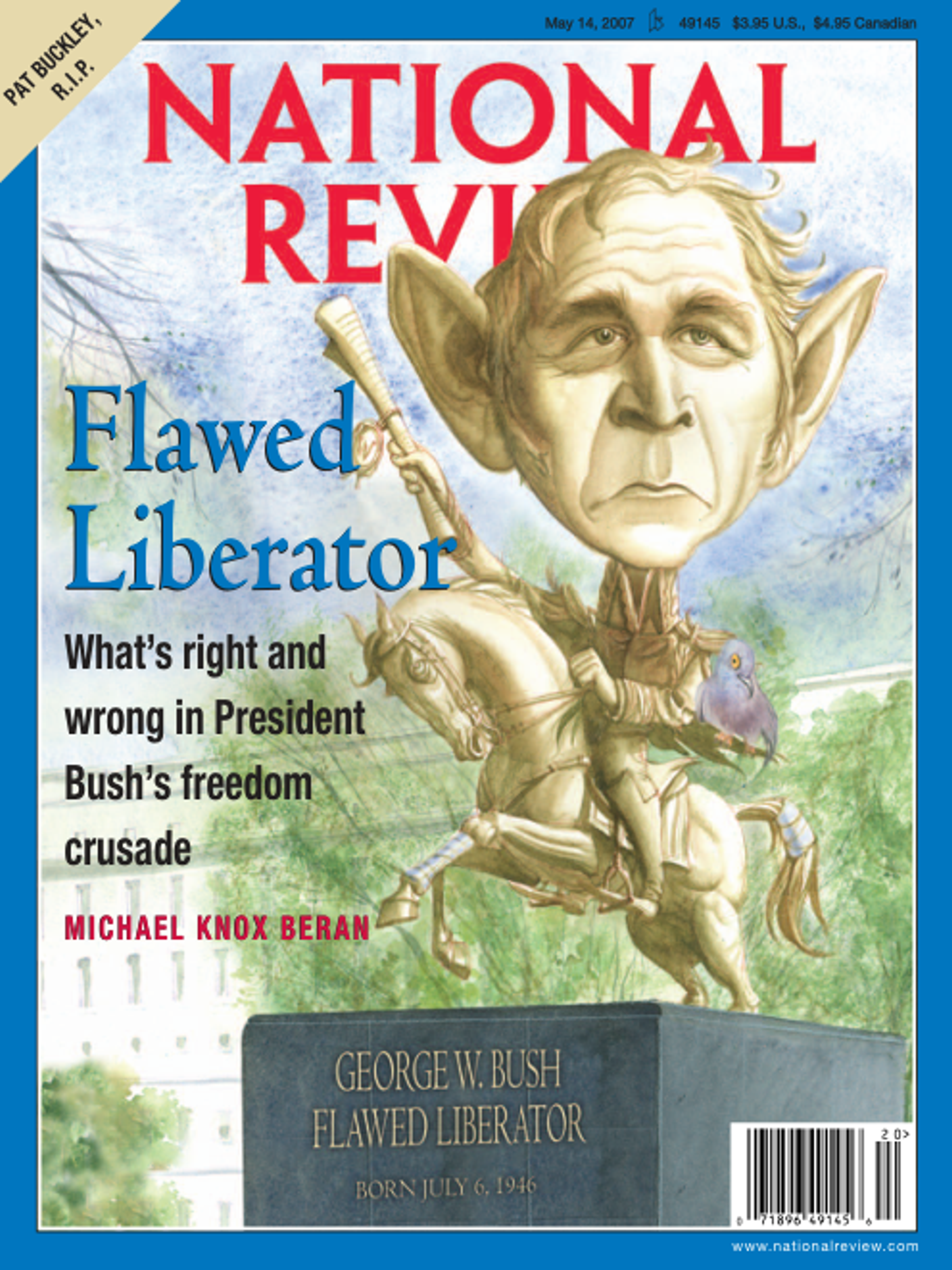
PRESIDENT BUSH’s confidence in the worldwide appeal of free institutions is now all but universally regarded as naïve. The president’s detractors ridicule as “Bush babble” the rhetoric of in his Second Inaugural Address, the high-water mark of his Freevangelical policy; and, as distressing news pours forth from Iraq, they point to his claim that “eventually the call of freedom comes to every mind and every soul” as evidence that he suffers acutely from a Messiah complex.
The criticism misses the mark. America was founded on a messianic idea; and whether John Winthrop was right or wrong when he crossed the ocean to build a city on a hill, it is too late now to abandon the visionary business. Nor is it evident that we need, or ought to. The convictions the president expressed in his Second Inaugural Address, utopian though they may be, have often, by a paradox that deserves but has never received careful study, inspired sound and pragmatic diplomacy. No, if Mr. Bush has gone wrong, his error lies, not in his adherence to a Freevangelical faith that Lincoln, FDR, Truman, and Reagan all shared, but rather in the methods by which he has tried to implement that faith-methods strikingly similar to those that brought two of his less happy predecessors, Woodrow Wilson and Lyndon B. Johnson, to grief.





Comments