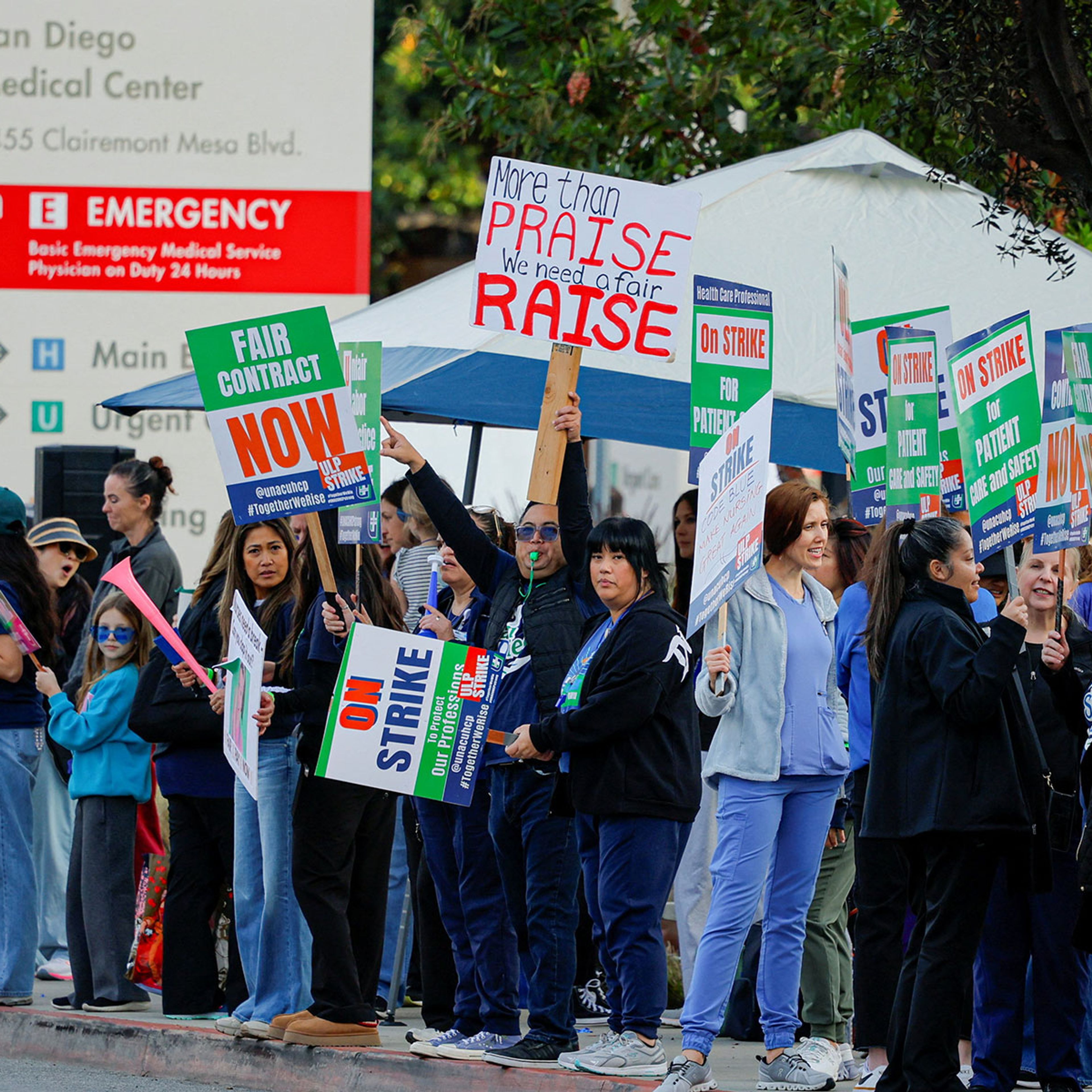
THE shadow of the angel of annoyance passed over the city, and we were afraid. It looked as if the doormen would strike. “Doormen” is headline shorthand for residential-building workers-the 25,000 doormen, porters, handymen, and elevator operators who keep 3,500 buildings in Manhattan, Brooklyn, and Queens going. (Three thousand supers belong to the same union, Local 32BJ of the Service Employees International Union, but since many of them work under a contract that runs until June, they were not due to walk.) The doormen wanted more health insurance, the building owners wanted a wage freeze. In days of yore gentlemen rowed to Weehawken and shot each other. These days workers stay home, owners stay put, and everyone shoots the tenants. The last strike ran for twelve days in 1991, but we all know the drill.
Mr. and Mrs. Suburban, on their divot of lawn, are Adam and Eve, or the archetypal property owners of Blackstone, who wield “that sole and despotic dominion which one man claims and exercises over the external things of the world, in total exclusion of the right of any other individual in the universe.” Apartment dwellers live in a vertical village, an immobile caravan in the urban desert. My apartment building-early Sixties, white brick, dull and solid as a TV business show-has twenty storeys. Subtract one for the non-existent 13th floor, and another one for the first floor, which is all lobby and rented space. There are just under 16 apartments per floor (the number diminishes slightly at the top). Assuming 3.5 people per apartment, balancing widows and families, there are about a thousand tenants. Six days a week the mail is delivered; every day of the week the Chinese takeout is delivered. All but the infants and the ill go in and out; ditto their dogs. Housekeepers, baby sitters, lovers, psychoanalytic clients, cable guys, family members from out of town (all smiles and slowness), must be announced. Hot and cold air, gas and e-mail, water and excrement, appear and disappear at command. Some of these services are subcontracted out, or performed by utilities, but most of them aren’t. It takes a lot of on-site activity to keep a building running.



Comments