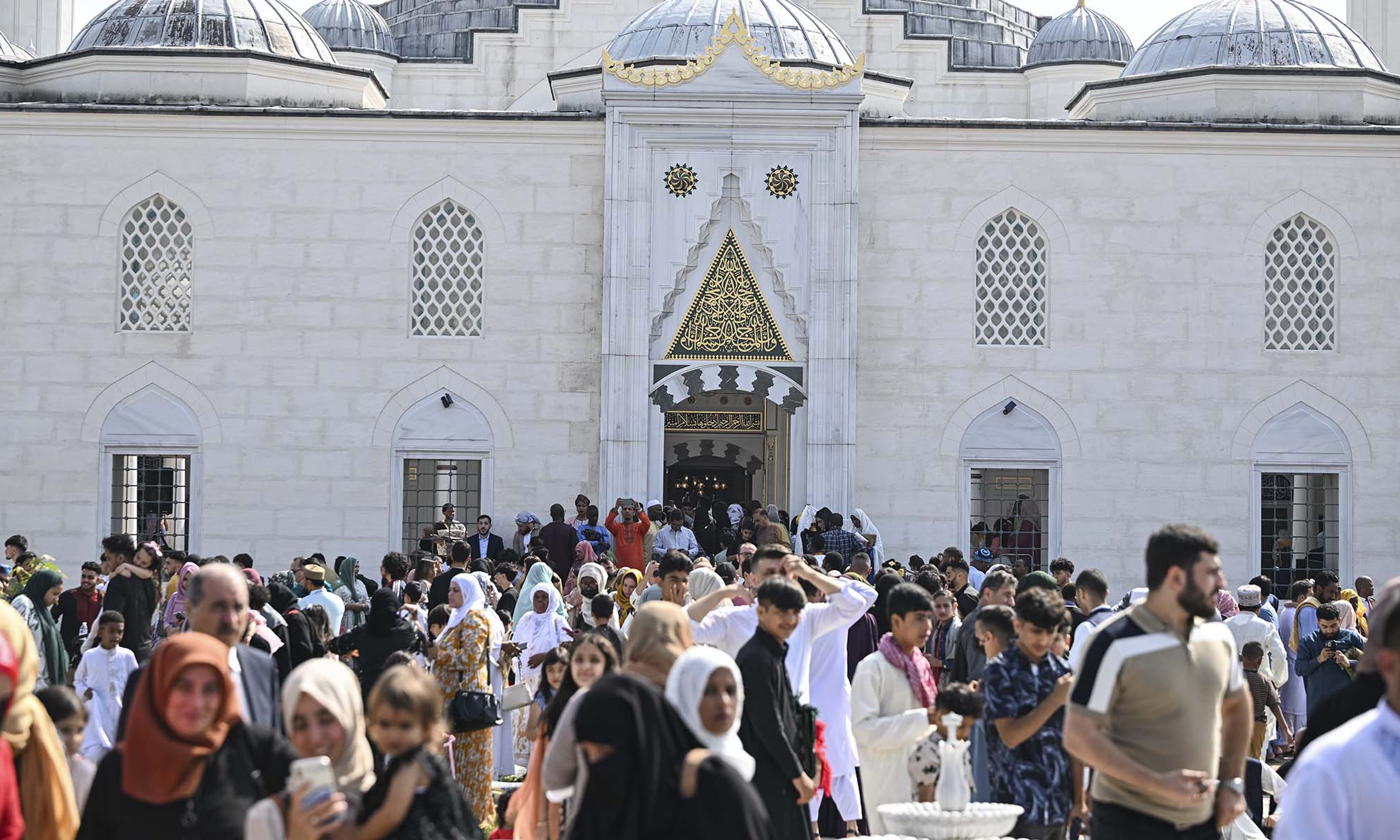
On Saturday morning of the recent Labor Day weekend, I found myself waiting in a long, slow line at the Starbucks inside the mammoth Donald E. Stephens Convention Center, adjacent to Chicago’s O’Hare Airport. I was there for the 60th annual convention of the Islamic Society of North America. It had convened the previous day, right after midday prayers (jummah), when observant Muslims around the world crowd into mosques and prayer spaces to worship “shoulder to shoulder, feet to feet.” Overseas in Muslim-majority countries, weekly jummah prayers have spawned political demonstrations and riots that threatened, even toppled, vulnerable regimes. But on this occasion, Friday afternoon’s events celebrating the largest and oldest Muslim organization in America began with the Pledge of Allegiance, followed by greetings from the Biden White House in the person of Mazen Basrawi, senior adviser and liaison to American Muslim communities, and by opening remarks from ISNA president Safaa Zarzour, a practicing attorney and former principal of a Chicago-area Islamic school.
Zarzour highlighted ISNA’s commitment to interfaith dialogue and also its program to train Muslim chaplains for the U.S. military. Although he stressed the organization’s role in “adding to the mosaic of this beautiful country of ours,” he acknowledged that, “while we’re not going to agree with everyone on everything, we will look for what we have in common.” More than 20 years after 9/11, many non-Muslims might be surprised by what they now share with their Muslim neighbors, colleagues, and fellow citizens.










Comments