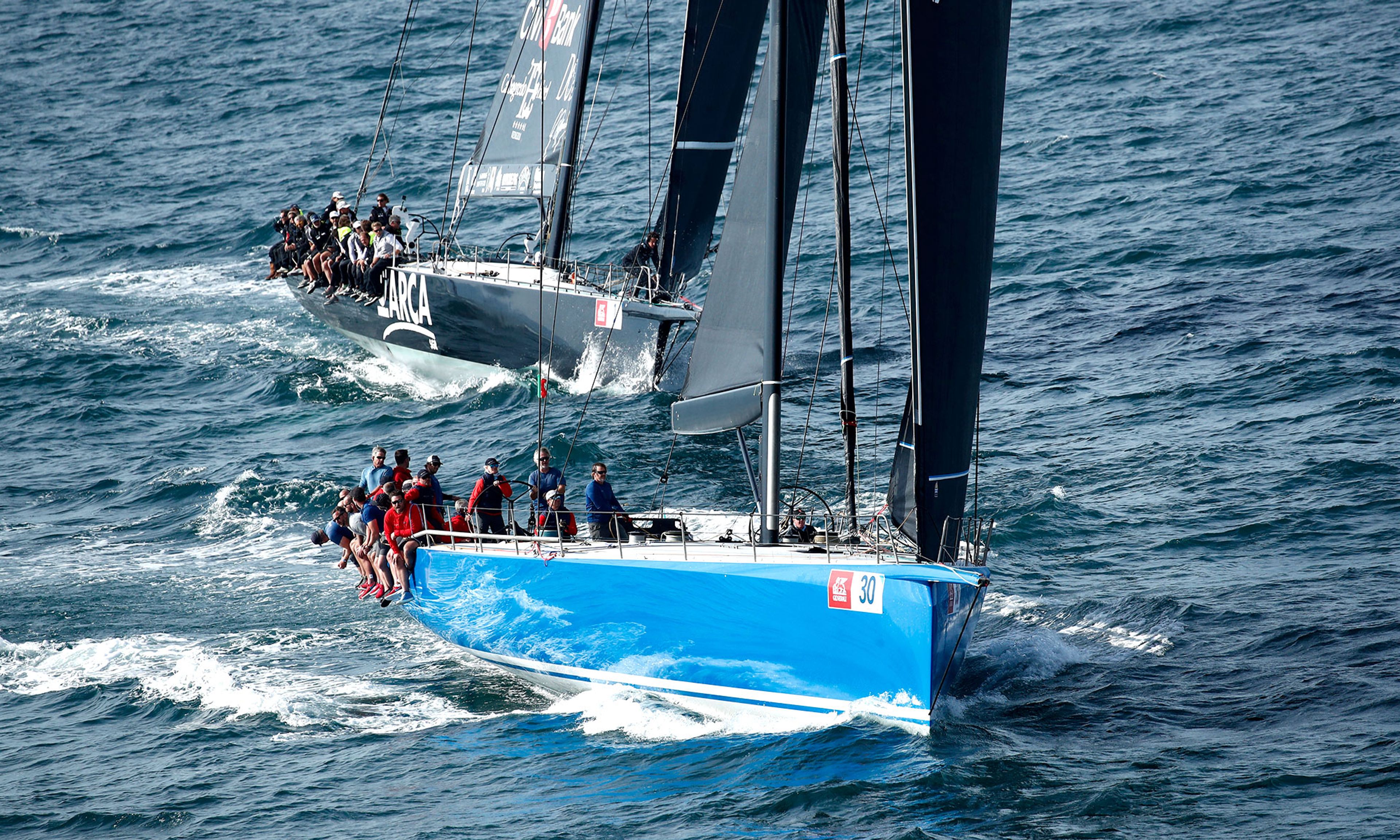
From the outset, I should make clear that I did not learn to sail just to follow in the wake of William F. Buckley Jr. I was aware that Buckley loved to sail, and even had I not known, it seems almost the sort of thing one could intuit from an armchair. But I was not thinking of Buckley when I signed my husband and myself up for a summer sailing course. I was thinking about all the times when I have stepped out onto the balcony of our lakefront Minnesota home to see a Sunfish (a kind of sailed dinghy) gliding gracefully across the water. I was thinking of the joy our family has already found in fishing, kayaking, and skating on our lake. I was thinking, too, about a momentous marital milestone: The children have finally reached the point where they can be left to themselves for the evening. Finding babysitters capable of managing five boys is daunting; even I feel unequal to the task much of the time. So for 14 years, my husband and I have enjoyed evenings out only when relatives happened to be visiting. Now, with our eldest in his teens and our youngest approaching kindergarten, we feel ready to make up for lost time. Who would settle for dinner and a movie after all those years of home “date nights”? I found an affordable sailing class and started practicing my bowline.
One afternoon a package showed up on the doorstep. My husband smiled when he saw it. “A present,” he said. It was a copy of Airborne, Buckley’s account of his first sail across the Atlantic, in 1975. Lyons Press has just reprinted the book, along with Atlantic High, which recounts the second voyage, in 1980. An avid sailor from adolescence, Buckley had spent years planning this trip, on which he and five friends journeyed more than 4,000 miles in a 60-foot sailboat. Buckley’s adventure was of course rather different from the one I had planned. He captained a schooner, while I was learning to sail a one-man Sunfish. He took a transatlantic road trip, and I learned to ride a lake bike. But sailing is still sailing, and as I took my own first steps into the sport, I found Buckley’s stories utterly engrossing and his lessons surprisingly applicable. Learning to sail with Buckley at my elbow, I felt suffused with his zest for life. But as I studied nautical terminology and learned my points of sail, I found myself thinking about more than just hull speed and the difference between “true” and “apparent” wind. My thoughts also turned to the American Right, political coalitions, and the appropriateness of having a conservative movement that was effectively launched by a sailor. Buckley was a man in command of his vessel, always the captain and never the crew. But he understood that in politics, as in sailing, it is necessary to be alert to the conditions at hand and use them to best advantage. Only one man in history could command obedience from wind and waves; the rest of us must catch whatever breezes we can find. Buckley knew how to do that, and the talent served him equally well in the cockpit and in politics.










Comments