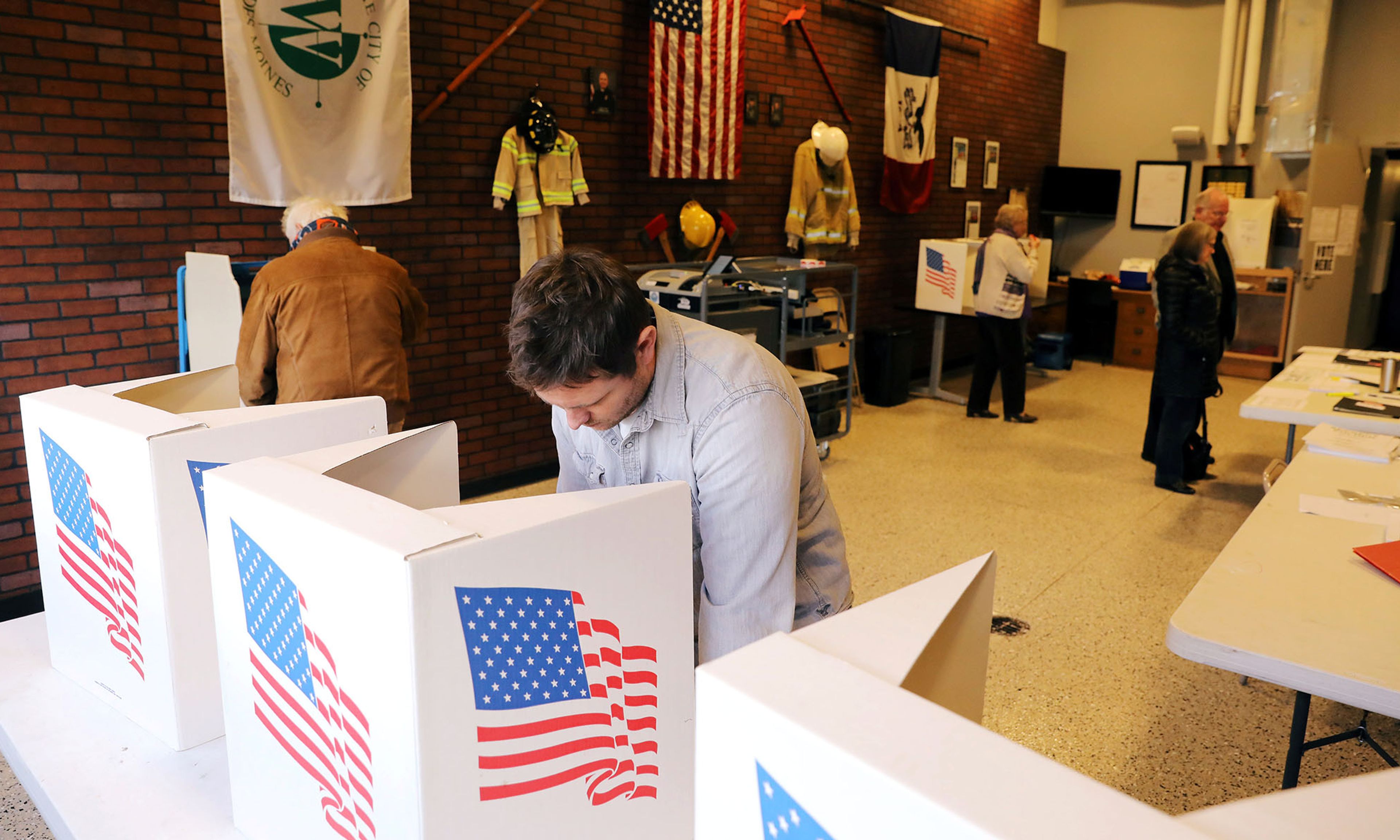
The ACLU is suing Iowa secretary of state Paul Pate after he ordered the state’s county auditors to challenge the ballots of more than 2,000 people on the state’s voter rolls who previously reported to the Iowa Department of Transportation that they were not citizens.
Under Pate’s instruction, which he issued on October 22, county auditors will be required to have the voters in question cast a provisional ballot unless the voter can prove their citizenship at the polls or the county auditor has verified they are a citizen, in which case they will be allowed to cast a regular ballot.
The ACLU is suing on behalf of a group of four naturalized citizens and the League of United Latin American Citizens of Iowa; the plaintiffs argue Pate’s orders violate the equal protection clause of the U.S. Constitution’s 14th Amendment by discriminating against voters based on their natural origin and their status as naturalized citizens.
The suit, which was filed on Wednesday in the Southern District of Iowa, further alleges that the Republican secretary of state’s instructions violate the Constitution’s right to vote, the Voting Rights Act and the National Voter Registration Act.
“The secretary’s directive severely burdens the right to vote for affected voters, who will be forced to prove their citizenship — likely without advance knowledge that they will have to do so — in order to exercise their fundamental right to vote,” the lawsuit states. “These burdens go far beyond what is required of all other registered voters in Iowa, and what is required under state and federal law.”
Last month, Pate’s office created the list of voters by cross-checking the Iowa DOT’s database of self-reported noncitizens with the state’s voter registration system. The process uncovered a list of 2,022 people who previously told the state DOT that they were not citizens and later registered to vote or cast a ballot.
Meanwhile, another 154 people were found to have told the Iowa DOT they were not citizens after they had already voted or registered to vote. The secretary of state’s office referred those people to law enforcement for possible prosecution as it is a felony in Iowa for noncitizens to vote or to register to vote.
The lawsuit argues that many of the voters on the DOT’s list are naturalized citizens who received their driver’s licenses before naturalizing.
“The secretary’s claims about the eligibility of the affected voters to vote are based solely on purported self-reporting to the DOT of lawful permanent resident status that may be more than ten years old and long outdated,” the lawsuit says.
But Pate defended his decision on Wednesday, saiying that he is not preventing people on the list from voting.
“We have questions. We need to get them answered,” he said during a press conference.
“That is why none of them have been taken off the voter rolls,” he said. “But we do owe an obligation to make sure that they are citizens now. That’s why we’ve asked the county auditors, through the poll workers, to challenge those votes, to allow them to confirm their citizenship status, so that we can count their vote as well.”
The secretary of state said he tried to gain access to a federal database called SAVE, or Systematic Alien Verification for Entitlements, which provides information on immigration status and whether someone is a naturalized citizen. However, he has been unable to access the list.
“I’m very confident that there aren’t 2,000,” Pate said. “But sadly, we are forced to have to work with the information we have available, because the federal government has tied my hands, and we cannot do a redo on an election.”
He said Thursday that he asked the Des Moines field office of U.S. Citizenship and Immigration Services to look over the list to determine whether the affected voters are citizens. But while the Des Moines office conducted the review, ICE’s Washington, D.C., headquarters stopped Des Moines from sharing its findings with Pate.
“If the federal government has information that will ensure only U.S. citizens vote AND ensure naturalized citizens can cast their ballot as normal, that information must be shared,” Pate said in the statement.





Comments