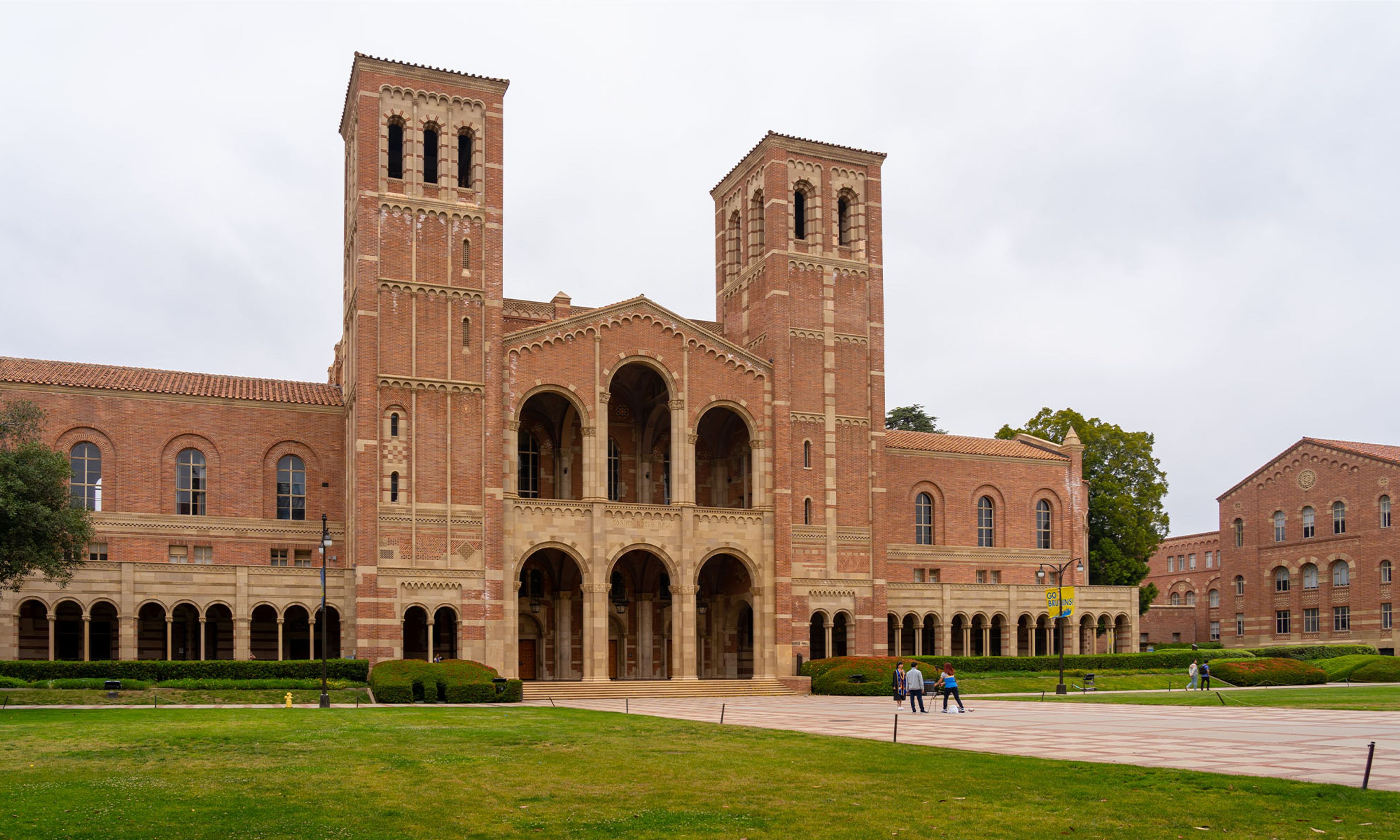
Attorney General Pam Bondi launched investigations into Stanford University and several high-profile schools in the University of California system to determine whether they are violating federal anti-discrimination law by giving preferential treatment to applicants of certain races.
Bondi ordered the Justice Department’s Civil Rights Division to conduct the compliance review of the admissions policies at Stanford, the University of California, Berkeley, the University of California, Los Angeles, and the University of California, Irvine.
“President Trump and I are dedicated to ending illegal discrimination and restoring merit-based opportunity across the country,” Bondi said in a statement.
“Every student in America deserves to be judged solely based on their hard work, intellect, and character, not the color of their skin.”
The Supreme Court’s landmark 2023 ruling in SFFA v. Harvard banned colleges and universities from race-based admissions criteria after decades of affirmative action policies gave advantages to people from certain demographic groups. The justices found that race-conscious admissions violated the Equal Protection Clause of the 14th Amendment, a ruling with major consequences for the legal landscape surrounding diversity, equity, and inclusions programs across American institutions.
“The Department of Justice will put an end to a shameful system in which someone’s race matters more than their ability,” said Acting Associate Attorney General Chad Mizelle. “Every college and university should know that illegal discrimination in admissions will be investigated and eliminated.”
The Justice Department did not specify which policies at Stanford and the UC schools prompted the compliance reviews.
“Since Proposition 209 banned California’s public institutions from considering race in admissions, UC has implemented admissions practices to comply with it. At the same time, we remain committed to expanding access for all qualified students,” the UC Office of the President said in a statement to NR, referring to a 1996 ballot proposition California passed prohibiting state educational institutions from factoring race into admissions.
“The UC undergraduate admissions application collects students’ race and ethnicity for statistical purposes only. This information is not shared with application reviewers and is not used for admissions.”
President Donald Trump signed a sweeping executive order at the start of his term ending DEI in the federal government and federally funded institutions including colleges and universities.
Trump tasked Bondi and the Department of Education with administering and enforcing his order against a wide swath of American institutions. Already, the Education Department has launched dozens of civil rights investigations into colleges and universities for alleged racial discrimination in DEI programming. The agency has warned schools that they could lose federal funding if they do not terminate DEI programs that exist in violation of federal civil rights laws.
“Following the Supreme Court’s 2023 decision in SFFA v. Harvard/UNC, the university immediately engaged in a comprehensive and rigorous review to ensure compliance in our admissions processes. We continue to be committed to fulfilling our obligations under the law, and we will respond to the department’s questions as it conducts this process,” Stanford said in a statement.
Progressive DEI initiatives typically emphasize race and other identity characteristics in evaluating groups of people, rather than focusing on individual character and achievement. Conservative critics believe DEI fosters an obsession with identity and anti-American sentiment, without meaningfully contributing to diversity of opinion or experience.
As a result of the summer 2020 Black Lives Matter riots, DEI became nearly universal across schools, corporations, media, and other prominent institutions that help shape American life. Some large corporations and universities have begun scaling back DEI in response to the changing political and legal landscape.
This article has been updated with a statements from Stanford and the UC Office of the President.






Comments