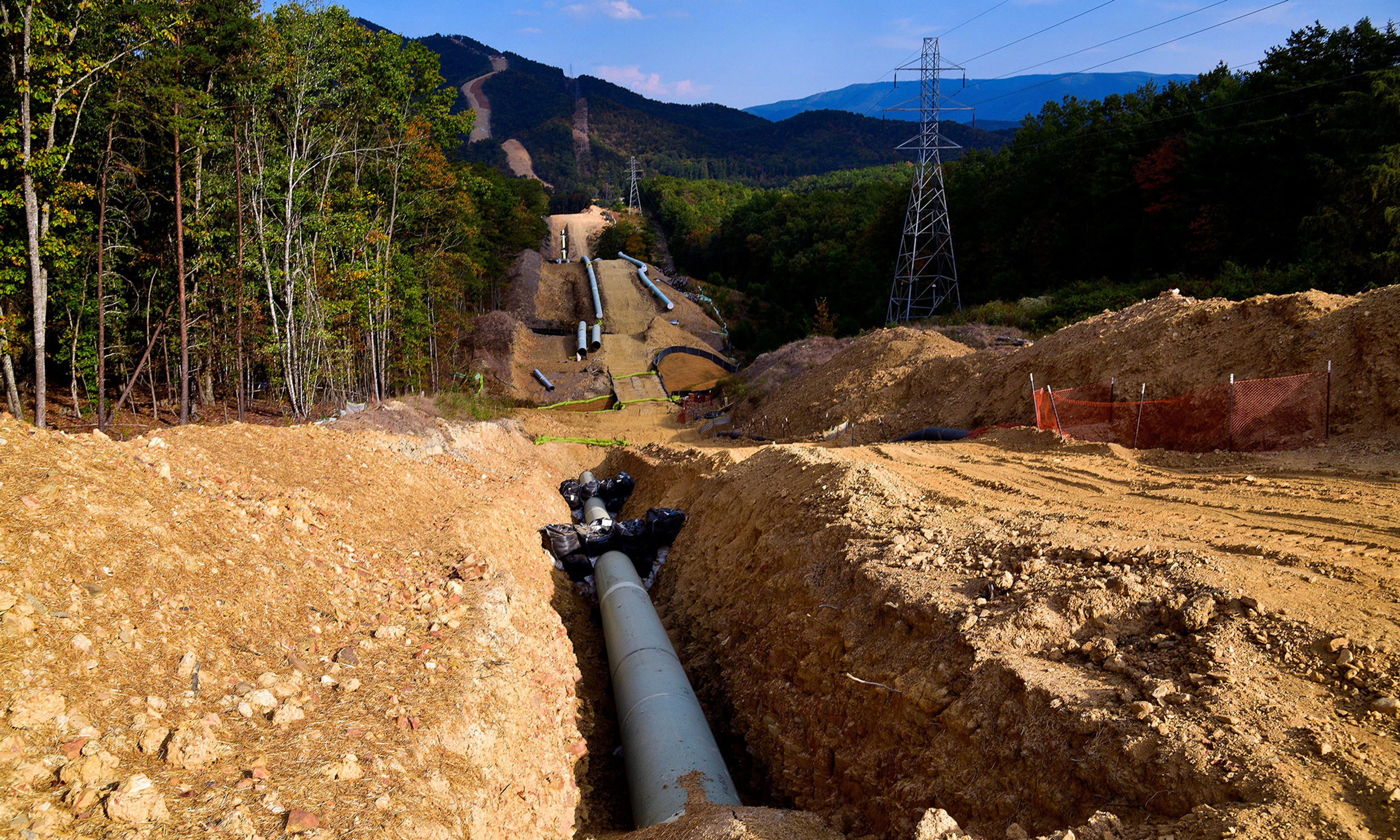
The U.S. Court of Appeals for the Fourth Circuit has blocked construction of the Mountain Valley Pipeline, which is to run from West Virginia to Virginia, despite Congress explicitly limiting judicial review of the project in the debt-ceiling deal.
Republicans were able to agree with the White House on a provision that would expedite the project alongside broader reforms to energy permitting. Furthermore, the D.C. Circuit Court of Appeals was given “original and exclusive jurisdiction over any claim” against the judicial-review provision.
To Representative Garret Graves (R., La.), one of the chief negotiators, the pipeline would not only boost U.S. energy production, but was also a strategic win, putting Democrats on the record tying the judiciary’s hands.
However, the Fourth Circuit decided to throw a wrench into the works this week, issuing a construction stay. Equitrans, the company building the pipeline, is considering its legal options, including an emergency appeal to the Supreme Court.
The company in a statement it was disappointed with the “remarkable decision to grant a one-sentence stay [and provide] no explanation.”
“The Court’s decision defies the will and clear intent of a bipartisan Congress and this Administration in passing legislation to expedite completion of the Mountain Valley Pipeline project, which was deemed to be in the national interest. We believe the Court also exceeded its authority, as Congress expressly and plainly removed its jurisdiction,” Equitrans said, adding that the Court’s behavior demonstrates why congressional intervention was necessary in the first place.
The company said that the stay jeopardizes the project’s planned completion by the end of this year.
Senator Joe Manchin (D., W.Va.), a vocal supporter of the project, expressed outrage at the decision in a statement on Twitter: “The law passed by Congress & signed by POTUS is clear – the 4th Circuit no longer has jurisdiction over MVP’s construction permits.”
“This new order halting construction is unlawful, & regardless of your position on MVP, it should alarm every American when a court ignores the law,” Manchin added.
The pipeline received approval to start construction last month. Both the Justice Department and Equitrans urged the Fourth Circuit to dismiss pending lawsuits by environmental groups. On the other hand, the environmental groups argued that the debt-ceiling deal violated the Constitution’s separation of powers in tying the judiciary’s hands.
“Congress cannot mandate that federal regulators throw caution to the wind—environmental laws are more than just mere suggestions, and must be adhered to,” said Ben Jealous, executive director of the Sierra Club, one of the plaintiffs.
Under Article III, Congress is authorized to determine what classes of “cases” and “controversies” inferior courts have jurisdiction to review and it also has the power to make “exceptions” and “regulations” to the Supreme Court’s appellate jurisdiction. Even before the debt-ceiling deal, Congress has eliminated a court’s jurisdiction to review a particular case.
The permitting reforms included in the debt-ceiling deal were intended to start easing the way for conventional energy projects.
“This is all about unlocking America’s resources. This is about improving the competitiveness of the U.S. economy, and not getting bogged down in the 115 lawsuits a year that are filed against [the National Environmental Policy Act], taking on average 3.5 years and in the majority of cases actually going in favor of government or the original permit decision,” Graves told reporters in May.
Graves and his colleagues did however admit more work is needed.






Comments