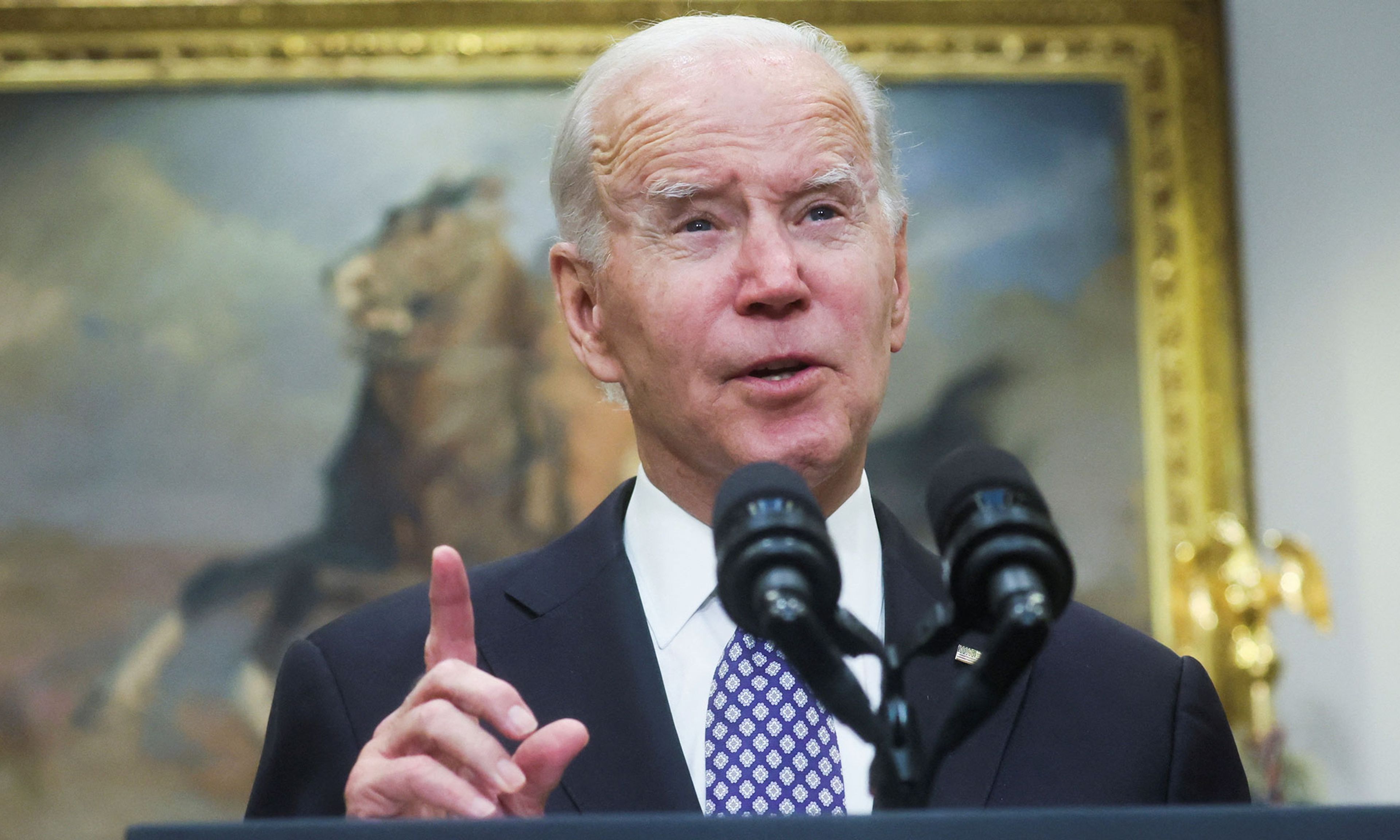
President Biden on Monday warned that oil companies could be slapped with “higher tax” if they don’t help increase production to curb skyrocketing energy costs.
“They have a responsibility to act in the interest of their consumers, their community and their country, to invest in America by increasing production and refining capacity,” Biden said during a speech at the White House. He suggested he would find a way to financially penalize them with taxation if they don’t do their part to expand the U.S. oil supply, which has been constrained since the Biden administration cut land leases for oil production offshore and on federal land.
“If they don’t, they’re going to pay a higher tax on their excess profits and face other restrictions,” Biden vowed.
After the pandemic, many Americans resumed leisure travel and other recreational activities, driving a surge in demand for gas while supply struggled to catch up. One consequence was higher prices at the pump. Biden has also claimed that “Putin’s price hike” is responsible for much of the inflation in household commodities, including food and gas, since Russia waged its war in Ukraine.
However, he’s also accused the domestic oil industry of hoarding profits instead of investing them to generate more oil. The consumer crunch has intensified now that OPEC has announced it will decrease oil production. Biden declared Monday: “The oil industry has not met its commitment to invest in America and support the American people.”
With this rhetoric, Biden has fueled the conspiracy that oil companies are coordinating to keep the price of gasoline high. He has cited the fact that major oil companies reported massive profits in the third quarter of 2022, all while American families scramble to afford basic necessities. However, some oil firms promise taxation will have the opposite of the intended effect.
“Increasing taxes on American energy discourages investment in new production, which is the exact opposite of what is needed. American families and businesses are looking to lawmakers for solutions, not campaign rhetoric,” American Petroleum Institute president Mike Sommers told The Hill.






Comments