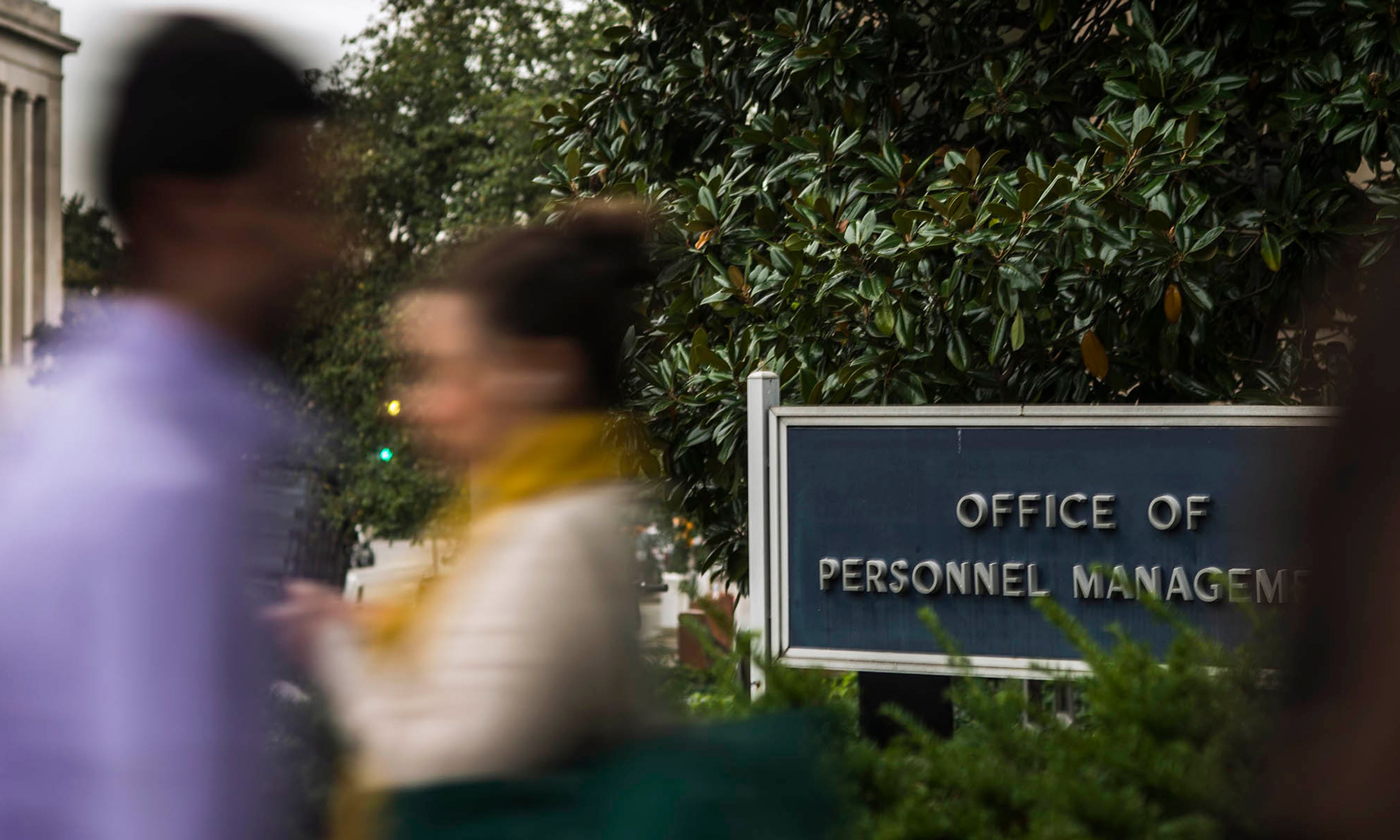
The House Oversight Committee is demanding answers from the Office of Personnel Management after a report revealed the Federal Employees Health Benefits program may be spending up to $1 billion per year on payments for ineligible members.
The Government Accountability Office released a report earlier this month that found more than 8 million federal employees and their families receive health insurance benefits under FEHB. While OPM began requiring some new program enrollees to verify that their family members are eligible, beginning in 2021, the agency “doesn’t have a process to identify and remove ineligible family members who are already enrolled in the program,” GAO said.
House Oversight Committee chairman James Comer (R., Ky.) sent a letter to OPM in response to the GAO report, calling the revelation a “fragrant waste of funds” and warning it “may be driving up premium costs for eligible participants.”
“The Committee seeks documents and information to understand how these improper payments were allowed to happen, and what OPM is doing to fix this problem moving forward,” Comer wrote in a letter to OPM director Kiran Ahuja obtained by National Review.
Comer writes in the letter that the GAO’s report “suggests OPM has been aware of this problem for years but has consistently failed to address it effectively.”
OPM issued regulations in 2018 allowing agencies and participating insurers to request proof of eligibility for federal employees’ family members but did not require proof of eligibility. The 2021 updated policy only enforced verification requiremnets for “certain types” of new enrollments.
“OPM does not plan to establish a monitoring mechanism to identify and remove ineligible family members who already have FEHB coverage,” GAO writes in the report.
OPM’s annual fraud risk assessment of the program also fails to cover “fraud risks associated with ineligible members in the program,” according to the report.
Comer cites one example included in the GAO report of a situation where just one enrollee’s family containing two ineligible individuals led to the wrongful payout of $100,000 in benefits over a 12-year span.
“Imagine the levels of waste, fraud and abuse that OPM could already have uncovered and corrected if it had in place during each relevant year adequate verification, monitoring and auditing requirements for the FHEB program—which has covered approximately 8 million members annually since 2000,” Comer wrote.
The letter adds that, given OPM has not required a verification of eligibility since the program was launched in 1960, “it is entirely possible OPM’s failure has led to several tens of billions of dollars in waste, fraud and abuse over the program’s 60-plus year existence.”
National Review has reached out to OPM for comment.
Comer concludes his letter by giving OPM a February 6 deadline to turn over documents and information related to OPM’s 2018 rule “Federal Employees Health Benefits Program: Removal of Eligible and Ineligible Individuals from Existing Enrollments” that “that document the history of OPM’s awareness of the participation of ineligible participants in the FEHB program.”
Comer also request documents and communications “containing any OPM analysis of or decision to adopt the measures in the Removal Rule, or whether subsequently to adopt measures in addition to the Removal Rule, to mitigate or eliminate the problem of ineligible individuals participating in the FEHB program” and documents that include the annual amount of money paid out under the FEHB program to pay for benefits claims by ineligible participants in the program.
Comer also calls on OPM director Ahuja to make arrangements to schedule a staff-level briefing on this matter, including OPM’s plans to achieve full compliance with GAO’s four recommendations, as soon as possible, but no later than January 30, 2023.






Comments