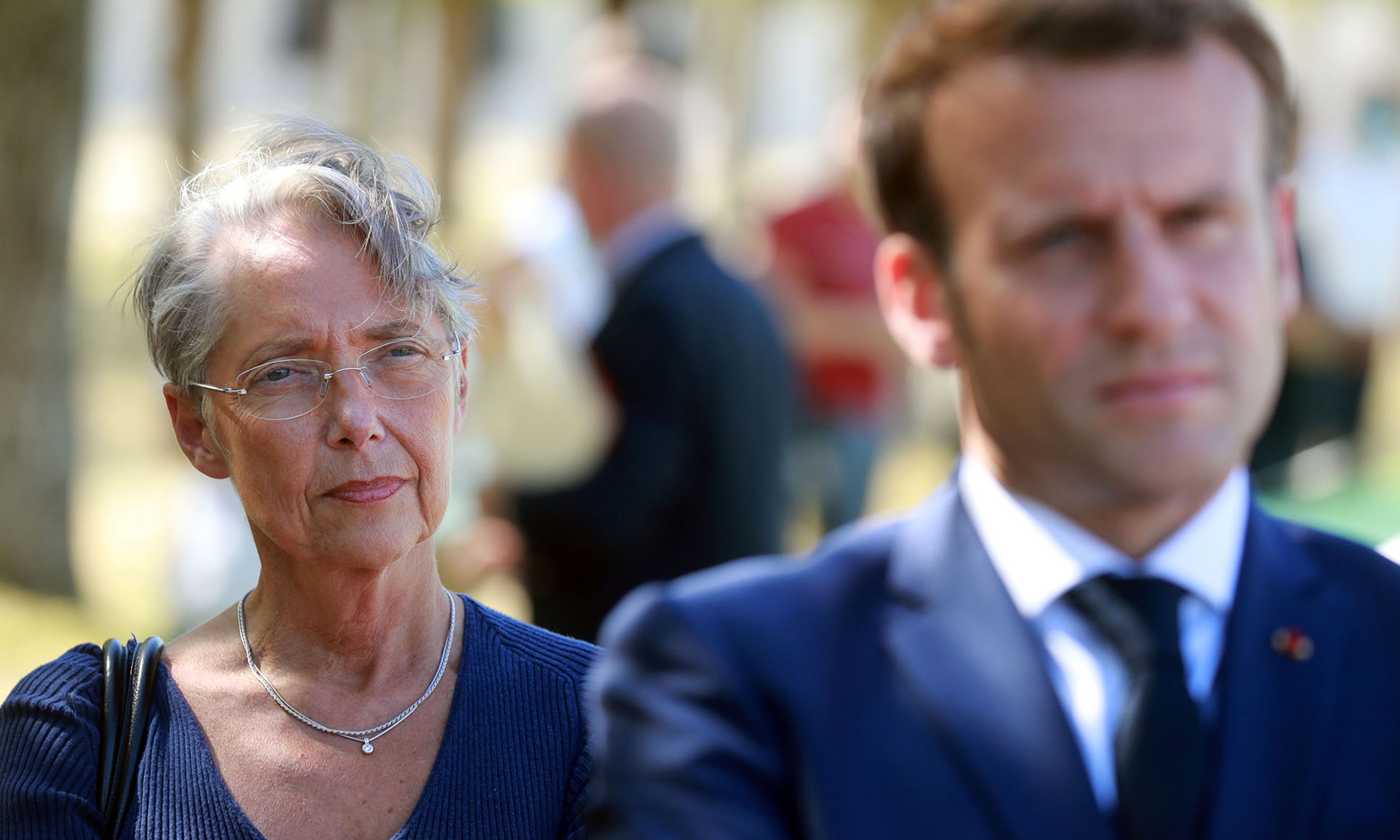
French president Emmanuel Macron appointed a new prime minister on Monday, naming the first woman to the role in over 30 years.
Elisabeth Borne, the country’s former Minister of Labor, was elevated to the job after Jean Castex, a Macron ally, stepped down from the post. The move is part of Macron’s efforts to shake up his cabinet before French parliamentary elections in the second week of June, which will decide whether his newly named party, Renaissance, has a legislative majority to carry out his agenda. Macron, himself, was reelected to a second five-year term as president earlier this month.
In France’s semi-presidential government, the role of the prime minister – unlike in other parliamentary systems – is largely subordinate to the president, who leads domestic and foreign policy when both are from the same party. However, when both are of different parties, per constitutional convention, the prime minister leads domestic policy while the president leads the country’s foreign affairs. Most prime ministers serve very short terms, usually lasting two years.
The selection of Borne is being seen as an attempt by Macron to avoid such a scenario. After failing to win the presidency last month, far-left candidate Jean-Luc Mélenchon and far-right candidate Éric Zemmour have both announced they will seek the office of prime minister. If successful, their occupancy would split the French executive branch between two parties – a situation that, in the past, has led to controversy. Notably, in 1986, President François Mitterrand appointed Jacques Chirac (himself a future president) to the role, despite being from rival parties, which observers claim led to a “dyarchy” in the French state.
Borne, 61, is a former member of the Socialist Party and civil servant who has held a variety of roles in the French state. She was the prefect – the executive head of a French region – of Vienne, a historic town and former center of the Roman Empire under Julius Caesar, before becoming CEO of RATP Group, France’s state-owned public transportation authority. During Macron’s term, she held cabinet portfolios of transportation, labor, and climate change. The latter two put her in the public eye – during France’s long-running ‘Yellow Vests’ labor protests and the country’s efforts to transition its energy sources and meet climate change commitments.
She is the first woman to hold the role of prime minister after Edith Cresson, who served briefly between 1991 and 1992. According to observers, her gender, socialist leanings, and technocratic background are likely counterpoints to the appeal of Mélenchon, whose left-wing electoral alliance – NUPES – is currently surging in opinion polls.





Comments