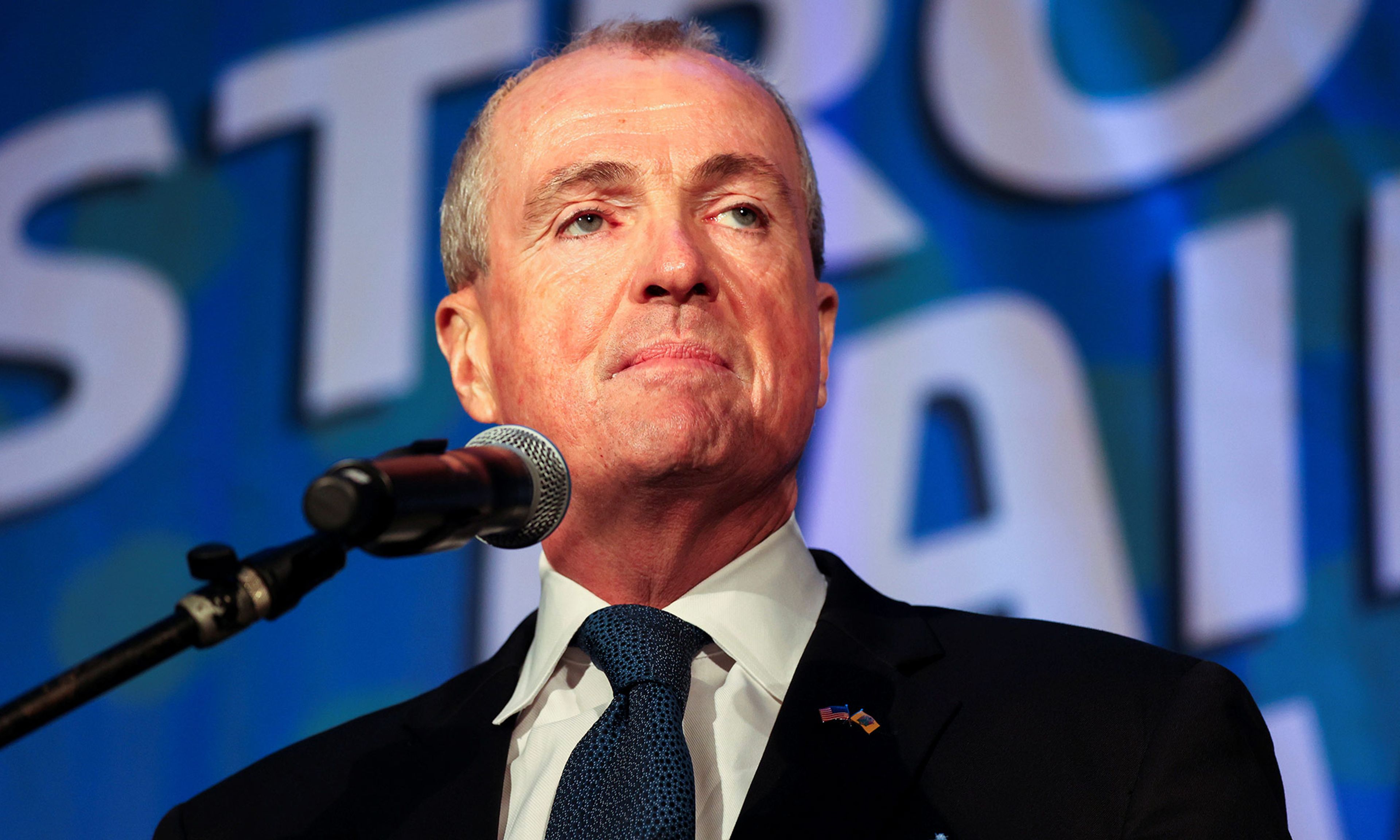
New Jersey governor Phil Murphy signed a law on Monday to prohibit the banning of books in public and school libraries, diverging from the approach that Republican-led states have taken against LGBTQ+ or racially themed materials that conservative-minded parents find inappropriate for their children.
“It’s the antithesis of all these book banning states that you see,” the Democratic governor said at the Princeton Public Library, where he signed the bill. “I’m incredibly proud to have signed it, but also acknowledge that America — and this is yet another good example — is becoming a patchwork-quilt country. It really matters where you live.”
Under the Freedom to Read Act, public and school libraries cannot exclude books based on the origin, background, or views of the authors. While it prevents the censorship of books in the event that someone finds them offensive, the law does restrict “developmentally inappropriate material” for specific age groups. Local school boards and the governing boards of public libraries are required to develop policies on which books are selected and how people can challenge certain library materials.
Additionally, the law protects library staff members and librarians from civil and criminal charges filed by people who object to obscene or otherwise inappropriate literature.
“This law will strengthen, not diminish, the rights of parents to choose what reading materials their children should or should not have access to by ensuring that every family can make their own determination about what books are appropriate for a child,” Murphy said.
Over 4,200 books in school and public libraries were targeted for censorship in 2023, the American Library Association reports. The figure represents a significant increase from the 2022 total of 2,600 books.
Meanwhile, PEN America estimates that more than 10,000 works were removed from school shelves during the 2023–24 academic year, with more than 8,000 of those occurring in Florida and Iowa. The number of book bans totaled 3,362 the previous year.
The problem with PEN America’s methodology lies in its broad definition of a “ban,” National Review previously reported in September 2023. For instance, the nonprofit says any book that is limited to higher grade levels is considered banned. However, just because a book can’t be accessed by a younger student below the required grade level doesn’t mean it is banned.
Florida has led the way in removing certain content containing themes of race, sexuality, or gender identity to protect children from progressive indoctrination.
Last month, the Florida Department of Education released a list of more than 700 books that were either removed or discontinued from K–12 school districts. The comprehensive list, which doubled from last year, includes Jay Asher’s 13 Reasons Why, Toni Morrison’s Beloved, Margaret Atwood’s The Handmaid’s Tale, Kurt Vonnegut’s Slaughterhouse Five, and Stephen King’s numerous horror titles.
New Jersey is now the third blue state to outlaw book bans after Governors Tim Walz of Minnesota and J. B. Pritzker of Illinois enacted similar legislation this June and in June 2023, respectively.
The latest measure will take effect one year from the date of Murphy’s signature, giving school and library officials time to develop the required policies. In the meantime, the state education commissioner and state librarian can start implementing the law’s provisions immediately if deemed necessary.






Comments