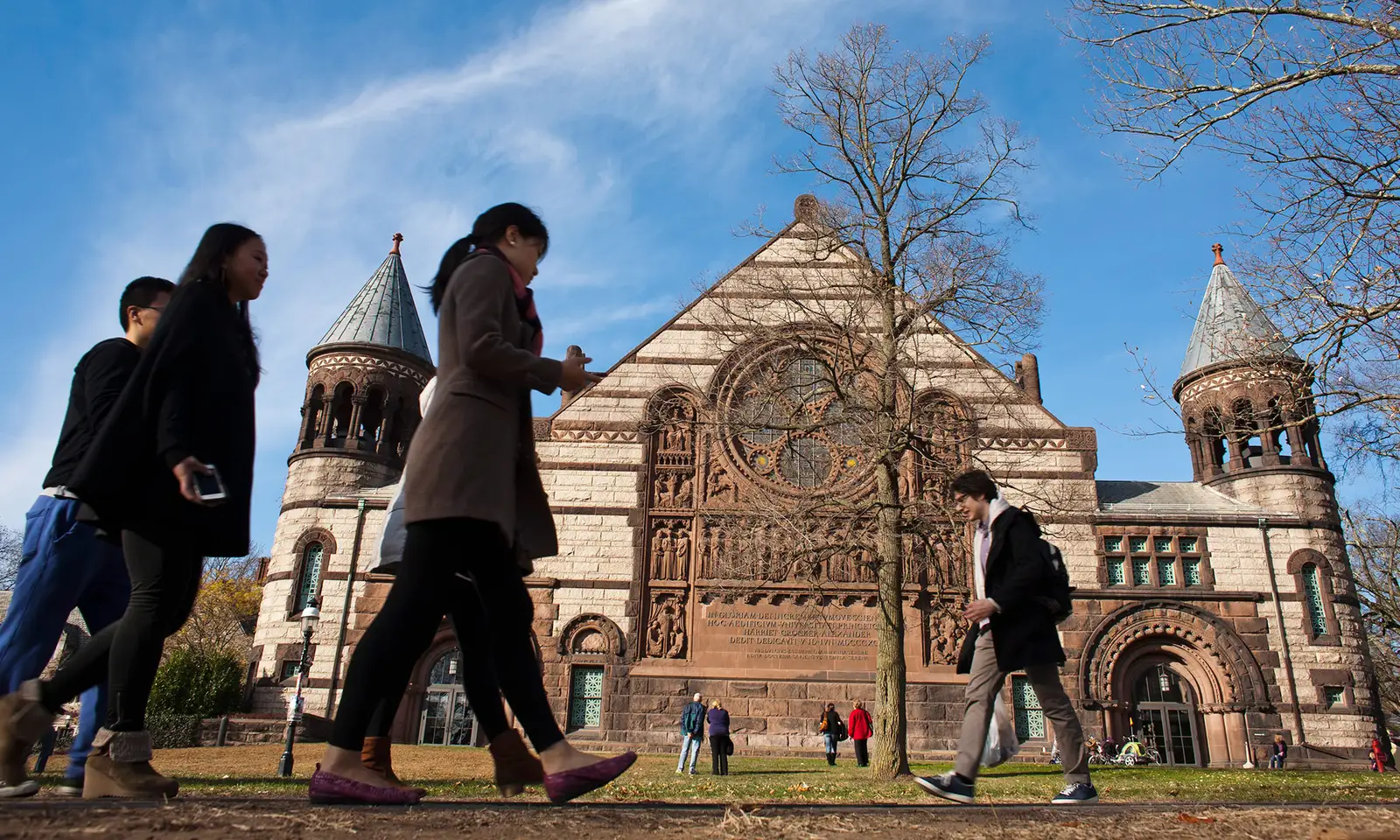
Princeton University students established a protest encampment on campus Thursday morning but began disassembling their tents within five minutes, before transitioning to a sit-in protest with singing. At least two students were arrested.
“We raised our encampment in solidarity with Gaza to protest Princeton’s role in funding the ongoing genocide,” a group called the Princeton Israeli Apartheid Divest wrote on social media. “We join a national movement of students speaking out against the occupation, fighting for Palestinian liberation.”
Around 7 a.m., approximately 50 students set up an encampment in the McCosh Courtyard at Princeton University.
“You’re all in violation of university policy, these tents must come down right now,” a man can be heard telling the protesters. “This is your first warning.”
The students began chanting “free Palestine” and “from the river to the sea, Palestine will be free.”
Within five minutes of setting up the tents, the students began disassembling them. The protest transitioned to a sit-in at the McCosh Courtyard with singing.
“We ain’t gonna study war no more,” the protesters sang while clapping and banging drums.
Two students told National Review that faculty members who attended the protest included history professor Max Weiss and Classics professor Dan-el Padilla Peralta, both of whom signed a letter published on Monday that expressed “solidarity” with the Columbia and Barnard students demanding that “the university divest from Israel’s genocide in Gaza and ongoing occupation of the West Bank, East Jerusalem, and other Palestinian land.”
“This morning, fewer than 100 people gathered on campus, and a small number began erecting about a half-dozen tents, which is a violation of University policy,” a university spokesperson said in a statement provided to National Review. “After repeated warnings from the Department of Public Safety to cease the activity and leave the area, two graduate students were arrested for trespassing. All tents were then voluntarily taken down by protestors. The two graduate students have been immediately barred from campus, pending a disciplinary process.”
Princeton University president Christopher Eisgruber published an article Thursday morning clarifying that encampments are not protected by the school’s free-expression policies.
“Encampments can obstruct others from moving freely or conducting University business. They can create health and safety risks,” Eisgruber wrote. “They require significant staff time to keep occupants and bystanders safe, thereby diverting people and resources from fulfilling their primary purpose. They can intimidate community members who must walk past them. There is no practical way to bar outsiders from joining the encampments.”
Princeton University did not respond to a request for comment by the time of publication.
National Review published documents on Wednesday obtained from Princeton University students planning the anti-Israel protest encampment. The students claimed to have pro bono legal support and trained security.
“We think expulsion is highly unlikely; only students who have been expelled in the movement at Vanderbilt were expelled for touched (‘assaulted’) a police officer,” reads a portion of a document under the subhead “understanding the risk.” It continues, “Explusion [sic] is highly unlikely; at Princeton it requires committee and we know that at least 2 faculty members who are part of the committtee [sic] are in the Faculty for Justice in Palestine.”





Comments
On “Princeton Encampment Lasts Five Minutes, Protest Continues as Sit-In”