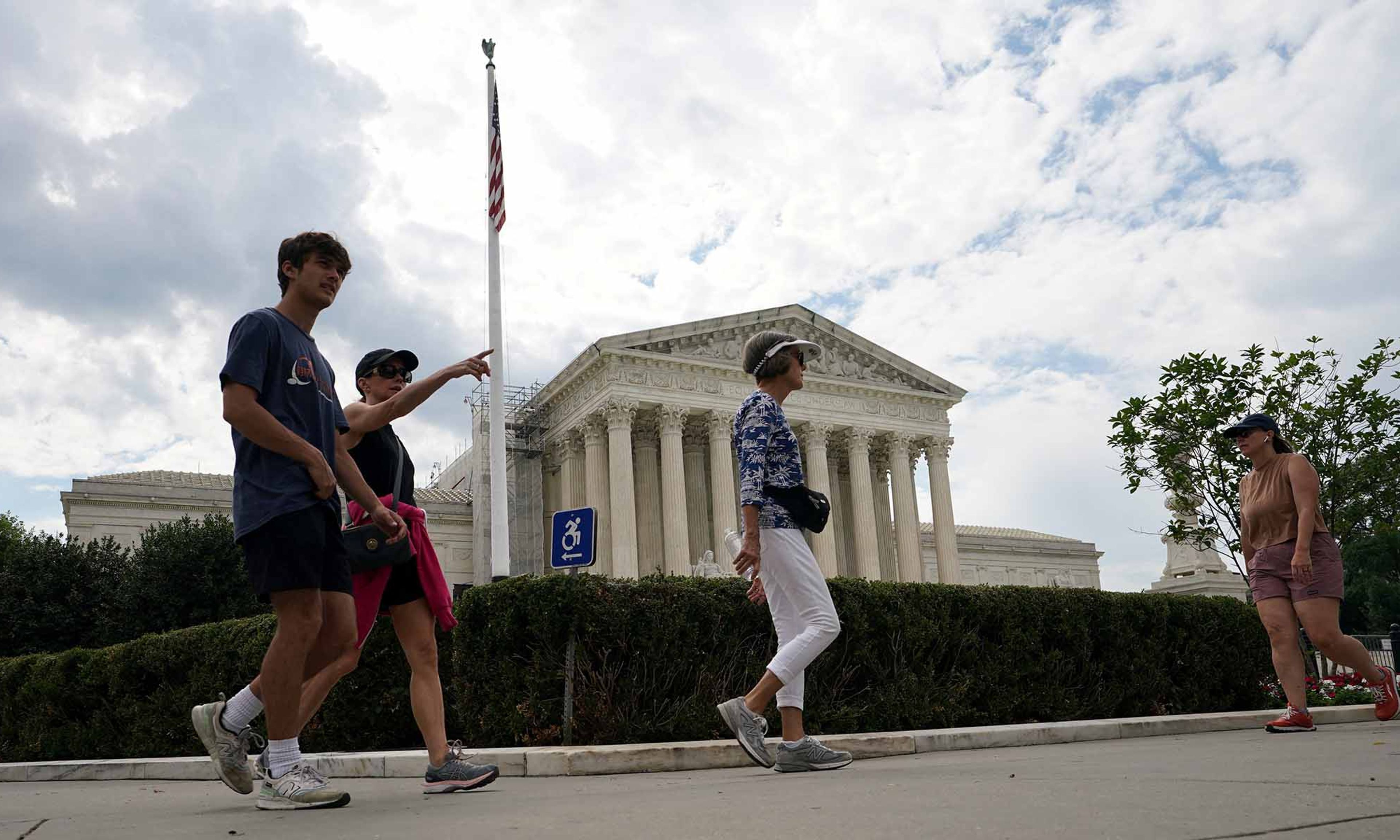
The Supreme Court on Thursday unanimously ruled in favor of a Christian letter carrier who refused to work on Sundays because of his faith, arguing that the federally funded United States Postal Service violated Title VII of the Civil Rights Act of 1964 requiring employers to accommodate the religious practice of their staff with limited exceptions.
All nine justices on the bench, including progressives Justice Kagan, Sotomayor, and Brown-Jackson, ruled against the USPS.
The case involved Gerald Groff, an evangelical Christian who believes for religious reasons that Sunday should be devoted to worship and rest. While working for the USPS, Groff did not work on Sundays, according to the court opinion authored by Justice Alito. His schedule remained this way until the postal service facilitated Sunday deliveries for Amazon. To avoid the requirement to work on Sundays, Groff transferred to a rural USPS station, until it also started Sunday deliveries, forcing him to redistribute work load to other staff. After receiving “progressive discipline” for failing to work on Sundays, Groff resigned and subsequently sued.
Title VII’s one loophole, the opinion noted, is if the accommodation of an employee’s religious practice, such as observing a day of rest on Sunday, imposes an “undue hardship on the conduct of the employer’s business.” Forcing other employees to work overtime to compensate for Groff’s day off does not meet that bar, Alito wrote.
“Observing the Sabbath day is critical to many faiths—a day ordained by God. No one should be forced to violate the Sabbath to hold a job,” said Randall Wenger of the Independence Law Center, one of the group’s representing Groff.
Lead trial counsel Alan Reinach of the Church State Council said: “Workers have suffered too long with the Supreme Court’s interpretation that disrespects the rights of those with sincere faith commitments to a workplace accommodation. It’s long past time for the Supreme Court to protect workers from religious discrimination.”






Comments