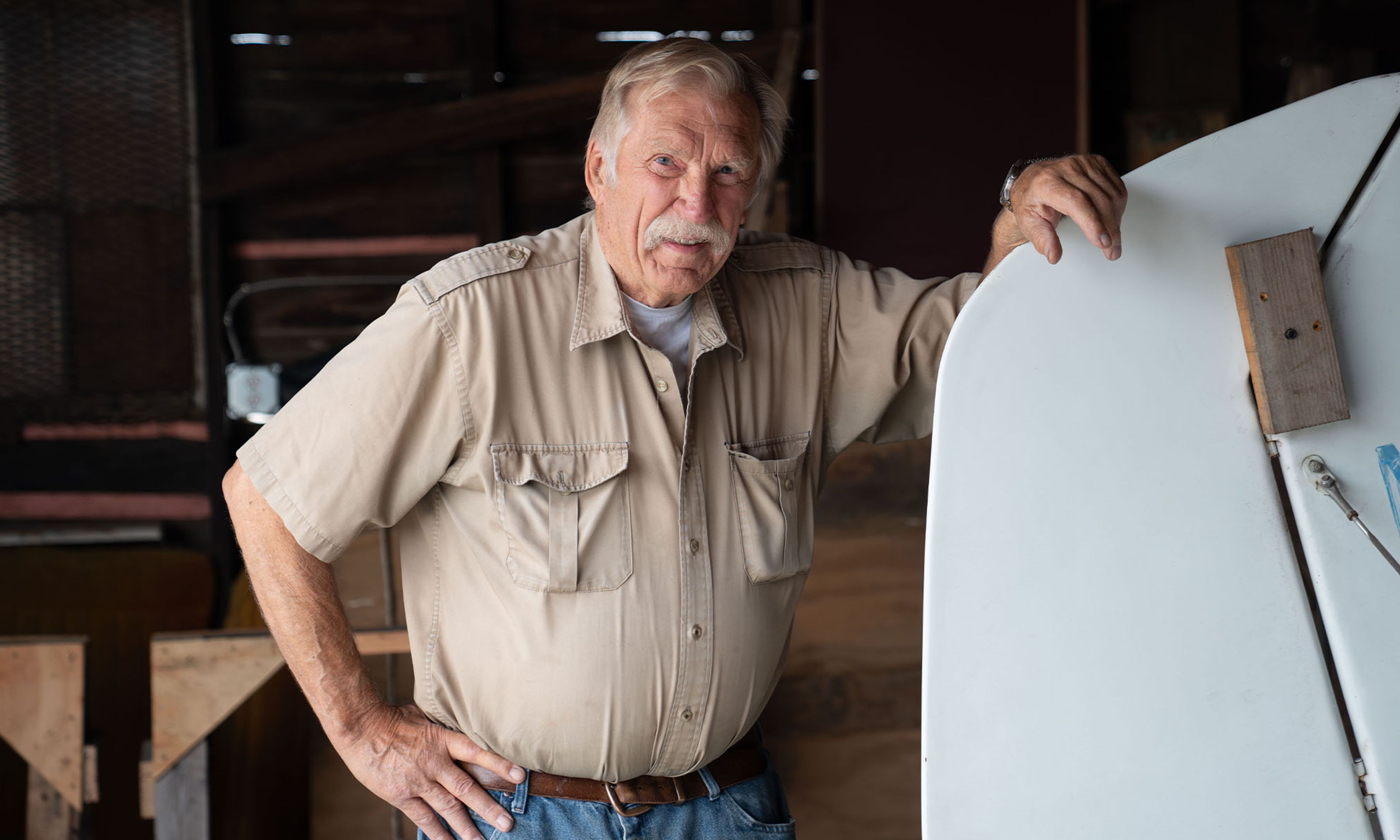
The Supreme Court announced Monday that it will hear the case of an Alaskan bush pilot who had his plane seized by the state for transporting alcohol into a dry community.
Kenneth Jouppi sued Alaska for seizing his $95,000 plane after police found a six pack of beer inside. Jouppi argues the seizure violates the Eighth Amendment’s “Excessive Fines Clause.”
Back in April 2012, Jouppi was flying a passenger from Fairbanks to Beaver. The small village of Beaver, however, is a dry community by law, and the passenger had a six pack of beer in her luggage. When the plane, a 1969 Cessna, was inspected before takeoff, state troopers discovered the contraband.
The case will have significant implications for the future of civil asset forfeiture, a legal process that entitles the police to seize private property if they suspect it is associated with a crime. Since the legal action is brought against the property rather than the person, the burden of proof is much lower and, in some states, the property can be seized without the owner having ever committed a crime.
“I’m in my 80s now, and I’ve been fighting this for over a decade because I see it as my duty to ensure that the Bill of Rights actually means something in protecting against government overreach,” Jouppi said, in a statement from his attorneys at the Institute for Justice.
The passenger pleaded guilty to a misdemeanor offense of knowingly transporting an alcoholic beverage into a dry community. Juoppi, and the transportation company, were later convicted by a jury. The judge sentenced Juoppi to three days in jail.
Juoppi’s attorney’s say the state did not take into the account the fact that Juoppi’s violation is not part of a broader pattern of criminal behavior, noting the state examined his conduct in “purely in abstract terms.”
“Few excessive fines cases will present the issue so sharply; a decision upholding the forfeiture of an airplane for a six-pack is a self-recommending candidate for review,” his lawyers wrote in the appeal.
The Alaska State Supreme Court, however, previously upheld the forfeiture, and the state’s lawyers are continuing to argue that it was valid. But, Juoppi’s attorneys said the decision conflicts with other precedent, specifically precedent set by the U.S. Supreme Court.
“Alcohol abuse is a serious problem in rural Alaska, and airplanes are sometimes the only realistic means to commit the crime of alcohol importation,” the state’s attorneys wrote.
They also argue that Juoppi has not proven how the seizure of his plane is “grossly disproportional to the gravity of his offense.”
In states across the country, police departments often seize vehicles and other valuables with the slightest provocation and then either retain the seized property or sell it and keep the proceeds for department use.
In 2009, a South Carolina man’s RV was seized after police discovered four ounces of marijuana inside. Mikee Albin, a 65-year-old Vietnam veteran and cancer patient, had parked his vehicle in the parking lot of the restaurant where he worked. When police searched the restaurant as part of a narcotics and illegal gambling investigation, they included the RV. Though, the man did not have enough marijuana in his possession to justify the seizure, the police argued that the RV was actually a “container” for the marijuana, which entitled them to seize it and sell it at auction.
The U.S. Supreme Court is set to hear Juoppi’s case this fall.






Comments