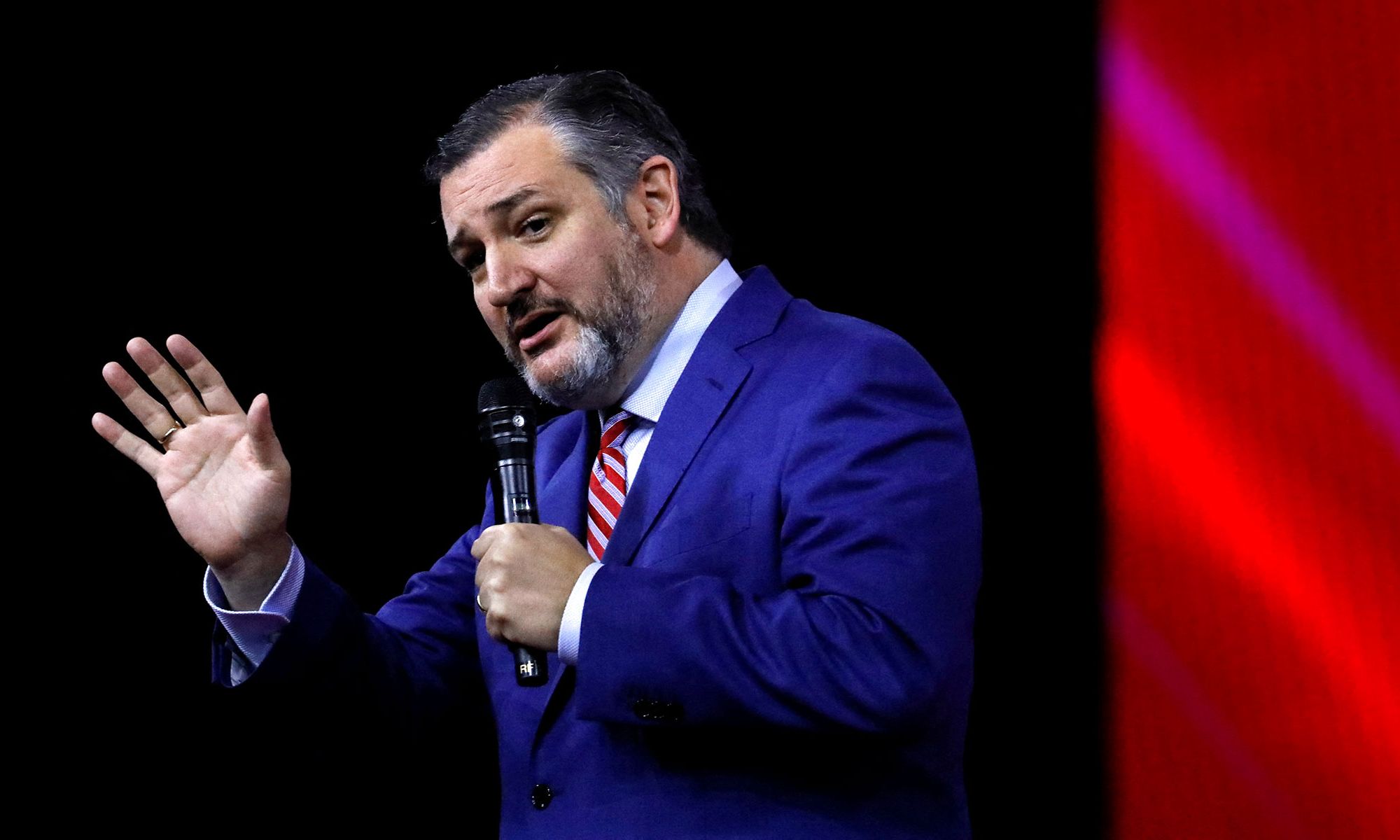
The Supreme Court ruled 6-3 in favor of Senator Ted Cruz (R., Texas) on Monday, striking down a rule that prevented him from repaying debt from his 2018 Senatorial campaign.
The case, FEC v. Cruz, was brought by Cruz after he attempted to repay his campaign’s considerable debt with political contributions raised in his name. Cruz, whose wife Heidi was a banker with Goldman Sachs, had lent $260,000 of his personal money to his campaign. Section 304 of the Bipartisan Campaign Reform Act of 2002 limited the use of contributions in excess of $250,000 to repay debt 20 days after an election, which left Cruz $10,000 due.
The U.S. District Court for the District of Columbia summarily ruled in favor of Cruz’s constitutional claim, that the cap was a limit on the First Amendment and “burdened political speech without sufficient justification.”
The FEC then appealed to the Supreme Court, which heard arguments in the case over the October Term in 2021. The case had drawn the interest of several Republican Senators, who filed amicus briefs supporting Cruz, including Minority Leader Mitch McConnell (R., K.Y.) and five other colleagues led by Roy Blunt (R., M.O.). The Republican National Committee had also filed a brief.
In the opinion for the conservative majority, Chief Justice John Roberts wrote that the law “abridges First Amendment rights” of candidates by burdening their ability to make loans on behalf of their candidacy. “Debt is a ubiquitous tool for financing electoral campaigns, especially for new candidates and challengers. By inhibiting a candidate from using this critical source of campaign funding, Section 304 raises a barrier to entry—thus abridging political speech,” wrote Roberts.
The Court also ruled that Section 304 never furthered any “permissible goal” of restriction on political speech, which – in McCutcheon v. FEC – was limited to “quid pro quo corruption or its appearance.”
Roberts, further, chided the government for failing to prove any of corruption being prevented by Section 304. “In the absence of direct evidence, the Government turns to a scholarly article, a poll, and statements by Members of Congress” to prove its case, he wrote.
Meanwhile, Justice Elena Kagan wrote a dissenting opinion, joined by Justices Stephen Breyer and Sonia Sotomayor. Beginning with an analogy, she suggested that, without Section 304, officials will lead to “crooked exchanges” where elected officials solicit “donations from wealthy individuals and corporate lobbyists, making clear that the money they give will go straight from the campaign to [him].” She said that the majority’s opinion “greenlights all the sordid bargains Congress thought right to stop.”
In a statement to National Review, a spokesman for Cruz called the ruling a “resounding victory for the First Amendment,” and claimed that it would “help invigorate our democratic process by making it easier for challengers to take on and defeat career politicians.”
Cruz’s 2018 campaign against former Congressman Beto O’Rourke, now the Democratic nominee for Governor of Texas, was highly contested and, at the time, the most expensive Senate election in history. A combined $126 million was raised by both candidates during the race, which attracted nationwide attention after O’Rourke called Cruz “Lyin’ Ted,” a nickname given to him by then-candidate Donald Trump during the 2016 election. However, Trump, as president, later visited Texas for a rally with Cruz, where he changed the nickname to “Beautiful Ted”.

Comments