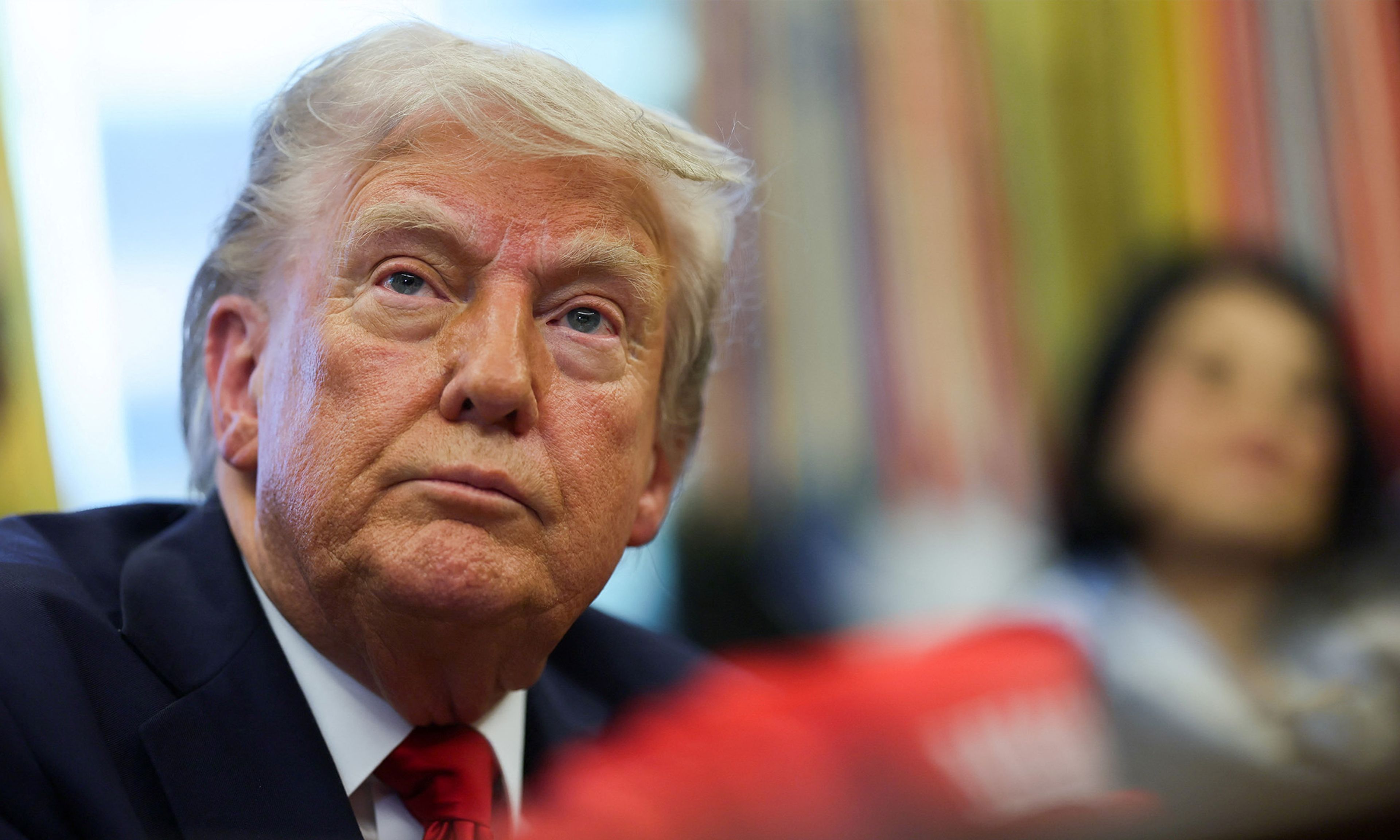
President Donald Trump on Friday floated reducing tariffs on China to 80 percent, down from the current 145 percent total, as Washington and Beijing officials prepare for an important meeting this weekend.
Trump indicated a lower tariff rate in a post on Truth Social, saying an “80% Tariff on China seems right!” The president added it remains “up to” Treasury Secretary Scott Bessent in negotiating a lower levy, though.
Bessent and U.S. Trade Representative Jamieson Greer traveled to Geneva, Switzerland, where they will meet with their Chinese counterparts. The meeting marks the first meaningful step toward resolving the trade tensions between the world’s two largest economies since the U.S. slapped tariffs on China.
In a separate Truth Social message posted Friday morning, Trump wrote, “CHINA SHOULD OPEN UP ITS MARKET TO USA — WOULD BE SO GOOD FOR THEM!!! CLOSED MARKETS DON’T WORK ANYMORE!!!”
China is the country hit hardest by the tariffs the Trump administration rolled out on “Liberation Day” last month. The administration lowered initial rates to a baseline of 10 percent with all trading partners save China. Trump has instead taken an aggressive approach in his dealings with Beijing, raising tariffs on China to 125 percent after imposing a 20 percent tax related to fentanyl, adding to a total of 145 percent. China responded in kind, raising its tariffs on U.S. goods to 125 percent.
On Thursday, Trump signaled good news for the markets in that the top rate can only be lowered.
“You can’t get any higher. It’s at 145, so we know it’s coming down,” Trump told reporters in the White House, as he announced a trade deal with the U.K. “I think it’s a very friendly meeting. They look forward to doing it in an elegant way.”
The tariffs have had a significant impact, with new data out of China showing the shipment of goods to the U.S. fell by more than 20 percent in April relative to the same period last year, while shipments to Southeast Asia rose.
Ahead of this weekend’s talks, which he expects to be “substantive,” Trump said China “very much” wants to make a deal and that he would like to see the foreign power reopen its economy.
“I think we’re going to have a good weekend with China,” he said. “I think they have a lot to gain. I do think they have far more to gain than we do, in a sense.”
China is now one of more than 75 nations willing to negotiate over tariffs. It appears the reduced tariff rate that Trump proposed on Friday will be given to allow room for further negotiations, in theory. The outcome of the talks remains to be seen.
Earlier this week, Bessent said he expected “de-escalation” to be the primary topic of discussion at the high-stakes meeting, starting Saturday and ending Sunday. He argued the astronomical tariffs on China are “not sustainable.”
The U.K. was the first foreign nation to strike a trade deal with the U.S. after the latter’s back-and-forth tariffs sent the global market into turmoil. Under the new deal, the U.K. will lower its tariffs to 1.8 percent while the U.S. raises its own to a baseline 10 percent that has remained imposed on all countries. The agreement is said to open more than $5 billion of increased market access for American exports and bring in more than $6 billion from tariff revenue.






Comments