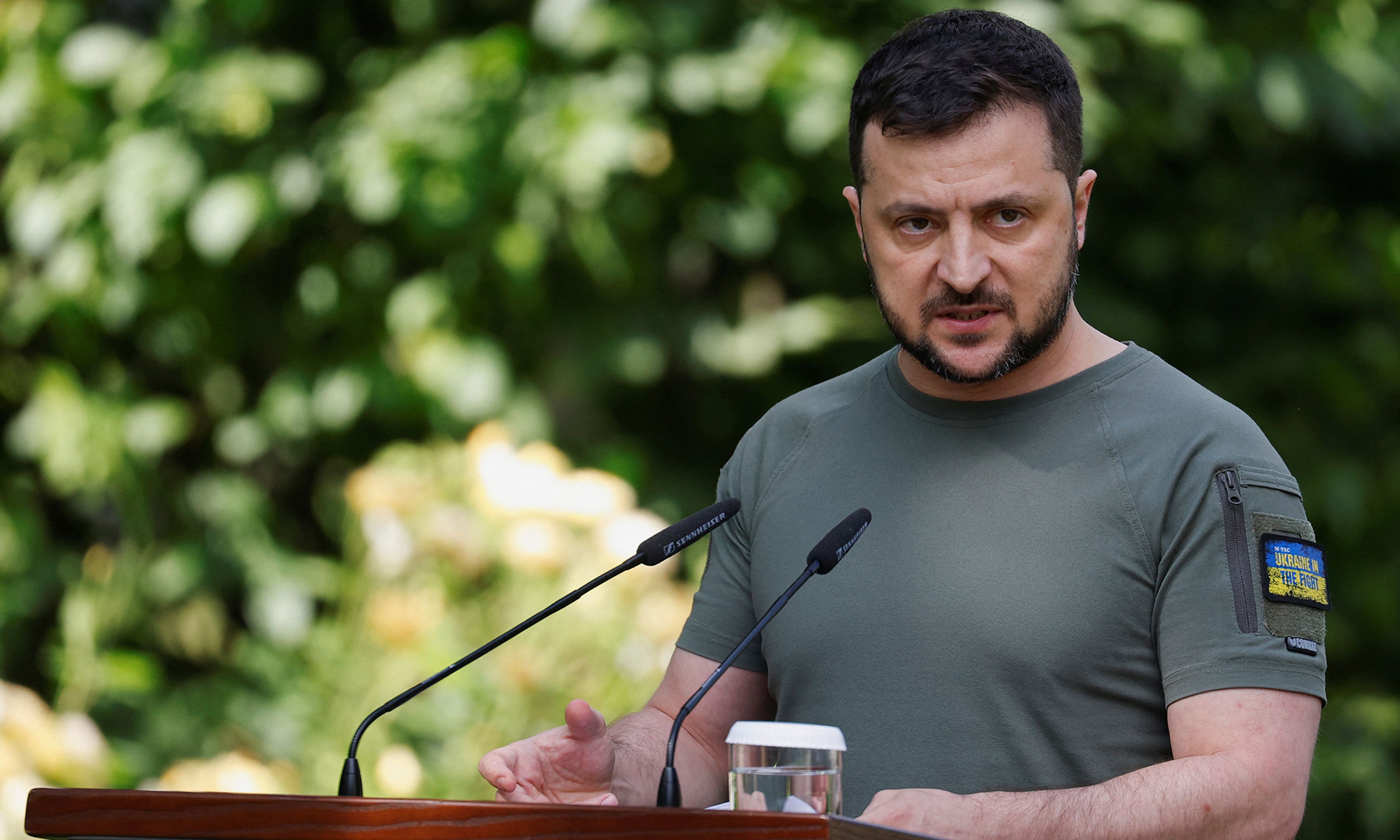
Ukraine moved a step closer towards becoming a member of the European Union on Friday, after the European Commission – the bloc’s executive body – nominated it as a “candidate country.”
Speaking at a press conference announcing the decision after the commission’s Economic and Financial Affairs Council met, Commission President Ursula von der Leyen of Germany said that “we all know that Ukrainians are ready to die for the European perspective, we want them to live with us, the EU”.
Von der Leyen said that Ukraine has a “very robust parliamentary, presidential democracy” and a “very vibrant and active civil society,” suggesting that the country meets the basic criterion for membership, that it must be a democracy. However, she noted that Ukraine’s efforts to target corruption, reduce oligarchic inequality, and strengthen minority rights must be pursued.
“We want to see results on the ground,” she added.
The decision by the Commission also included the nomination of Moldova, which shares a border with Ukraine and Romania, for candidacy. While the Caspian Sea state of Georgia was also considered, Von der Leyen said that it had not been nominated at this time and that “it should only get candidate status once a number of priorities have been addressed.”
The decision is notable given that all three countries considered by the E.U. for membership presently have separatist territory occupied by Russian military forces.
Ukraine was invaded by Russia in February shortly after the Kremlin recognized two separatist outfits in the Donbass Region as independent, with a war between them and Ukraine ongoing.
In Moldova, pockets of the Transnistria territory along the country’s eastern border with Ukraine have declared themselves independent, with a large Russian military presence in them. Georgia, meanwhile, was invaded by Russia in 2008, which currently supports separatist governments in Abkhazia and South Ossetia.
The E.U. has been among the leading opponents of the war in Ukraine and has taken several steps to punish Russia for the invasion. Notably, this has included plans to end Europe’s purchase of Russian oil and gas, the country’s most important economic sector, by 2023.
It also comes after Ukraine sought membership of European institutions as means of a counterweight against pre-war Russian influence in the country. In particular, it had attempted to become a member of the North Atlantic Treaty Organization, the European military alliance led by the United States. However, with Russia’s primary grievance with Ukraine stemming from its NATO aspirations – which it views as an existential threat to its security – it is unlikely that Ukraine will ever join the alliance, a point conceded by Ukrainian President Volodymyr Zelensky.
The nominations made on Friday must be confirmed by the European Council, which comprises the heads of government of all 27 member-states, at its next summit meeting in Brussels on June 23rd. Following a confirmation, the E.U. Commission and the candidate country will begin extensive and protracted negotiations on the terms of accession, which may take as long as a decade.


Comments