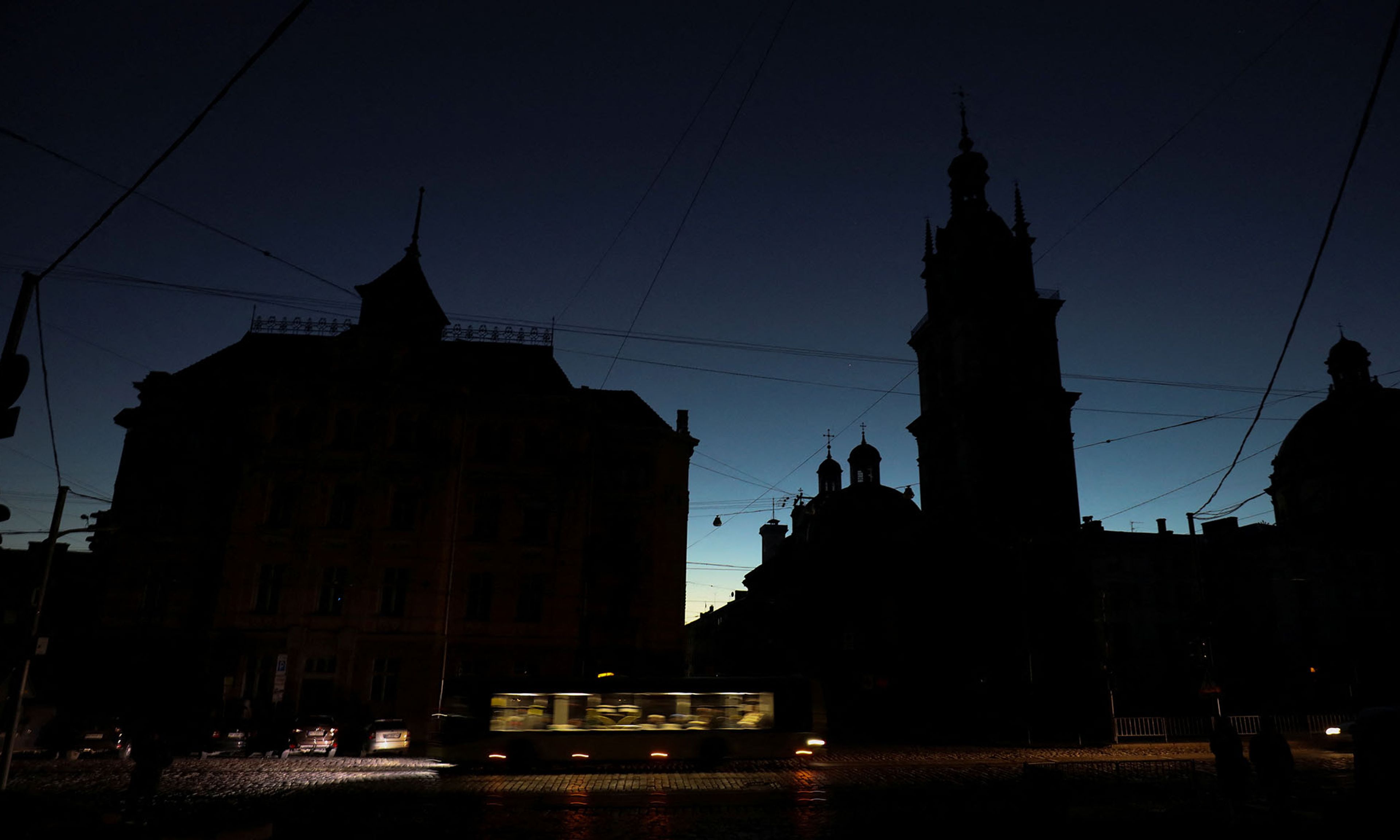
The western Ukrainian city of Lviv, one of the nation’s largest, has been blanketed by blackouts following a Russian missile strike which hit its electrical grid Tuesday. The attack is being felt across the wider city infrastructure and its nearly 750,000 people living there.
Lviv’s mayor, Andriy Sadovyi called it a “serious situation” as four electricity stations were hit by Russian strikes causing water shortages including a lack of hot water. Sadovyi announced that they were making “maximum use” of backup generators but was unable to give a definite timeline as to when power would be returned.
“As a result of the missile strike, 30% of Lviv is temporarily without electricity,” Sadovyi wrote on the Telegram messaging app, according to Reuters.
The strategic importance of Lviv and its proximity to the borders of Poland and Slovakia have made it an ideal place for shelter. The city has been one of the relatively safer regions throughout Russia’s invasion of Ukraine, hosting 150,000 internally displaced Ukrainians as well as more than 11,000 wounded, the BBC reported. As Sadovyi said of the city, “Kyiv is the heart of Ukraine, but Lviv is the soul.”
This comes on the heels of a wide-scale Russian bombardment across Ukraine. One such strike killed 19 people, injuring an additional 105. Local authorities warned people to shelter in doors “for your safety” amid the heightened risk.
The approaching Ukrainian winter has made the issue more worrisome. Authorities in Kyiv have asked people to limit energy consumption with long queues forming at gas stations in some areas. “It is clear now that most of the missiles hit the power systems of different cities,” Deputy Head of the Presidential Office Kyrylo Tymoshenko said.
The coordinated attacks bear the telltale signs of a Russian battle plan, not a spur of the moment decision. “To launch as many missiles as they did today, that’s not something you wake up in the morning and decide to do,” Ben Hodges, a retired U.S. general who commanded American military forces in Europe noted. This sentiment was echoed by Ukrainian military intelligence officials, who said the missile barrage targeting power plants was meant to create “panic among Ukrainians and intimidate the European public.”





Comments