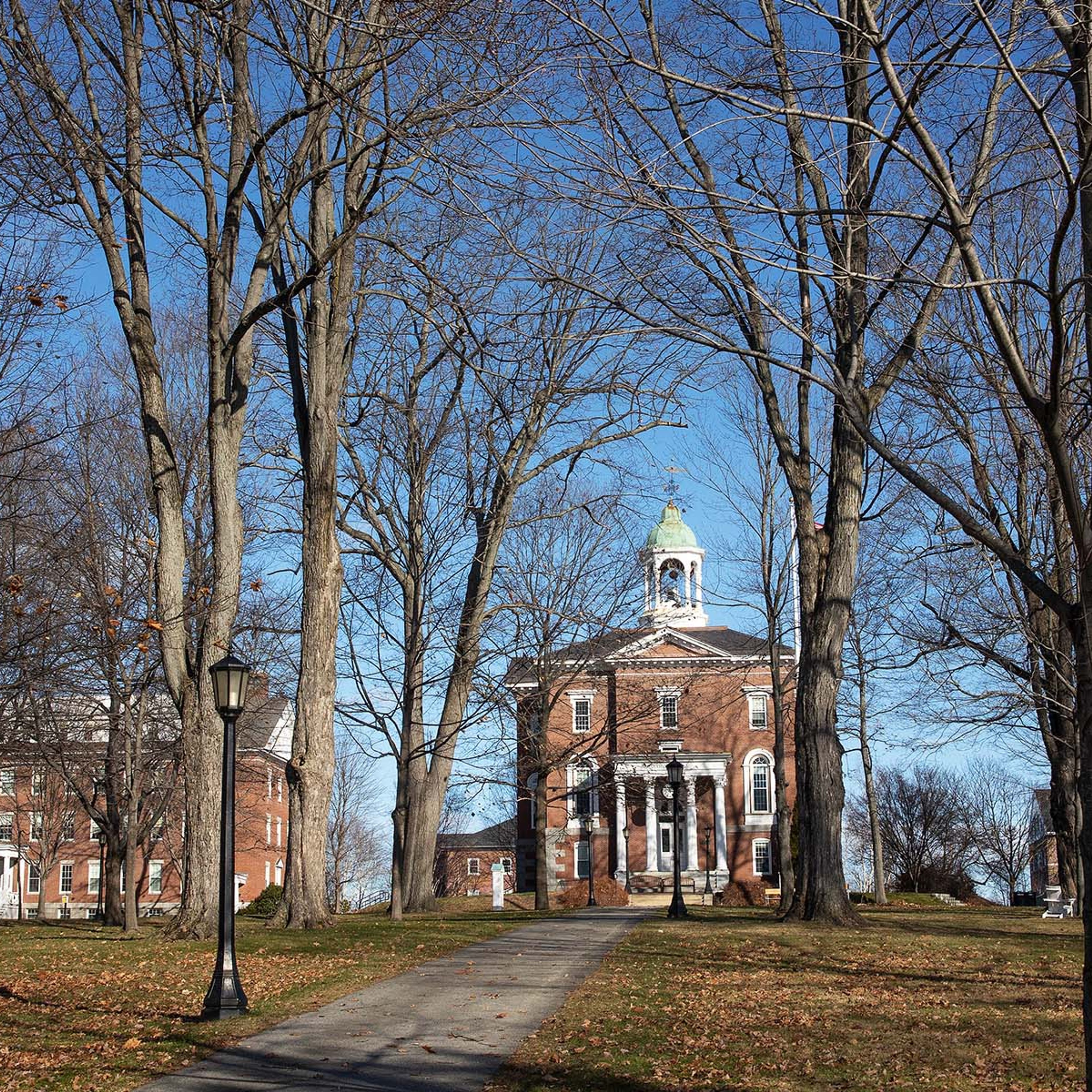
The trail from New York City to Hanover, New Hampshire and Dartmouth College is a long one, fraught at this time of year with decades-old Saabs making the same old haaj to campuses all along the eastern seaboard of these United States. Through the corridors of Connecticut (Yale), Massachusetts (Harvard), and then Vermont (?), the pie-eyed driver is offered intimations innumerable that at the end of those four hundred miles, in the once-barren plains of New Hampshire, where nine out of ten radio stations are called “Cat Country” and where a place called “The Fort” serves pork rolls to Wal-Mart truckers at 3:30 in the morning every morning must lie some northerly Xanadu.
But the ability of Manhattan, Cambridge, New Haven, and all the rest to project their haze into dear old Hanover is always something of a disappointment. The first news item I saw was the endgame of yet another silent internal dust-up over diversity. Dartmouth’s czar of diversity, someone called Ozzie Harris II, has quit, citing “philosophic differences.” Only he wasn’t the czar, per se. He was “Special Assistant to the President for Institutional Diversity and Equity.” He was also “the Director of the Office of Institutional Diversity and Equity.” But now that he is gone, his spot will be filled in the interim by someone whose current job is “director of Equal Opportunity and Affirmative Action.”
None of this would be smirk-worthy if students–or anyone ’round these parts–were given to understand that these sundry diversity officers have some positive quantifiable output. Or that, to take a similar example, our new position of “director of sustainability” has actually caused us to save more than we’ve spent on his salary.
But, speaking generally, there are no public expectations of anyone in a college bureaucracy. That’s because the budgets of many elite schools, mine included, are enrobed in blissful concrete, never to be seen by non-dean eyes. The repercussions are grave, because secret budgeting is what insulates expenditures from the demands of students–of the market. By rights, every scrap of found money should go to the wildly popular economics and government departments so that they can hire additional faculty and erase those class waitlists. But students are deprived of their vote-by-dollar at many private colleges. It is to the credit of the editorial board of Dartmouth’s student newspaper that they recently demanded some degree of transparency in college fiscals, but it is going to take a lot more than an editorial. No one is asking to judge individual professors’ salaries, but for institutions so eager to shuffle off the “corporation” name in favor of “community”, universities ought to let their denizens know where the money goes.



Comments