Jim Rogers, rent-seeking CEO of Duke Energy, writes sensibly in today’s WSJ:
America is falling behind in the race to develop green energy technologies. As John Doerr, a partner at the venture-capital firm Kleiner Perkins Caufield & Byers, recently told a U.S. Senate energy panel, “The United States led the world in the electronics revolution, and we led in biotechnology and the Internet. But we are letting the energy technology revolution speed by us.”
Mr. Doerr noted that the U.S. is home to only one of the top 10 wind turbine producers, only one of the 10 largest photovoltaic solar panel producers, and only two of the top 10 advanced-battery manufacturers.
China is leading this race, and I saw this first hand during a recent trip there. China has doubled its wind-energy capacity each of the past four years, and it is expected to become the world’s largest manufacturer of wind turbines this year. It is already the world’s leading producer of solar panels. The Chinese understand that clean-energy technologies are the key to controlling their energy future.
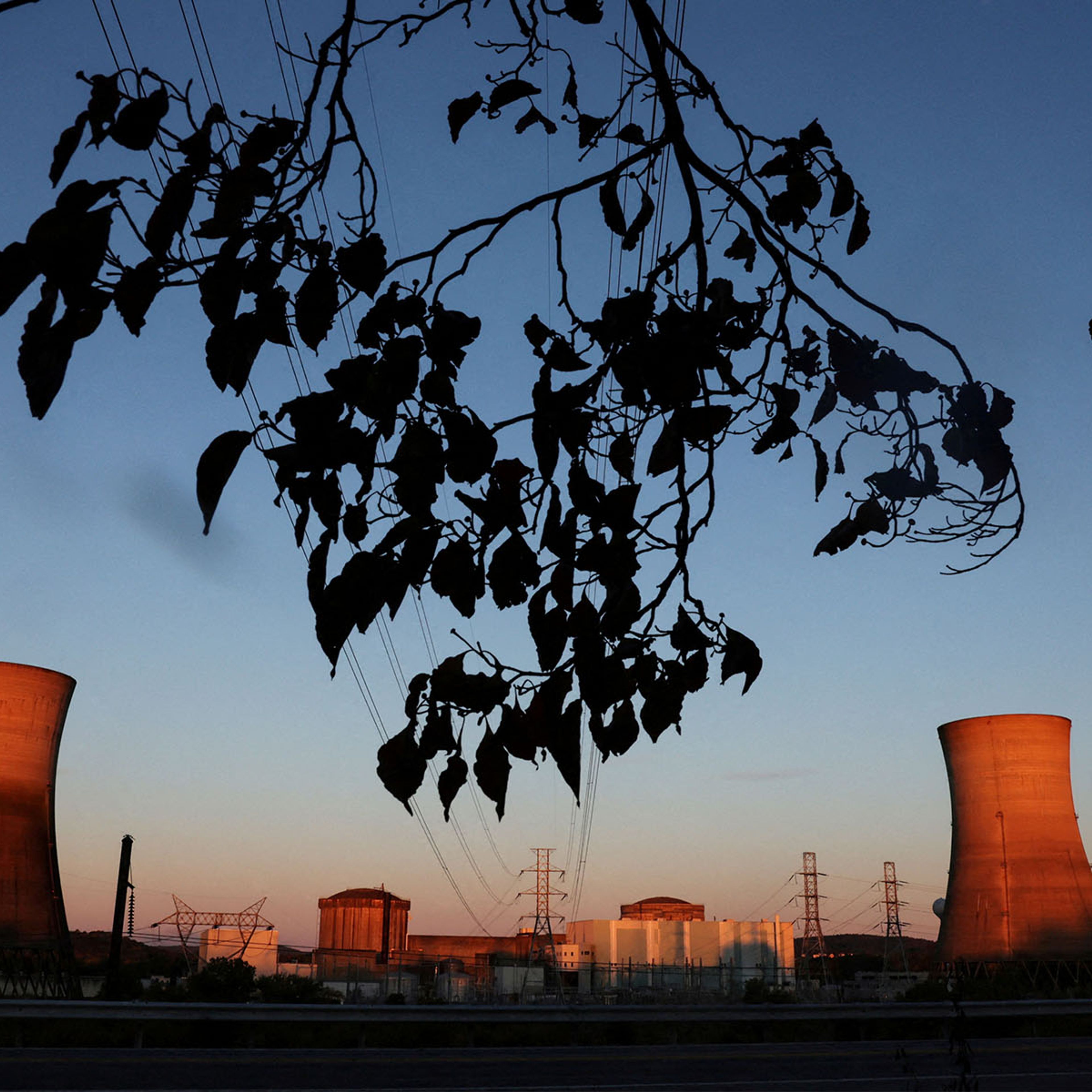
However, while the U.S. may be trailing on renewable energy and storage technology, we are still the world’s largest operator of commercial nuclear power.
We have 104 licensed commercial nuclear reactors — generating about 20% of our electricity and more than 70% of all carbon-free electricity. My company, the North Carolina-based Duke Energy, has seven reactors and we are planning three more. France operates 58 reactors and China has 11, but it is currently building 24 more.
Additionally, the U.S. remains a leader in researching and developing nuclear technologies. Our national labs and private sector know-how provide the resources and the scientific foundation for the U.S. to compete as a global leader in commercial nuclear power.
Our private-sector expertise and interest in new nuclear plants is causing regional energy hubs to sprout up, creating thousands of well-paying jobs. In our headquarters city of Charlotte, N.C., Toshiba America Nuclear Energy recently announced it is adding about 200 new jobs and investing nearly $3 million to establish a nuclear power construction management center.
Also in Charlotte, Siemens Energy is adding over 220 new jobs over the next five years and investing $50 million to grow its local power facility, which employs 780. The Shaw Group located and expanded its 1,000-employee Power Group here. Similar stories are being repeated around the country. This naturally occurring, market-driven expansion of nuclear jobs didn’t have anything to do with stimulus spending.
We must maintain this momentum. Not only is this a major shot in the arm for our local and national economies, but with zero greenhouse gas emissions, nuclear power is tailor-made for addressing climate change. This is critical as Congress prepares to put a price on carbon.
The rest here.




Comments