Tomorrow, former World Bank economist Sir Nicholas Stern will testify before the House Energy and Commerce Committee. His function is to reprise and update the alarm he sounded by claiming that it was simply too costly to not quickly adopt that GHG mitigation agenda [The Stern Review of the Economics of Climate Change (Stern et al., 2006)]. This is the “cost of inaction” line around which Lieberman-Warner champions plan to build their next assault.
That claim is facially absurd, as Iain Murray details here, with the assistance of a devastating chart on page 4:
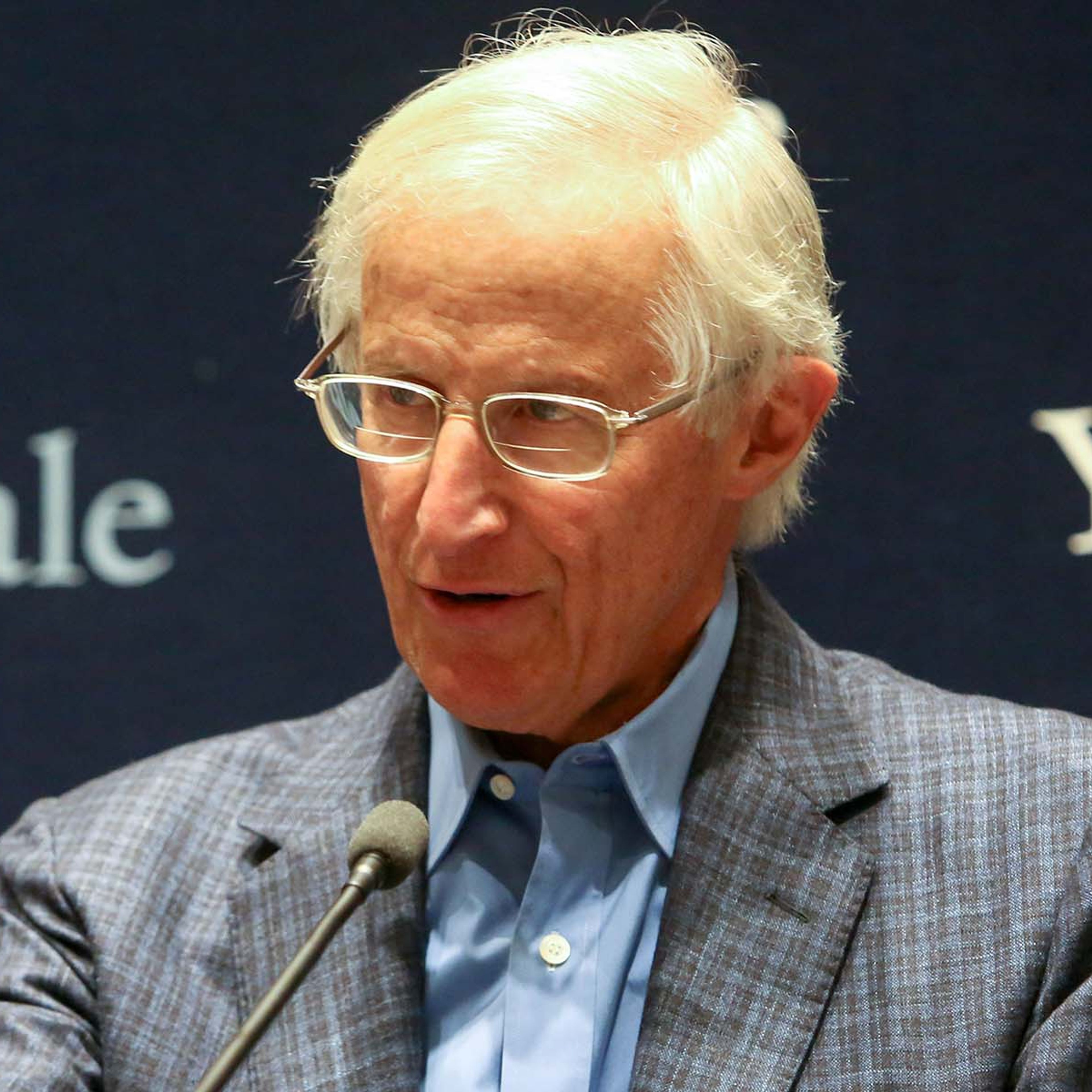
Between now and testimony-time I will post a few things to help one recall Stern’s rather public defrocking. First, recall the work of Yale University’s William Nordhaus – an adherent of the catastrophic man-made global warming theory, who has been estimating the economic costs of climate change since the 1970s. Nordhaus has a long record of explaining how policies proposed to address AGW would cost two or even three times the benefits they would theoretically achieve.
After reviewing Stern’s paper, Nordhaus wrote that Stern’s dramatic new conclusions were “new” in that they represented his having invented, ad hoc, a radical new way of treating the present valuation of future costs – that is, his claims are “depend[ent] on an extreme view of economic discounting.”
Nordhaus notes that “the Stern Review embraces traditional economic techniques,” up to a point, then veers off into its own methods which were necessary to produce its outcome. This “reasoning has questionable foundations in terms of its ethical assumptions and also leads to economic results that are inconsistent with market data.”
Economist Robert Murphy, author of The Politically Incorrect Guide to Capitalism, also notes in an email how Stern simply “picks extreme values for the constituent parameters (in a stripped down model) in order to get more extreme policy recommendations than most other economists. [In other words], it’s not that Stern is modeling something different, he’s just plugging in extreme values into the same approach that other economists use . . . and Nordhaus gives numerical demonstrations of the absurdity of Stern’s assumptions – e.g., we would be suffering such-and-such GDP loss now with miniscule gains, but such-and-such benefits in hundreds of years.”
This means that Stern’s ominous-sounding claim, that we would risk between 5 and 20 percent of global GDP at the end of the century if we “did nothing,” is a mythical scenario. For better or worse, no western government is “doing nothing” about emissions. Stern’s scare tactic is actually spin for “instead of being 10 times as rich as we are today, we might only be 8 to 9.5 times as rich.” Most brokers I’ve met would be lucky to do so well.




Comments