
Scot Bertram is the co-host of the Political Beats podcast at National Review. He also serves as a lecturer in journalism and general manager of the student-run radio station at Hillsdale College.
Political Beats
Scot Bertram and Jeff Blehar ask guests from the world of politics about their musical passions.
Episode 20: Guy Benson / Billy Joel
Introducing the Band
Your hosts Scot Bertram (@ScotBertram) and Jeff Blehar (@EsotericCD) with guest Guy Benson, political editor of Townhall.com and co-author of End Of Discussion. Follow Guy on Twitter at @guypbenson and buy his book here.
Guy’s Musical Pick: Billy Joel
The gang advises you to never take any s**t from anybody as they tackle the pride of Long Island, Mr. William Martin Joel. Guy recounts his concert introduction to Joel, back when he was touring with Elton John, and compares Joel favorably as a pop musician to everything on the radio today. Jeff talks about a personal progression familiar to musical hipsters: loving Joel as a kid listening to his dad’s copy of Greatest Hits, Vol. I & II, learning to ‘hate’ him later in life once he realized that critical rectitude demanded it, and then finally coming back around in his adult years, certain enough about his tastes to now freely acknowledge how good Billy was capable of being.
Sing us a Song, Piano Man: Billy Joel’s Early Years, From Cold Spring Harbor to Streetlife Serenade
That said, Jeff doesn’t spare any vitriol when it comes to Billy Joel’s early era: sure, Atilla is a joke (yes, this podcast is so thorough that we mention Atilla), yes, Cold Spring Harbor is a misproduced slab of underdeveloped piano ballads, but it’s Piano Man he truly reserves his hatred for. Jeff hates “Piano Man” as only an ex-piano bar musician can, having been forced to play it night after night, but spits authentic white-hot rage at the tuneless drug epic “Captain Jack,” where he is joined by Scot, who learned to loathe it through his experience as a DJ working the overnight shift, dealing with drunken phone-in requests. There are good songs on Piano Man, however; Scot and Jeff praise “Travelin’ Prayer,” Elton John cop though it is, and Guy is willing to set aside the historical travesties of the lyric in “The Ballad Of Billy The Kid” to focus on the greatness of its music.
Joel’s improvement would be rapid from here on, and his third LP Streetlife Serenade (the last of his Los Angeles “exile” period) is a signpost on the way. Jeff loves the vicious snark of “The Entertainer” (and love the inappropriate Rick Wakeman-esque synthesizers even more), meanwhile Guy’s favorite moment is the purely instrumental “Root Beer Rag,” an opportunity for Joel to flash his delightful keyboard chops.
Say Goodbye To Hollywood: Billy Joel Returns to New York and Makes his Name With Turnstiles and The Stranger
Turnstiles, Joel’s 1976 album that marked his return to New York City from Los Angeles, was a massive commercial flop. None of the gang care, however: despite slightly flawed production, Guy, Scot and Jeff all agree that this is Billy Joel’s first truly worthy album. Jeff adores the Phil Spector/”Be My Baby” tribute of “Say Goodbye To Hollywood” (and thinks of this record as Joel’s answer to Springsteen’s The Wild, The Innocent & The E Street Shuffle). Scot and Guy rave about the fan favorite “Summer, Highland Falls,” and everyone loves the quasi-apocalyptic tribute to a troubled metropolis in “Miami 2017 (Seen The Lights Go Out On Broadway).” Guy singles “Prelude” but reserves the most love for “New York State Of Mind,” one he always listens to whenever he’s flying back to his old home in the New York area.
If Turnstiles was an album of great songs hampered by indifferent production, The Stranger (1977) solved all of those problems, becoming Joel’s best-selling and most critically acclaimed album. As Scot notes, this is basically a greatest hits LP all of its own, packed with songs that you know by heart. From “Movin’ Out” all the way to “Scenes From An Italian Restaurant” (the third part of which Jeff identifies as “the Charlie Brown theme song” even though it’s really about Brenda & Eddie), you know almost all of these tracks already. Guy singles out “Only The Good Die Young” as his all-time favorite BJ song, while Jeff salutes the deceptively anti-romantic “She’s Always A Woman.”
Billy Joel, King Of Pop: From 52nd Street to An Innocent Man
Billy Joel had already demonstrated his ability to write sprawling piano epics in the vein of “Scenes From An Italian Restaurant” or thoughtful cameos like “Summer, Highland Falls.” But it was on 52nd Street (1978) and Glass Houses (1980) he proved that he could be a nonpareil McCartneyesque hitmaking melodic craftsman as well. Jeff singles out 52nd Street as his favorite Joel album, and starts in by praising the joyously snotty class-attack of “Big Shot.” Scot thinks “My Life” is one of those songs that defines the Sound Of The Seventies (Jeff is merely fascinated with its Beatlesque middle eight), while Guy says that the jazzy “Zanzibar” is a song that just makes him want to have a martini every time is comes on. Beyond the hits, there are so many other hidden delights: the ominous nasty-woman strut of “Stiletto,” the Righteous Brothers pomp of “Until The Night,” etc. Joel had clearly turned a corner.
Just what kind of corner that was became clearer on Glass Houses (1980). Usually pitched as Billy Joel’s “rock” album, Glass Houses is more properly understood as the place where he refined his pop sensibilities to a diamond-hard edge: Joel sounds equally adept on bar-rockers like “You May Be Right” (Scot’s favorite) retro jabs like “It’s Still Rock And Roll” and gently gliding McCartney pop numbers like “Don’t Ask Me Why” (Jeff’s favorite). But the more obscure numbers here also display a confidence and attitude missing from any of Joel’s previous records (e.g. the phone sex ode of “Sometimes A Fantasy” or “Sleeping With The Television On”).
At this point, the gang takes a moment to praise Joel’s surprisingly essential live album Songs In The Attic (1981), which is as far from your standard profit-taking live release as can be imagined. Instead of “greatest hits live” rehash, Songs In The Attic is a painstakingly curated selection of Joel’s “greatest obscurities” – the non-hit material from his early pre-Stranger career that had great potential but fell short in terms of recording. In a weird way, this might actually be one of Billy Joel’s most essential albums (Guy absolutely thinks so, for one), and must be heard for no other reason than the electrifying, definitive rendition of “Miami 2017″ that opens it.
Back in the studio world, however, Billy Joel was pushing full-steam-ahead into the 1980s, with all the sonic implications that entailed, on The Nylon Curtain (1982). Everyone in the gang loves “Pressure,” despite (heck, maybe even because of) its Yes-like 90125-like synth-heavy production sheen. Guy singles out its lyrics as some of Joel’s most incisive, and while opinions differ on the text of “Allentown” everyone still loves its music. But yes, the gang all agrees that Billy got way out over his skis on the cringeworthy “Goodnight Saigon,” seemingly written he rented a copy of The Deer Hunter (Guy thinks it plays better live, to be fair).
After Joel’s first step into modern production techniques on The Nylon Curtain, he went straight on Back To The Future with the defiantly retro An Innocent Man (1983), which — either ironically, or perfectly predictably, depending on your perspective — became one of his most iconic albums. Half of these songs were massive hits, and yet each of them was a late ’50s/early ’60s throwback move, Jeff will fistfight you to defend the virtue of “Uptown Girl” (and Guy talks about how fun it is to hear it concert with the entire crowd “whoa-oh-oh-OH-OOH-OH”-ing), Scot loves the Motown soul of “Tell Her About It,” and you’d have to be a pulseless corpse not to at least derive some enjoyment from the 6-part Billy/Billy/Billy/Billy/Billy and Billy ensemble of “The Longest Time.”
The Eighties run Billy Joel Down and Take Over his Music: from The Bridge to River Of Dreams
The late ’80s were not kind to Billy Joel from a songwriting perspective in retrospect, although commercially he continued to sail along untroubled. The gang tackles The Bridge (1986) and Storm Front (1989) in tandem, because both of them share the same production hallmarks: big booming drums, processed guitars, synth-beds, and a general desiccated soullessness that infected all but the best Top 40 music of that era. Among those that escape the Eighties Reaper, in Jeff’s opinion at least, are “Baby Grand” (Joel’s majestic duet with Ray Charles) from The Bridge, even though he admits that songs he used to like (“This Is The Time,” “A Matter Of Trust”) now tend to grate.
When it comes to Storm Front, Jeff admits that “We Didn’t Start The Fire” is a guilty pleasure on the level of Starship’s “We Built This City” but hey: #YOLO. Jeff and Guy are far more capable of unironically defending the legitimately great “I Go To Extremes,” and Guy likes “Storm Front” without being capable of explaining why. But beyond that this is an album that was hugely popular in its time yet has aged very poorly indeed, sonically. Scot likes “And So It Goes” well enough as a dirge, at least.
Scot considers Billy Joel’s swansong River Of Dreams (1992) to be something of a recovery for him, but Jeff isn’t that sure. Scot praises “All About Soul,” Joel’s last major hit single (Jeff thinks it’s too operatic). Guy loves the title track, particularly as a live feature when it breaks midway through into a random hit by some other band before returning home. There’s only one song on this record that Jeff cares about, and (perhaps unexpectedly) he thinks it may be Billy Joel’s single finest song: “Lullabye,” as succinct and beautifully moving a song about death (as explained to a young child) as anyone will ever write.
Finale
Guy, Scot, and Jeff each name their two key albums and five key songs by Billy Joel.
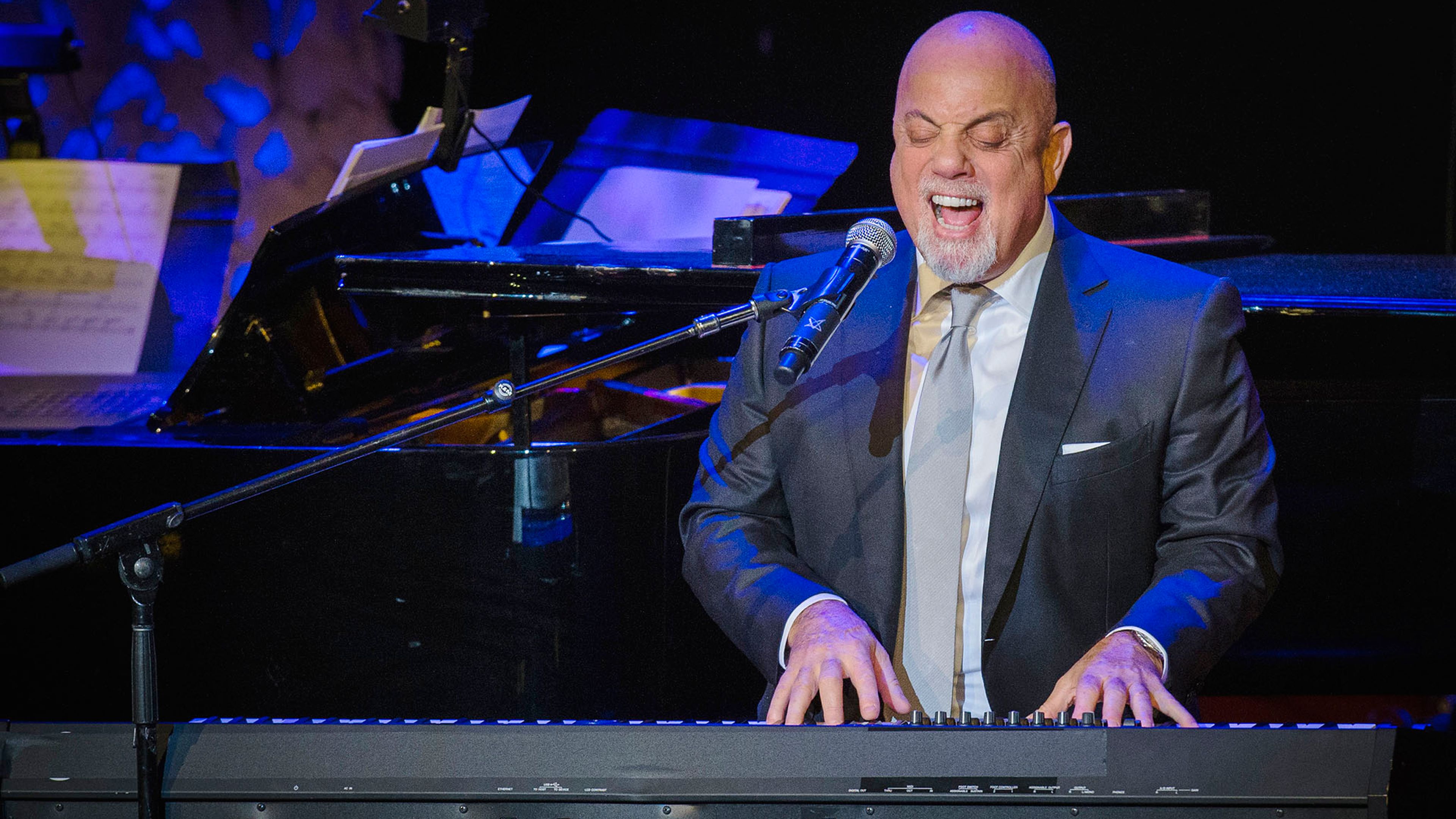
Pictured: Joel performs after accepting an award at the American Society of Composers, Authors and Publishers Centennial Awards in New York, November 17, 2014. (Lucas Jackson/Reuters)
Jeffrey Blehar is a National Review staff writer living in Chicago. He is also the co-host of National Review’s Political Beats podcast, which explores the great music of the modern era with guests from the political world happy to find something non-political to talk about.
Comments
On “Episode 20: Guy Benson / Billy Joel”