So now Donald Trump has gone too far. Reasonable people can disagree on Carly’s face or whether Jeb is a reliable cure for insomnia, but Ben Carson is better than an okay doctor. The question remains about whether being the greatest pediatric neurosurgeon ever qualifies you to be president.
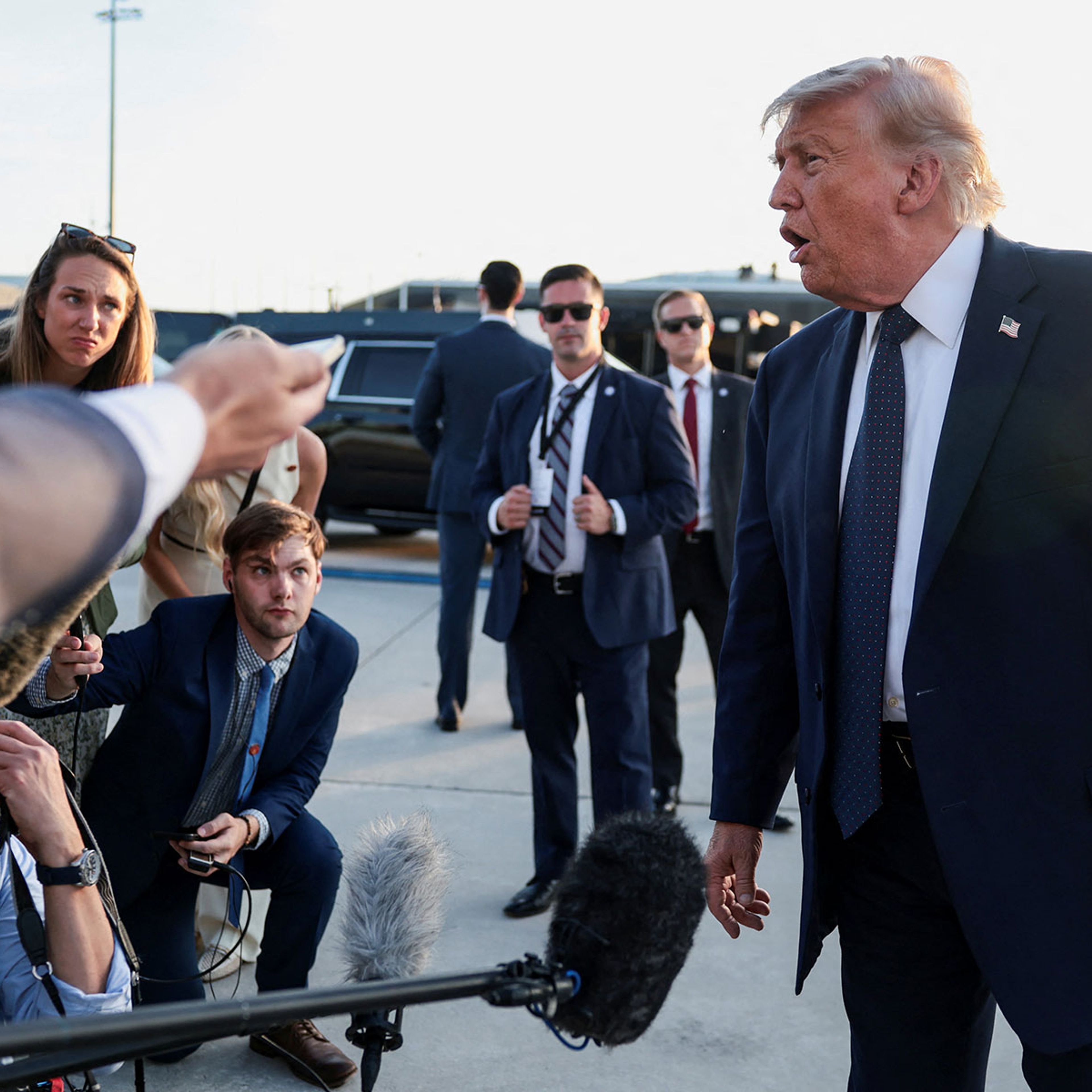
I’m told by our friend Henry Olsen that the group of Republicans most hostile to Trump are those with advanced degrees. And their attacks on Trump continue to be, in the words of Reason magazine, “vituperative and somewhat entertaining.” Those words, of course, apply to Trump too. Now “the conservative anti-Trump club,” which includes almost all leading Republican intellectuals, is strangely ineffective. Trump’s shot against the WSJ’s unremitting hostility to him ends with ”Who cares?” So far he doesn’t have that much reason to care.
I’ll join that club if they’ll have me, but I might start my own “tone it down” club. Stage 2, during which the most savvy authors learn from — rather than have contempt for — Trump seems to have about run its course. But I was joking when I said that stage 3 is where everyone caves and embraces Trumpism. Stage 3, whatever it is, will surprise me.
But what I really want to tell is tell you about is two opportunities: The board of editors of Perspectives on Political Science is on the lookout for disruptive and innovative symposium ideas to follow up the two-part labor of love edited by Peter Minowitz on esotericism and featuring many distinguished scholars from various continents, as well as our favorite Silicon Valley billionaire Peter Thiel and Mr. Esotericism himself, Arthur Melzer. Please contact me with what you have in mind. PPS will soon have a new look and more space to continue to be America’s best journal about the intersections at political philosophy, public policy, popular culutre, and “real life” generally.
And I’m also editing a new series for St. Augustine’s Press entitled Dissident Thought Today. It’s not about Solzhenitsyn, Havel, and the other courageous anti-Communists, but about the leading authentically countercultural currents in thought today. The books should be relatively short, written for that elusive “wider audience,” and somehow both detached and partisan in the best possible senses. They don’t have to be about politics in the narrow sense; other welcome topics include literature, culture both pop and high, education, religion, and so forth and so on. Again, contact me to know more. The first two books in the series will be by Patrick Deneen and me.





Comments