
Key Takeaways
- Variety’s rankings of “top” celebrities reveal how political preferences matter more than artistic achievement to Hollywood’s trade press.
- It’s become a devious habit for Variety to sneak political commentary into review opinions.
Share this story
Tom Cruise poses for a picture at the premiere of the Mission: Impossible – The Final Reckoning in Mexico City, Mexico, May 20, 2025.
Henry Romero/Reuters
Nobody actually trusts celebrities anymore, yet, thanks to the politicization of show-business trade journalism, Variety published a special feature titled “The 100 Greatest Movie Stars of All Time.” Trivial, yet revealing, Variety’s in-house survey might feature the most factitious cinema assessments since 2022, when Sight and Sound rigged its no-longer-respected decadal poll.
Note the folly in Variety’s introduction: “To choose the 100 Greatest Movie Stars, we had to use our heads, our hearts, our guts, our fantasy lives. We were looking for the stars who magnetize us, the ones who awe and overpower us and make us swoon. The ones we wish we were, and the ones who inspire the ultimate movie-star thought: ‘That’s who I am.’”
Instead of a traditional trade-paper report that emphasizes box-office grosses, studio budgets, or guild and production news, perhaps as a way of understanding the new crises facing Hollywood production, Variety ventures into celebrity idolization. The listicle uses questionable methods to assess superficial audience appreciation, though without doing broad cultural canvassing.
The most common aspect of film-going — the affection that fans feel toward favored performers — is demeaned by being subjected to arbitrary ranking. The top ten are mostly usual suspects: Marilyn Monroe, Humphrey Bogart, Charlie Chaplin, Jack Nicholson, Katharine Hepburn, Sidney Poitier, Marlon Brando, Tom Cruise, Toshiro Mifune, Barbra Streisand.
The ranking was assembled by Variety critics Owen Gleiberman, Guy Lodge, Daniel D’Addario, Alison Herman, and Aramide Tinubu, each of whom authored separate commentaries. The 100 entries are notable for actor descriptions based on an assessment of the actor’s charisma, or “rizz,” as the slang term has it. In these predictable blurbs, such “rizz” is made political and risible.
This unprofessionalism is most apparent in Variety’s entry on Marlene Dietrich, ranked No. 43: “Her striking independence extended off-camera to her outspoken antifascist convictions.” It’s become a devious habit for Variety to sneak political commentary into review opinions. Without examining Dietrich’s still-fascinating image, the blurb on her ignores how her Josef von Sternberg films transcended politics; instead, it merely prioritizes trite, trendy social “significance.” It shows Variety’s tendency toward hidden-agenda journalism in capsule form.
Throughout this roster of once-famous names, Variety introduces Hollywood stars to contemporary readers who might be unfamiliar with the circumstances of their fame. For example: Fred Astaire and Ginger Rogers are mushed together at No. 41, ignoring their particular distinctiveness in favor of glib stereotyping.
A hipster version of recency bias is apparent in ranking Jack Nicholson as No. 4 but Al Pacino as No. 30, even though Dog Day Afternoon has aged better than One Flew Over the Cuckoo’s Nest. Yet neither of those anxiety stars shines brighter than James Cagney (No. 36), and both are arguably less impressive than Spencer Tracy (No. 34), whose range from urban shark to mid-century sage is simply unfamiliar to the Millennial culture vultures.
Citing Tom Cruise as No. 8 for Top Gun but not Risky Business forgets his zeitgeist acumen that is as appealing as his ageless thigh-flexing dance moves. This is typical of how post-journalism Variety is more condescending than astute, as when it cited Julia Roberts as No. 13 for Pretty Woman despite the reigning contemporary sex-worker cynicism of Anora.
Variety’s antiquated liberal bias also explains why Barbra Streisand is No. 10, a commendation more for her political posturing than her two career markers (Funny Girl and The Way We Were). She has less popular significance than, say, John Wayne, Greta Garbo, Bette Davis, Vivien Leigh, Elizabeth Taylor, or James Dean.
Sidney Poitier (No. 6) and Toshiro Mifune (No. 9) illustrate mere tokenism to force Diversity Inclusion Equity (D.I.E.) onto movie memorization — an unignorable political gesture denied to Bruce Lee, Ingrid Bergman, and the unforgiven symbol of white American maleness, John Wayne.
After Quentin Tarantino’s astute observation that Marvel Comics typecasting has eradicated the movie star from public consciousness, Variety’s attempt to assert the significance of the no-longer-relevant movie star is both unrealistic and futile. Such a list violates the purpose of a fact- and finance-based journalism. The explanation is sheer narcissism when trade-paper writers flaunt political prejudice over their cultural knowledge. It turns a publication once based on reporting into a fan magazine; Variety, formerly the “showbiz bible,” is no more than Entertainment Weakly.
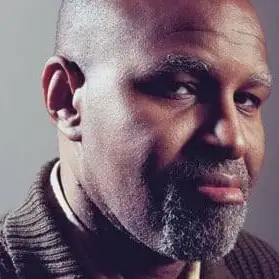
About the Author
Armond White is National Review’s culture critic and the author of New Position: The Prince Chronicles and Make Spielberg Great Again: The Steven Spielberg Chronicles.
Advertisement
Advertisement

Enjoy this article on us.
Create a free account to keep reading.






Comments
On “The Fault in Variety’s Stars”