Tom Vander Ark of edReformer anticipates that alternatives to conventional school-based P-12 instruction will experience rapid growth over the next decade:
With microschools, an extension of friends and family early learning and care, learning at home supported by full or part time online enrollment in an online school or at least significant use of informal online learning resources could approach 5 million students or 15% of the P-12 population early by 2020.
Interesting, he does not see most of the growth coming from homeschooling, which he predicts will grow from 3.1% to 4.9%. Rather, he sees the bulk of the growth in “blended-learning environments,” as described by Michael Horn in a recent report from the Innosight Institute:
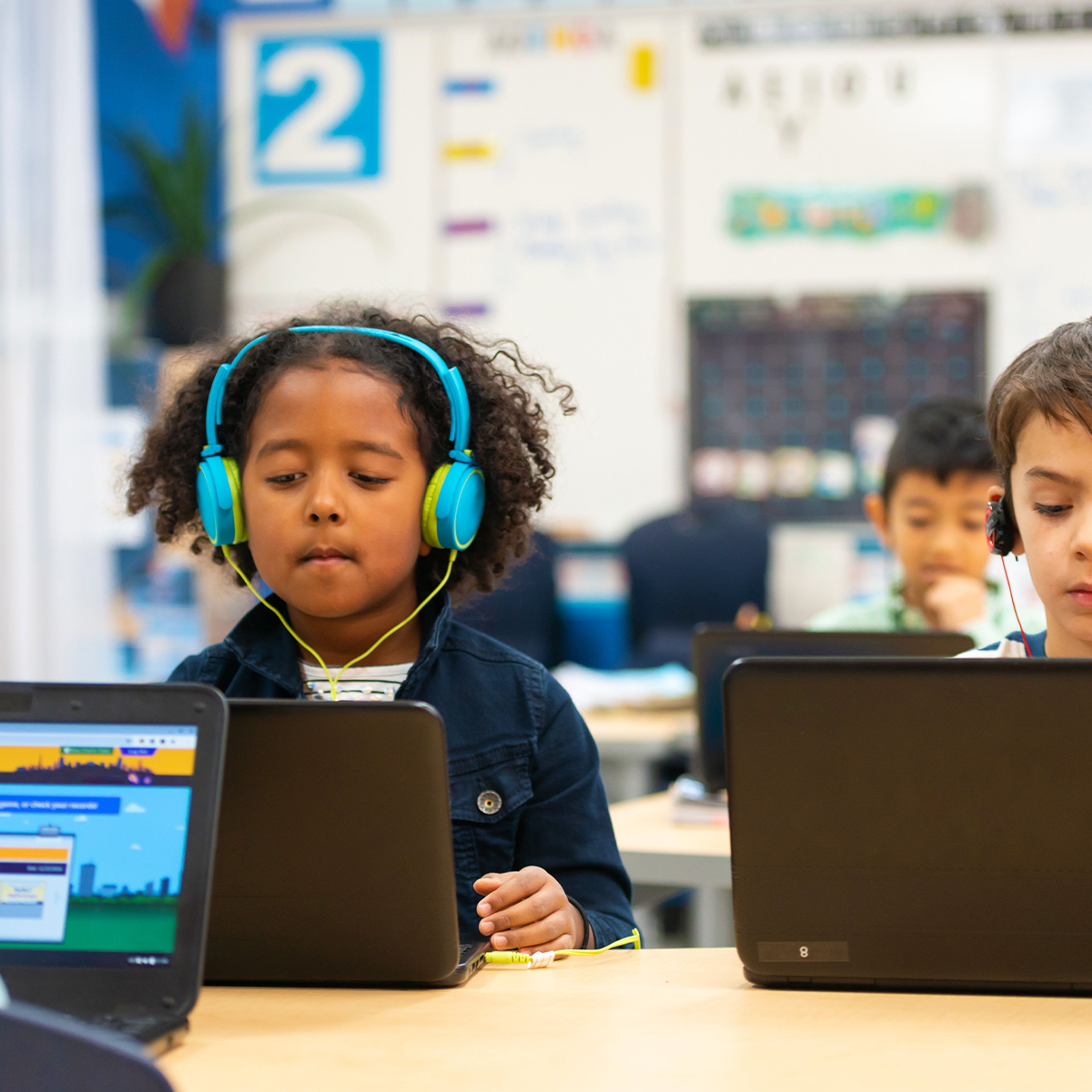
Online learning is sweeping across America. In the year 2000, roughly 45,000 K–12 students took an online course. In 2009, more than 3 million K–12 students did. What was originally a distance learning phenomenon no longer is. Most of the growth is occurring in blended-learning environments, in which students learn online in an adult-supervised environment at least part of the time. As this happens, online learning has the potential to transform America’s education system by serving as the backbone of a system that offers more personalized learning approaches for all students.
Horn argues that budget pressures will play a role in spurring the adoption of blended-learning strategies:
In classic disruptive fashion, online learning is expanding beyond distance learning. Educators and entrepreneurs are increasingly creating blended-learning environments—where rather than doing the online learning at a distance, students learn online in an adult-supervised school environment for at least part of the time. At the outset, this occurred in areas of nonconsumption, such as credit-recovery labs and dropout-recovery schools. A small but growing number of schools, however, are now starting to introduce blended learning into their core programming for mainstream students.
Bleak budgets coupled with looming teacher shortages amidst an increasing demand for results are accelerating the growth of online learning into blended environments.
This blended approach won’t be seen as a first-best at first, but it will get better faster than the alternatives. Vander Ark explains why he predicts extremely rapid growth in this space:
I’m projecting 50% growth rates for most of a decade, that may be optimistic, but it’s based on four factors:
1) most states will help orchestrate improved student Internet access to support a shift to online assessment and a shift to digital content.
2) higher expectations of real college and career ready standards
3) an extended “new normal” period of flat or shrinking resources
4) expanding student demand for learning options—both formal and informal
5) expanding number of states that support choice to the course and multiple providers
Just as the Great Depression proved “the most technologically progressive decade” of the last century, one wonders if straitened public sector budgets will encourage the adoption of innovative educational tools.
(Thanks to Courtney Knapp for the link.)





Comments