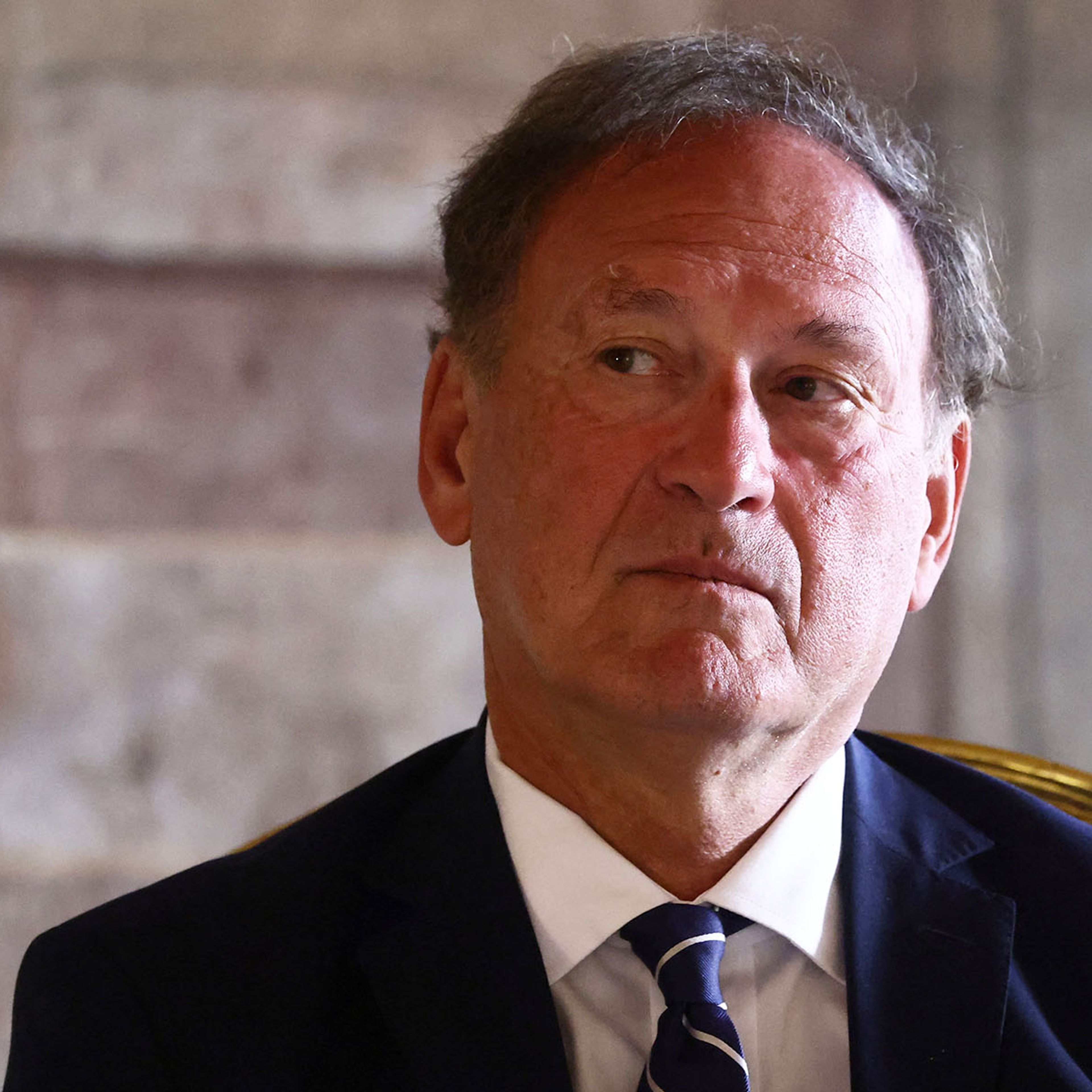
There’s a lot to talk about — expect a flood of blog posts in the near future — but I just want to say that if Samuel Alito really did mouth “not true” while listening to President Obama’s characterization of Citizens United, I’m with him. This was a genuine, entirely understandable response, and while I’m guessing he’s slightly embarrassed by the “incident,” if you can call it that, it is the president who should feel embarrassed. Politico’s Kasie Hunt and Martin Kady II have more. The following is the passage that Mr. Alito found objectionable.
“Last week, the Supreme Court reversed a century of law to open the floodgates for special interests – including foreign corporations – to spend without limit in our elections,” Obama said. “Well I don’t think American elections should be bankrolled by America’s most powerful interests, or worse, by foreign entities. They should be decided by the American people, and that’s why I’m urging Democrats and Republicans to pass a bill that helps to right this wrong.”
I actually agree that our elections shouldn’t in an ideal world be bankrolled by America’s most powerful interests. Yet I understand that public employees, both as individuals and in organized groups, enjoy First Amendment protections under our Constitution, and I appreciate that tampering with this arrangement could represent a grave danger to our freedoms.
I’m reminded of Ross’s excellent column from Monday, in which he praised one of my favorite books on government. Basically, the “special interests” are us.
Once you’ve enticed Big Pharma and Big Insurance inside the tent, you still have to contend with everyone else who might stand to lose from health care reform. This means seniors who get Medicare and hospitals that accept it. It means patients and doctors in states that spend “too much” on health care, according to the Office of Management and Budget, and who would bear the brunt of cost controls. It means upper-income taxpayers who object to being singled out for tax increases. It means union members who like the current health-insurance tax deduction exactly as it is. And judging by last week’s election, it means the citizens of Massachusetts, who already pay for semi-universal health care and don’t see why they should subsidize Mississippi and Montana as well. Chances are that you belong to at least one of these “special” interest groups.
Rather than offer a thoughtful discussion of the dilemmas facing a constitutional democracy, the president offered a crude, simplistic portrait that, for most State of the Union viewers, will be the sum total of everything they hear about the State of the Union.
Fortunately, voters have grown skeptical of the promises made by presidents. Some see this as a deficiency on the part of the public that badly needs to be remedied. I’m not so sure.
It could be that I’m overreacting. But from Mr. Alito’s perspective, I can see how he might think that his integrity had been impugned. Granted, conservatives strongly believe that the Supreme Court has overreached in many instances, not least when it comes to legislation relating to the intimate sphere. I have to assume that conservative presidents have had harsh words for decisions that I would find equally distasteful. I like to think that I’d have the same reaction.
In light of the president’s concern regarding the power of U.S. corporations and “foreign entities,” he might consider not channeling vast resources in their direction through the stimulus and a variety of other bailouts and “public investment programs.” He could also call for the elimination of various tax provisions that help entrench and enrich corporate interests. Let’s hope this is a subject President Obama tackles in the next speech.





Comments