
On the menu today: Tackling the question of whether every populist leader is destined to rise to power on pledges to fight corruption, and then once elected, turn around and engage in all kinds of abuses of power and corruption themselves. Separately, a couple of cabinet officials have attended a lot of college football games lately. Read on.
Corruption for Me but Not for Thee
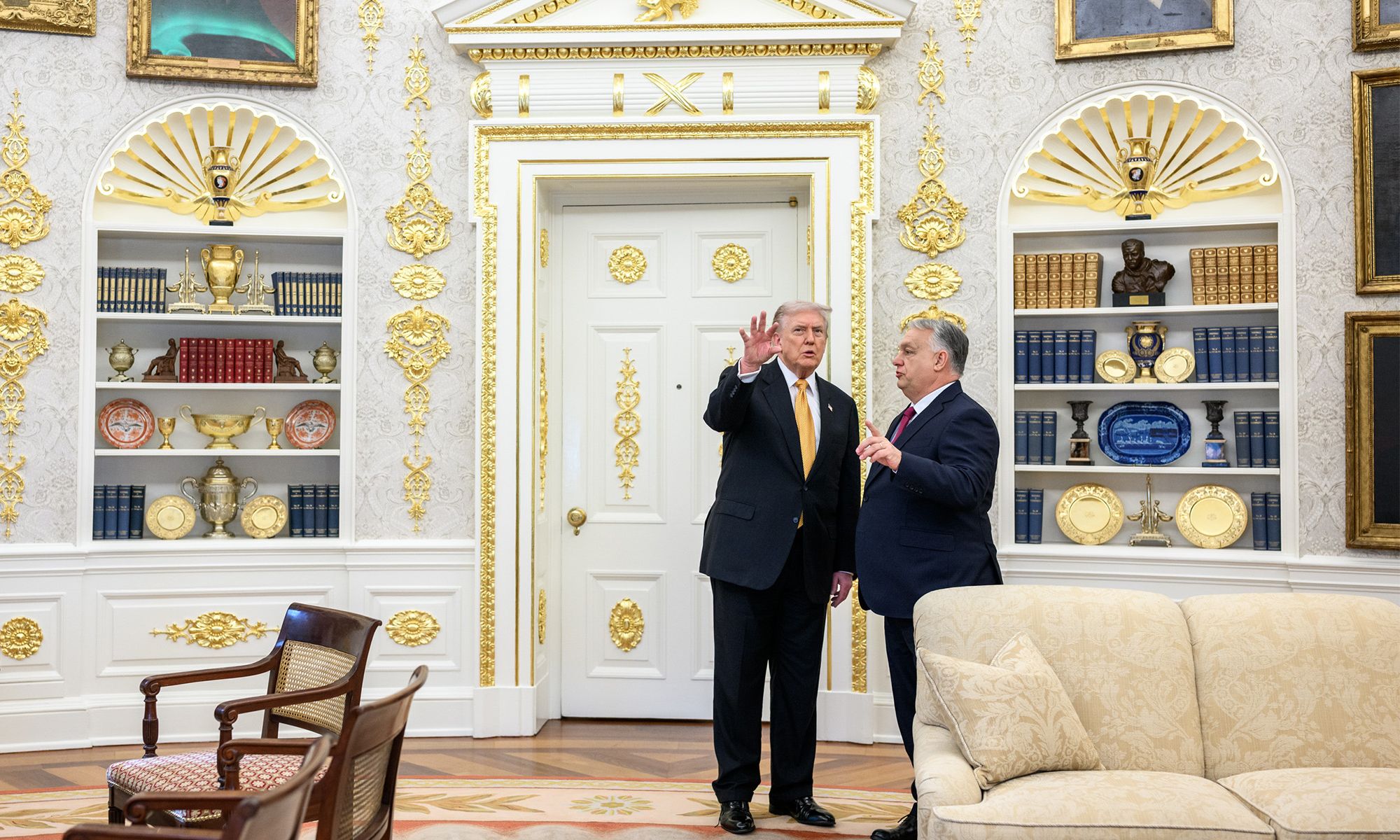
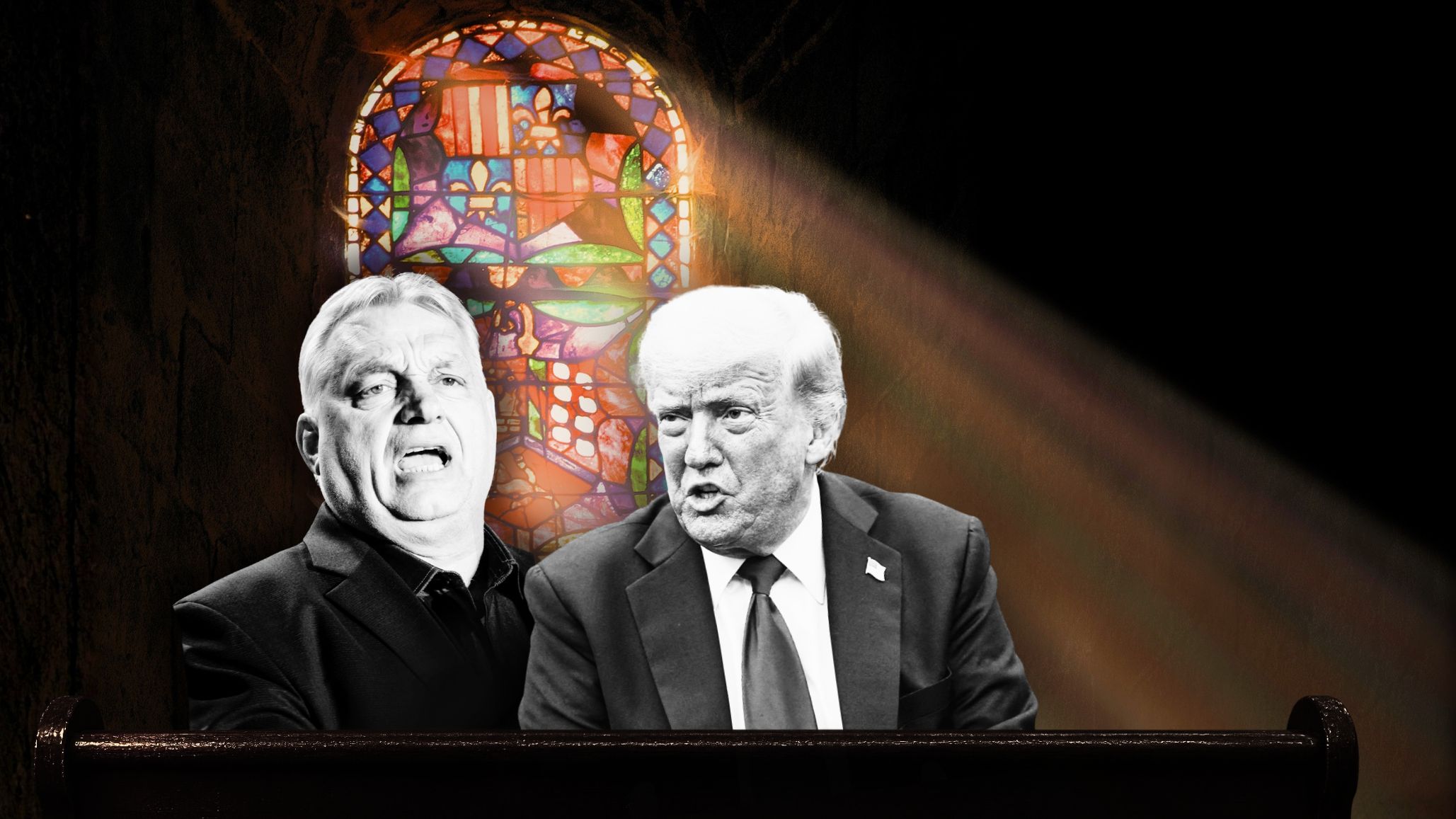
There’s a lot to chew over in Rod Dreher’s essay, “Is There Still Hope for Postliberalism?” over on the home page. One angle that jumped out to me was how Viktor Orbán’s Fidesz Party and President Trump’s MAGA movement pitched themselves to the public as the antidote to the corruption of their predecessors, and then over time became perceived as intolerably corrupt themselves and found themselves tossed out by the voters.
Rod writes:
When I first arrived in Budapest for a fellowship in 2021, a Hungarian conservative friend told me that everybody knows Orbán’s Fidesz Party is riddled with corruption, but people tolerate it because life has been getting better and better for them since the reformist prime minister took power in 2010. “But if the economy ever turns,” he said, “then corruption is going to matter. A lot.” And so it did. . . .
I returned to the U.S. at the beginning of summer and was quickly shocked to discover how expensive daily life had become here in the four years I spent abroad. With that in mind, the more I read about Trump administration grift, I began writing about how Republicans had better take a lesson from Orbán’s loss. All the postliberal conservative policies in the world won’t matter if the masses are hurting economically while you and your elite allies seem to be getting rich.
And here we are. Exit polling revealed that the biggest issues motivating U.S. voters in this fall’s midterms were entwined issues of the Iran war, the cost of living, and corruption.
When a new president comes to town, he brings along appointees to about 1,300 positions that require Senate confirmation, and hundreds more that do not require Senate confirmation. Unfortunately, it’s just about inevitable that some of them are going to succumb to the temptation to try to personally benefit from their offices in ways that either violate the law or ethical standards, and some of them are going to be idiots, and there’s a good chance that some will be both corrupt and idiots.
Because every administration is destined to have some corruption and some incompetence, the aim is to have as little of both as possible, and when corruption and incompetence rear their ugly heads, the responsible individuals either get taken to the woodshed or dismissed from their positions. Tough consequences and public embarrassment can be a deterrent to future bad behavior. The example set by the president, and the standards he upholds, can have a great influence on the rest of the administration.
Related Articles
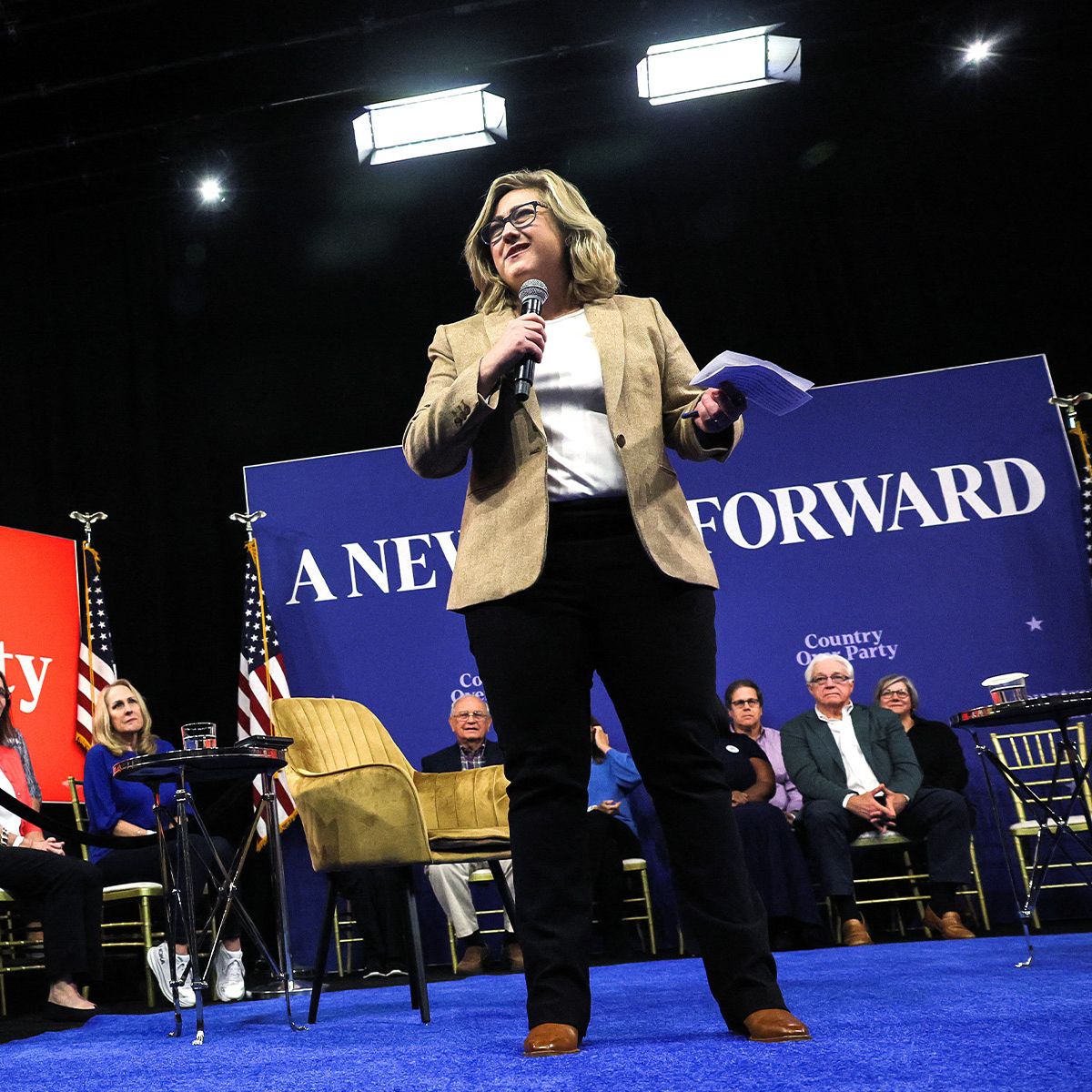
Alas, Donald Trump is rarely interested in punishing or even looking into allegations of corruption in his administration, except when someone starts making money off their association with Trump, as in the case of Kimberly Guilfoyle. One of the few sins that Trump cannot forgive is making money off his name and reputation and not giving the boss a cut.
Donald Trump’s personal wealth increased by an estimated $3 billion in his first year in office. Earlier this year, Trump filed financial disclosure forms revealing “about $1.4 billion of the windfall is estimated to have come from the Trump family’s sundry crypto ventures. Forbes estimates that since 2024, the fortune of Donald Trump Jr. has grown six-fold, from $50 million to $300 million; and Eric Trump’s has grown ten-fold, from $40 million to $400 million.”
President Trump has made more than 21,000 stock trades between January 2025 and October 2026, more than everyone in Congress combined, almost certainly taking advantage of the fact that he knows what changes to U.S. federal government policy are coming because he runs the executive branch.
Trump contends he’s just really good at picking stocks:
ROSS DOUTHAT: Including for yourself. There’s a Forbes story that said that your net worth, maybe it’s changed with the stock market recently, but your net worth went up by $3 billion since you—
PRESIDENT DONALD TRUMP: Well, so did everyone—
DOUTHAT: —since you returned to—
TRUMP: Okay, you ready? So here’s—
DOUTHAT: Everyone’s — my net worth did not go up by $3 billion for—
TRUMP: Well, you should’ve had stock—
DOUTHAT: —for the record. I — I should’ve — I should’ve —
TRUMP: You should’ve had stock.
ROSS DOUTHAT: I should’ve had stock.
Most U.S. stock indexes have done pretty darn well since Trump returned to office; as of this morning, the S&P 500 is up 21.2 percent over a nearly two-year span. However, that is not nearly doubling in value, as Trump’s net worth has done since then.
If you’re surprised to learn that Trump’s personal wealth has nearly doubled since he returned to office . . . well, I get the feeling you didn’t pay much attention to his life before he entered politics. The four bankruptcies, two messy divorces, numerous rumored affairs, more than 4,000 lawsuits over three decades, all kinds of shady international business partners, the scam of Trump University, the get-rich-quick schemes of Trump University . . . one ethical morass after another was all there for anyone who chose to look. Many Republicans, having concluded during the 2016 primaries that Trump was exactly what the country needed, didn’t want to hear about any of that. They had found their hero; any allegations of past wrongdoing must have been “fake news” from that dastardly liberal media.
Over time, many Republicans concluded that maybe Trump was a shady character, but at least he got results.
And then by the start of this month, gas had spent much of the year above $4 per gallon, and diesel spent most of the year above $5 per gallon, and the cost of living just kept going up, and a whole bunch of Americans decided they didn’t like the results.
And it became frustratingly clear that a whole bunch of people who claim to hate corruption meant they hate corruption in the other party, and don’t get all that upset when the accusations and allegations involve members of their preferred party. A lot of people on the right who were justifiably spitting mad about the deep-pocketed folks throwing money in various forms to Hunter Biden had much less to say about a Russian oligarch paying for Donald Trump Jr.’s wedding party. (Meanwhile, here at NR, Noah wrote about it, Dan wrote about it, I wrote about it, we talked about it on The Editors.)
I find myself wondering if there could be a genuinely un-corrupt populist leader. Populism tends to boil down complicated public policy issues into a very simple, “The elites are screwing us, and only electing my party can fix it” narrative, and once in power . . . those populists tend to prove as vulnerable to the temptation of power as anyone else, and sometimes downright eager to grab everything they can. (Since populists think everyone else is corrupt, I wonder if they think corruption is just part of “playing the game.” If government itself is just a giant racket involving fooling the naïve masses, why shouldn’t a populist leader take the opportunity to personally enrich himself?)
In fact, I wonder if some devious opportunists have concluded that the easiest way to get away with their own corruption is to pose as a ferocious critic of the other party’s corruption. It’s a bit like the way Whitey Bulger became an FBI informant, and ensured the bureau would be relentless in its pursuit of the Italian American Patriarca crime family . . . and never quite get around to going after Bulger’s Irish American Winter Hill Gang.
Beyond Orbán and Trump, I was going to list examples of other populists in other countries accused of corruption like Jair Bolsonaro, Flávio Bolsonaro and Luiz Inácio Lula da Silva of Brazil; Recep Tayyip Erdoğan of Turkey; Mexico’s Andrés Manuel López Obrador; Jimmy Morales of Guatemala; Rodrigo Duterte of the Philippines . . . and then someone pointed out that the politics of Brazil, Turkey, Mexico, Guatemala, the Philippines have pervasive corruption going back many years, and maybe the issue is with the political culture of those countries in general, not necessarily with populist movements specifically. That’s a fair point.
Argentina’s Javier Milei is populist in some ways — an outsider furiously denouncing the corrupt elites who preceded him, and his administration has faced its own corruption allegations. But I’m not sure that government-cutting libertarianism provides as many opportunities for corruption as other philosophies do. The bigger the government, the more money there is coming in, and the more opportunities to skim some money off the top, or favor particular government contractors through bribes, or campaign donations, or granting exceptions to regulations, etc. The bigger the bureaucracy, the easier it is to hide something shady.
If we want less corruption in government, we ought to shrink the size of the government. I realize the notion of shrinking the size of government is really out of style these days, but the fact that an idea is unpopular does not necessarily mean that it is wrong.
These Administration Officials Just Have to Get to Their College Football Games
Secretary of Homeland Security Markwayne Mullin is facing criticism for using a government plane to fly to the LSU-Texas game this past Saturday, while airports were still recovering from the nationwide full ground stop the previous day, with lots of cancelations and delays. Testifying before Congress yesterday, he suggested that he had to fly to the game, lest the public interpret a cancellation as a sign that it wasn’t safe to fly:
You want tobring up the fact that I took my family and my great nieces to an LSU game that was scheduled for weeks prior to that because I wanted to be a good uncle and take my little niece — who has never been to LSU game and she’s a huge LSU fan — to a game. We had discussions at 10:00 Saturday morning. Should we cancel it? We had deep conversations about it, and it came in that if we cancel something, with the airspace that was completely open, it could bring confusion because I was meeting the governor there. I was meeting other people there that would show maybe distrust that we’re not even willing to fly. There was a lot of stuff going on in the news saying is it safe to fly? We were saying our skies are completely open.
It just seems awfully convenient that Mullin concluded the best way he could reassure the public was by flying on his government jet to a college football game that he already wanted to attend. It’s not like his flight was at risk of being canceled, and it’s not like he was going to spend any time sitting around in a Shake Shack or wandering through a Hudson News, waiting for an update on when his flight would be rescheduled.
Elsewhere in the administration, Secretary of State Marco Rubio flies a government plane to University of Florida Gators games many weekends; Rubio’s son Anthony is a walk-on running back for the Gators.
I like Rubio. I think he’s one of the best, if not the best, appointment Trump has made in his second term. And every parent relates to the desire to see your kid play on the field, under the bright lights, at every opportunity possible. Life is short, and you only get so many chances to do something like that.
But the Washington Post, citing government documents, concludes that Rubio’s 23 flights to and from Gainesville, Fla., have cost the taxpayers more than $1.2 million, or about $52,000 per flight. For each flight, Rubio reimburses the government the equivalent of an economy-fare ticket. A round-trip economy-fare ticket from the Washington, D.C., area to Gainesville Regional Airport can run from $330 to $520. (There aren’t direct flights.)
So, each flight, Rubio receives something worth about $52,000 and pays the government a couple hundred bucks as reimbursement. The secretary of state is following the law. But it still feels like a disproportional benefit to a job that gets described as a “public servant.” And this is all separate from FBI director Kash Patel’s use of the FBI jet for his personal trips.
Back in 1991, White House chief of staff John H. Sununu resigned for a variety of reasons, but one of them was his use of government planes for personal business. I like John Sununu, too. But at what point does use of the perks of the office get excessive?
ADDENDUM: I did not expect my dashed-off proposal for how to reboot the James Bond series to get such a widespread reaction on X . . . but it did. The very short version: Not one but three eras, with three different actors and tones, leading up to a climactic tale that unifies the trio in spirit.


Comments
On “Grand Theft Party”