
On the menu today: Later this afternoon, at 2:20 p.m. ET, television and radio programming across the country will be interrupted as the Federal Emergency Management Agency and the Federal Communications Commission conduct a nationwide test of the Emergency Alert System. The timing is less than ideal, between the series of allegedly unrelated computer network failures in Microsoft systems, the nation’s air-traffic-control system, some of America’s biggest banks, and a separate problem with United Airlines systems. Say, fellas, is there any particular reason you feel the need to test the emergency alert system this week? Like maybe a concern that the Iranians want to detonate a dirty bomb on U.S. soil or conduct some other terrorist attack? Read on.
Unraveling CNN’s Report About an Iranian Dirty Bomb Plot
This morning, CNN breaks the kind of report that will make everyone in the Washington, D.C., area sit up and take notice. Pardon the long excerpt, but there’s a lot to unpack here:
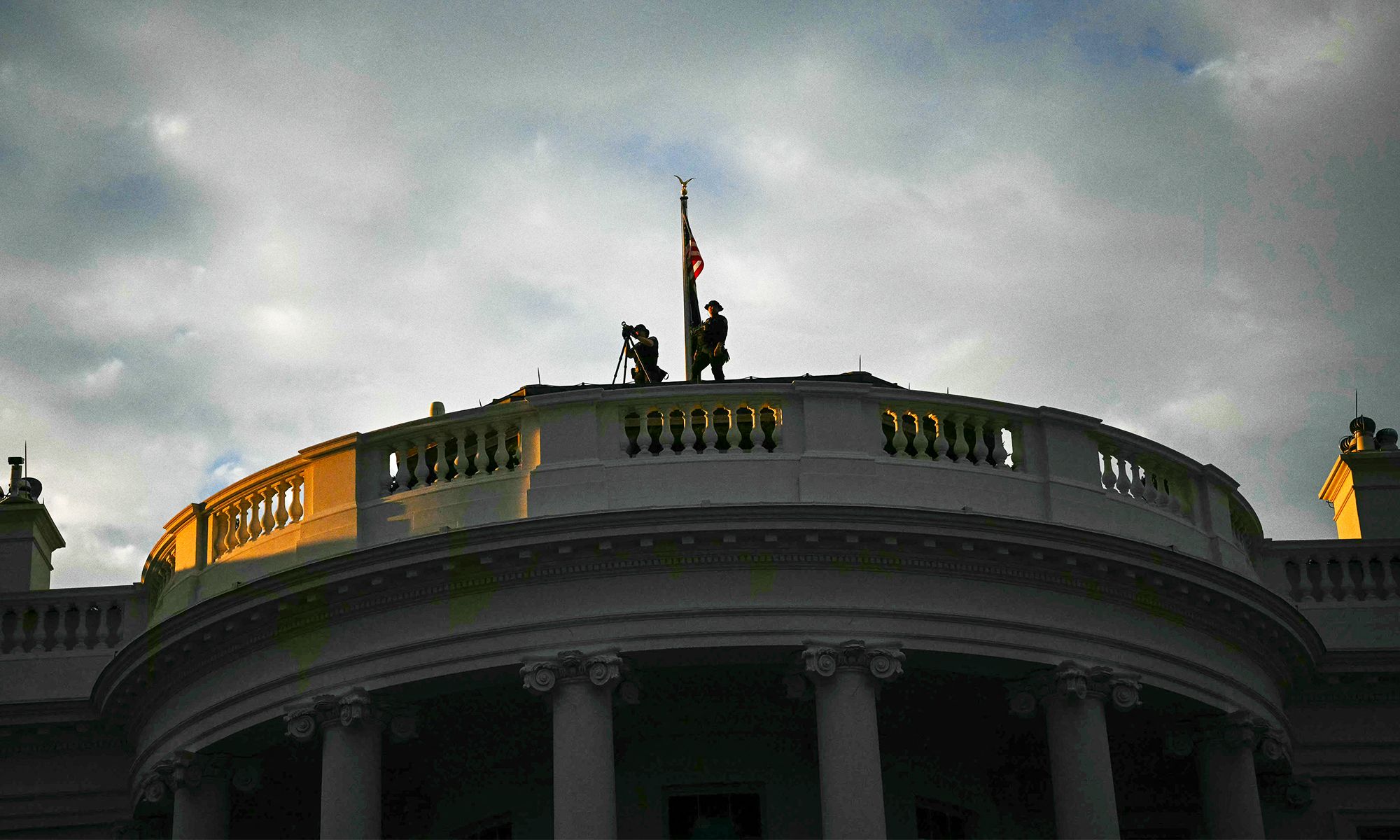
New U.S. intelligence indicates that Iran is developing plans to target senior Trump administration officials by detonating a so-called dirty bomb or a chemical weapon in Washington, DC, even as officials continue to debate whether Iran can or will attempt to execute such a plot, according to seven US officials.
Sources familiar with the latest intelligence characterized the Iranian planning as, for now, an effort to give itself options rather than an indicator of an imminent attack. But the plotting picked up by the U.S. has been very specific and includes locations and targets, two of the sources said, and has sparked a flurry of U.S. contingency planning. . . .
Two of the sources said that officials have held several meetings over the past week to discuss how to counter the threat, planning that one source described as “prudent.” It comes as threats from Iran also prompted the Secret Service to move Treasury Secretary Scott Bessent into military housing last week.
US intelligence has picked up Iranian chatter claiming that it has stashed bomb-making materials inside the United States, according to one of the sources. Officials are divided over how credible that intelligence is, but broadly believe that it would be very easy, and is even likely, that Iran has already pre-positioned nuclear materials or chemical agents that could be laced onto a conventional weapon.
In most cases of a dirty bomb, the radioactive material in the bomb would not be intense enough to kill victims, and the regular bomb would be the greater immediate threat. But the radioactive material would spread panic and make the bomb site potentially dangerously radioactive for a long time, even years. (The U.S. Centers for Disease Control and Prevention has a helpful, “what to do if you’re near a dirty bomb explosion” page.)
In theory, dirty bombs are not that hard to make — you just take a regular bomb and add radioactive materials. The U.S. Nuclear Regulatory Commission states radioactive materials “are routinely used at hospitals, research facilities, industrial and construction sites. These radioactive materials are used for such purposes as diagnosing and treating illnesses, sterilizing equipment, and inspecting welding seams. Most of these materials would not be useful in an RDD [radioactive dispersal device].” Hospitals have been phasing out their use of Cesium-137, an isotope found in blood irradiators and other medical equipment in many countries around the world, considered one of the most dangerous of all radioactive isotopes.
When radioactive material goes missing, it’s called an “orphan source incident” and you’d be surprised how regularly this happens around the world, and how often it goes back to irresponsible actions in the former Soviet Union*. In March, the International Atomic Energy Agency reported, “More than half of all thefts of nuclear and other radioactive material reported to the Incident and Trafficking Database since 1993 occurred during authorized transport, with the share rising to nearly 70 percent in the past decade.” There are 4,626 reported incidents in the ITDB from 1993 to 2025, and 730 were thefts or attempted thefts of radioactive material. Very often, the folks doing the stealing and selling are incompetent underworld characters trying to make a quick buck.
But Iranian agents might not need to steal radioactive material from a U.S. source. Whether or not Iran’s nuclear program is close to producing a bomb, it definitely generates radioactive materials. Back in June 2025, before Operation Midnight Hammer, the IAEA reported that Iran had “8,400 kilograms of uranium hexafluoride gas; 620 kilograms of uranium oxide; 71 kilograms of uranium metal in fuel assemblies, plates, and rods; 4 kilograms of uranium in targets; and about 140 kilograms of uranium in liquid and solid scrap.” Natural uranium and depleted uranium are only mildly radioactive; enriched uranium is more radioactive.
That CNN report also mentions chemical weapons, which are even easier to make; as I mentioned a few months ago, you probably have at least some of the ingredients to build something harmful with the cleaning products underneath your kitchen sink. But chemical weapons are hard to control; if the wind shifts, your toxic cloud is blowing away from your intended target instead of toward it. And let us note that a dirty bomb or chemical weapon would be unusual and very imprecise tools for a targeted assassination of a U.S. official.
As for the question of whether Iran has the personnel in place to execute an attack, the U.S. has arrested several Iranian agents and proxies on U.S. soil over the past few years.
The Iranian regime has targeted Masih Alinejad, a U.S.-based journalist, author, and human-rights activist several times over the years. There was a 2021 kidnapping plot and a 2022 murder-for-hire plot involving two figures associated with the Russian mob. Asif Merchant is a trained operative of the Islamic Revolutionary Guard Corps, convicted of plotting to kill the president and two other U.S. officials.
A week ago, the U.S. Department of Justice announced charges against Mohammad Baqer Saad Dawood Al-Saadi, a dual Iranian-Iraqi national; Mohsen Mohajeri, an Iranian national; and Mohammed Ali Al-Hassani, an Iraqi national, with terrorism-related offenses for their activities in support of Kata’ib Hizballah and Iran’s IRGC, for “involvement in nearly 20 attacks and attempted attacks throughout Europe and the United States, and a September 2026 terrorist plot at a British Royal Air Force Base in Fairford, United Kingdom.”
The DOJ statement about Al-Hassani’s role in the RAF Fairford terrorist plot describes the effort to build a bomb:
In or about September 2026, AL-HASSANI also tasked and paid several individuals to help him prepare for the plot, including by procuring vans and barrels of fuel, researching the purchase of chemical accelerants, including large quantities of potassium chloride, and purchasing metallic objects that could be used as explosive shrapnel. At AL-HASSANI’s urging, those individuals commissioned custom decals that they affixed to the vans to create the appearance that they were used by a fuel delivery business and a swimming pool supply business.
The threat of Iran using terrorism as leverage against the United States was predictable and predicted. At the live taping of The Editors up in New York City, October 30, I said:
Me: For what it’s worth, the Wall Street Journal reported earlier this week that the U.S. governmenthas notified our allies in the Middle East that after the midterms, there is a possibility of what they called a “short, intense conflict” or resumption of hostilities with Iran. Now, as we’ve learned, when you plan for a short, intense conflict. . . . I always intend for my conflicts with my wife to be short—
Rich: And they don’t turn — not intense!
Me: So, yeah, “I’m just going to I’m just going to snap at her once and then things will calm down.” No, no, it doesn’t work out that way. You hear that and you’re like, “You know, the other side gets a say in how they’re going to respond to that.” And we know that Iran’s go-tomove is terrorism. And we’ve put all our embassies on alert. We’ve been warning Americans in the Middle East. We’ve seen them shoot drones and rockets not just at ships in the Persian Gulf and the Strait of Hormuz, but also at energy infrastructure. Saudi Arabia’s still got desalinization plants. Saudi Arabia has still got all the Saudi Aramco facilities. There’s a lot of targets that could be targeted in this. If a conflict restarts, I don’t think it will be short. Probably be intense.
Launching a terrorist attack on U.S. soil would be astoundingly unwise for the remaining Iranian regime. Right now, the U.S. war against Iran is not popular. An Iranian terrorist attack that harmed or killed Americans would change public opinion overnight and dramatically increase public support not just for retaliatory attacks against the regime, and likely toppling the mullahs as well. Killing lots of Americans would represent the Tehran regime doing Donald Trump the biggest favor imaginable; Americans might even conclude that Trump was right to start the war, if the Iranians represented such an implacable clear and present danger.
*Keep in mind, it took a while for societies to grasp the dangers of radioactive material; back in 1950, American parents could buy their kids a “Gilbert U-238 Atomic Energy Lab” which came with types of uranium ore, and a comic book “Dagwood Splits the Atom.” If your Baby Boomer parents or grandparents ever seemed a little strange, this fun playset with radioactive material might be a reason why.
ADDENDUM: Over in the Washington Post, a look at America’s temporarily grounded planes, Spain’s suddenly unnerving planes, and angry voters in both countries.



Comments