
On the menu today: The pitch for the ongoing National Review webathon is inevitable, so just keep moving and we’ll get through it together; the year ahead promises to be as tumultuous and unpredictable as the one that is coming to a close; elsewhere, there’s a supremely implausible argument that some sort of nefarious, shadowy GOP Establishment is trying to start a fight between Donald Trump and Ron DeSantis.
National Review Will Be Your Guide
I know, you don’t like reading us asking for donations, and we don’t particularly like asking for donations. But these webathons are part of how we keep National Review going, along with advertising, subscriptions, and cruises.
The midterm elections have come and gone — well, they’re still counting the votes in a few places — but 2022 did not bring the sweeping rebuke of President Biden and the Democrats that they deserved. You could say that as 2023 approaches, America is gaining momentum . . . but then again, so is a plane going into a nosedive.
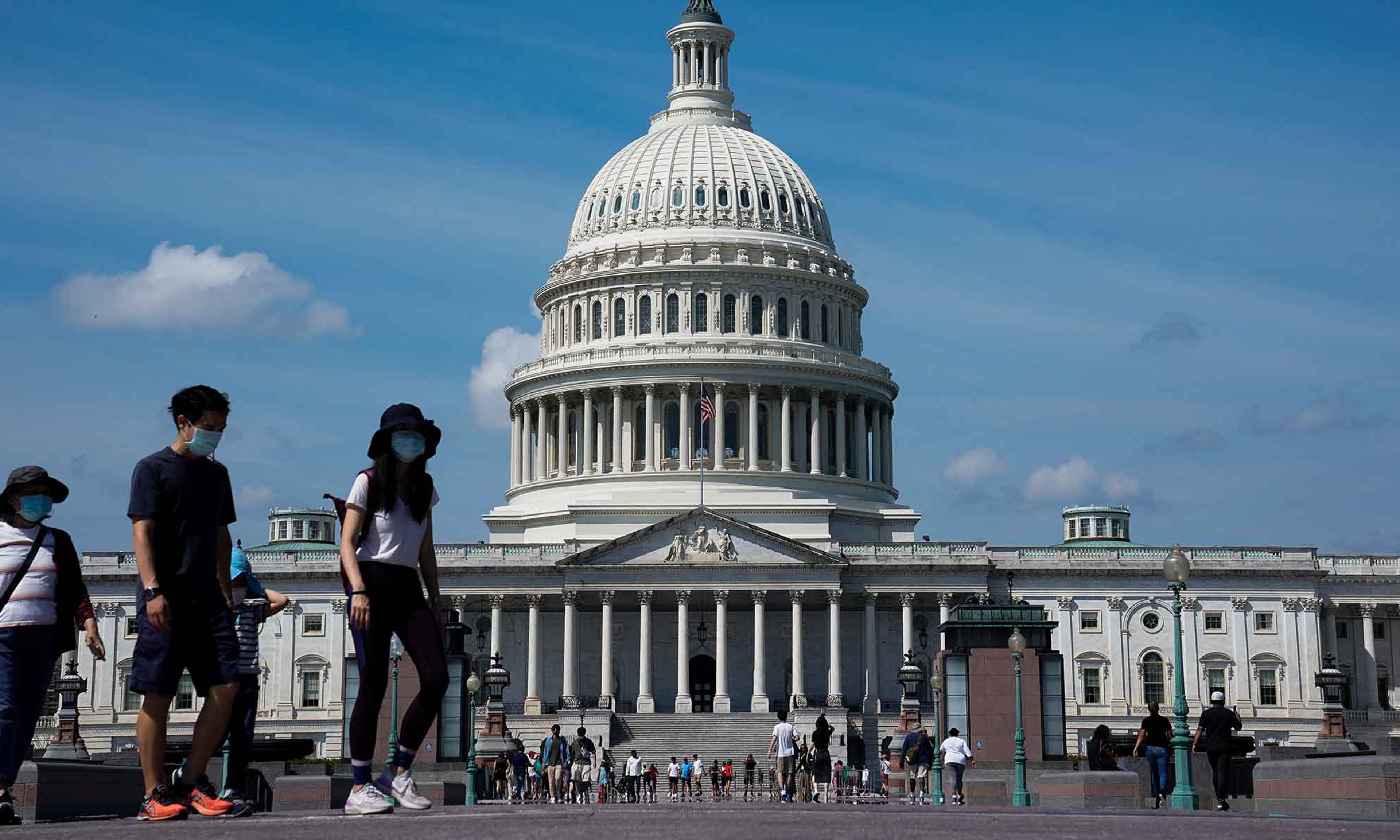
But there are no final victories in politics, and the work is never done for conservatives as a whole, or for National Review. In January, a smaller-than-expected wave of new Republican representatives and senators will take the oath of office and begin another era of narrowly divided government, with this one likely to be even more bellicose than its predecessors.
Right now, it appears that there will not be a debt-ceiling deal during the lame-duck session of Congress, which means that at some point in early 2023, Congress will need to raise the debt ceiling again. The debt limit is set at “merely” $31.4 trillion, and right now, the total outstanding U.S. debt is just a bit past $31.2 trillion.
Republicans don’t like raising the debt ceiling and giving their stamp of approval to another few years of borrowing and spending without getting some policy concessions in return.
The new razor-thin GOP House majority will attempt to drive a hard bargain with the Biden administration; meanwhile Biden and his team will argue that Republicans are gambling with fiscal ruin and the country’s future by not raising the debt ceiling with no strings attached. (If this all sounds familiar, it’s because we went through these fights in 2011 and 2013. Back then, the Obama administration insisted that there was no way the U.S. Treasury could prioritize the payment of interest on the debt and could use contingency measures — and, it turns out, lying about it, as our Veronique de Rugy revealed.) That is likely to be one of the first big showdowns between the Biden team and congressional Republicans, eating up a chunk of February 2023.
One complicating factor in that fight, and in both parties’ agendas, is the high likelihood of the U.S. experiencing an indisputable, un-spinnable recession in the coming year — in fact, Bloomberg analysts declared last month that there is a 100 percent chance of a recession in 2023. Hopefully, you’ve been reading or listening to our Kevin Hassett, the former chairman of President Trump’s Council of Economic Advisers. Kevin’s been ahead of the curve on all of this, particularly on inflation, supply-chain woes, and worker shortages. Back in autumn 2021, I wrote that the usually cheerful Hassett was offering “an economic assessment that was darker than Rembrandt’s Night Watch viewed through sunglasses at midnight during a power outage.” A big question on voters’ minds, after enduring more than a year of exceptionally high inflation, is what Washington can do to improve that grim economic picture.
(The price of the average Thanksgiving dinner is going to be about 20 percent more expensive than last year, our Caroline Downey reports.)
The year 2023 will be the first full year without Roe v. Wade in place, and new Republican governors and state-legislature majorities will take on the politically fraught responsibility of crafting new state laws on abortion. In some places, such as Arizona, new restrictions on abortion will take effect on January 1; in other places, such as Virginia, new restrictions will be on the state legislature’s agenda. The Dobbs decision came down in June 2022, but post-Roe reality will really take effect in the year to come, and NR will keep a sharp eye on those consequential battles. Although, with Stacey Abrams again defeated in her bid to be Georgia’s governor, perhaps we can permanently retire her bizarre argument that abortion is the solution to high inflation rates.
Amid those policy fights, the first battles of the 2024 presidential election are also kicking off, whether anyone in America wanted to start the campaign this early or not. Trump is already in. Next year’s Florida legislative session will begin on April 10, and final adjournment will be no later than June 8, which suggests that if Governor Ron DeSantis wants to run for president, he’ll announce his candidacy sometime in mid June. Other Republicans may throw their hats into the ring before then; in 2007, nine Democrats had announced their exploratory committees by the end of February, including Barack Obama, Hillary Clinton, John Edwards, and Joe Biden.
There’s a whole slew of big names in the “maybe” pile — former vice president Mike Pence, former secretary of state Mike Pompeo, former New Jersey governor Chris Christie, and former South Carolina governor and United Nations ambassador Nikki Haley, among others. No doubt you will find a steady geyser of reactions and keen analysis, tracking all the developments, here at NR.
Democrats’ relatively strong performance in the midterm elections quieted down a great deal of the “Biden shouldn’t run again” talk among the party’s base. But he’s still got a job-approval rating below 42 percent. Biden turns 80 in a few days and thus would be running for reelection at age 81. If you’ve been reading NR recently, you know how frequently Biden sounds like he has lost his marbles — contending that the economy is “strong as hell,” warning of “Armageddon” over Ukraine at a Democratic fundraiser, insisting that his student-loan bailout was passed by Congress, contending that his son was killed in Iraq. You could plausibly argue that the Democrats survived the midterms in spite of Biden, not because of him — and we may well have an unexpected and surprisingly contentious Democratic presidential primary to cover as well.
Finally, 2022 was not a quiet or stable year beyond our borders, and 2023 isn’t looking like it will be smooth sailing, either.
Europe is bracing for a long, cold winter without Russian energy supplies. While the Ukrainian forces are doing much better than many expected, the war drags on, and the Biden administration has asked Congress for another $38 billion in Ukraine aid; if granted, it would mean that the U.S. taxpayer has supplied more than $100 billion to the country in less than a year. That’s in the ballpark of what the U.S. Navy spends in a year. A lot of Americans want to see the Ukrainians successfully repel the Russian invaders, but they also have fair questions about how long the U.S. should be the primary financier of the Ukrainian war effort. It is also more than fair to object to our European allies, who are much closer to the fight than we are, have sent the Ukrainians so much less assistance than we have.
Xi Jinping just consolidated even more power over the Chinese state in Beijing, and the discussion about a potential Chinese invasion of Taiwan is getting unnervingly loud. The new Republican House is expected to intensify investigations into a lot of topics, but none interest me more than the origin of the Covid-19 pandemic and the possibility — ahem, really strong possibility — that the entire global disaster could be traced back to a leak or accident at the Wuhan Institute of Virology.
Add it all up, and we live in tumultuous times. I hope you’ve found National Review’s reporting, analysis, essays, criticism, and humor informative, enlightening, clarifying, and thought-provoking — and every now and then, giving you that laugh you need to get through the day. I hope you stick around — the midterms may be over, but the news never stops.
ADDENDUM: Over at The Federalist, Victoria Marshall writes that, “The GOP establishment and their allies on the left would love nothing more than a bloody, intraparty fight between former President Donald Trump and Florida Gov. Ron DeSantis.” She links to Tuesday’s Morning Jolt; apparently, I’m part of that establishment who wants a bloody intraparty fight.
She continues, “Kudos to Ron DeSantis for refusing to take the bait. Nowhere in his answer did the governor reference Trump, which was the right move. While some conservative media outlets might characterize DeSantis’s comments as a ‘brushing off’ or ‘clapping back’ at Trump, they fail to recognize DeSantis’s strategy: attack his real opponents instead of engaging in silly, intraparty strife. . . . Right now, powerful special interests are working overtime to pit DeSantis and Trump supporters against each other, divide the party, and take back control from the anti-establishment wing. Don’t let them.”
Okay, except . . . who, precisely, is engaging in “silly, intraparty strife”? Which guy is calling other GOP figures “DeSanctimonius” and “Young kin”? Who’s declaring that the Senate GOP leader has a “death wish”? Who chooses to refer to his own former Transportation secretary as “China-loving” “Coco Chow”? Who, precisely, is “working overtime to divide the party”?
Who decided to start the 2024 Republican presidential primary this week?
Marshall is really bothered by the fact that people are writing about things that Trump does that are counterproductive and self-destructive. Don’t get mad at other people for noticing what Trump is doing; get mad at Trump for doing it!







Comments