Dear Weekend Jolter,
Audrey Fahlberg here, National Review’s political reporter filling in for Judd this week.
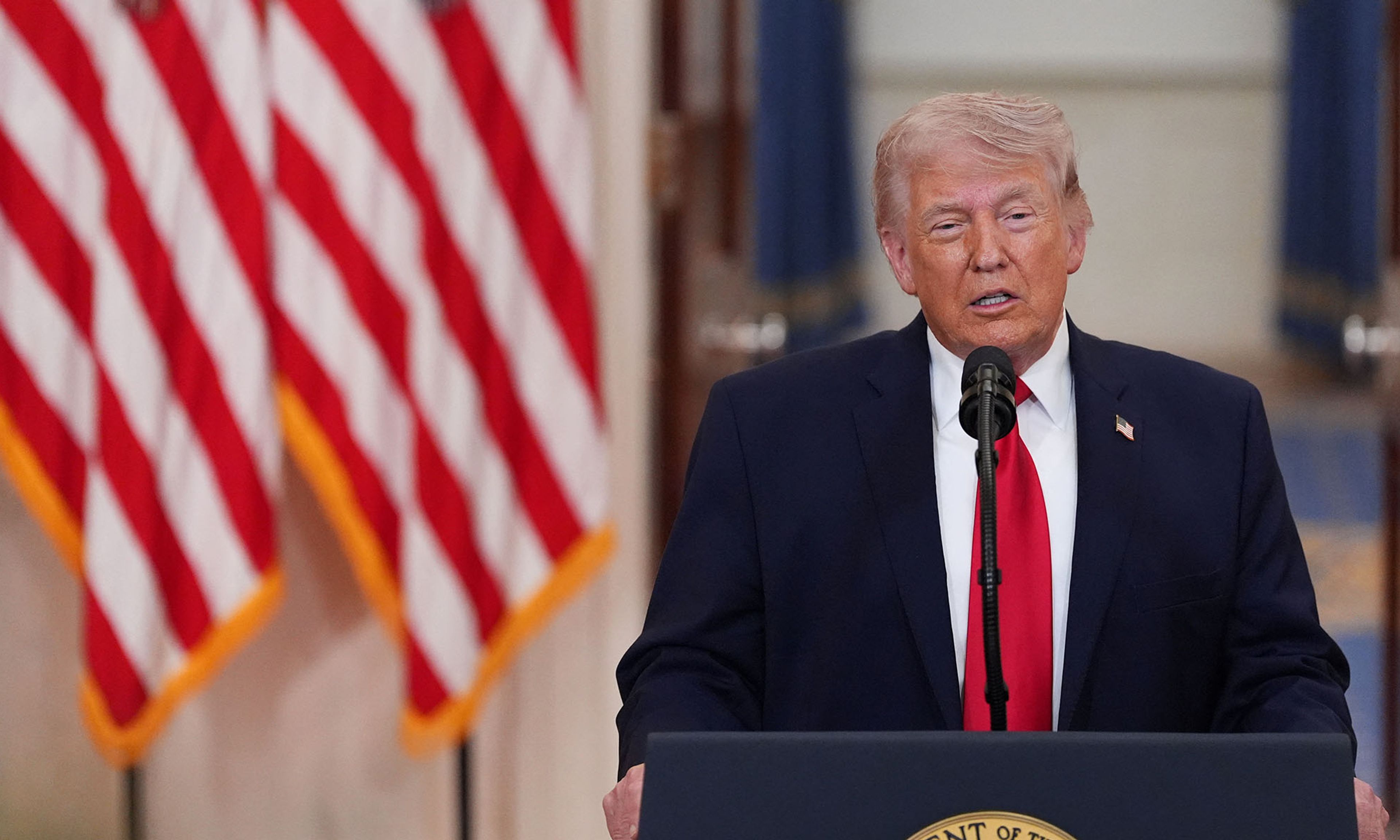
President Trump’s 20-minute address to the nation earlier this week signals that senior White House officials have finally gotten the message that maybe, just maybe, the administration needs to recalibrate its messaging strategy surrounding the Iran war.
Speaking from the White House in his first formal address to the nation since the conflict began, Trump touted the historic success of the U.S. military operation in Iran, insisting that “never in the history of warfare has an enemy suffered such clear and devastating large-scale losses in a matter of weeks.” He reiterated the U.S. military’s primary strategic objective in the conflict: “systematically dismantling the regime’s ability to threaten America or project power outside its borders.”
In a clear sign that the speech was reviewed by his 2026 midterm-focused political team, “Trump departed from his triumphalist tone” to “address Americans’ concerns about rising energy prices — an anticipated burden associated with this war that he should have prepared Americans to bear,” Noah Rothman observes. “But the pain Americans are feeling today would pale before the ‘decades of extortion, economic pain, and instability’ the nation and the world would experience if Iran held the strait hostage from behind an arsenal of fissionable weapons, he said.”
While Trump maintained during his speech that he is still hopeful for a diplomatic resolution to the conflict, he pledged to hit Iran “extremely hard over the next two to three weeks” and send them “back to the Stone Ages, where they belong.” He also urged countries who get their oil through the Strait of Hormuz to play a role in reopening it. “The United States imports almost no oil through the Hormuz Strait and won’t be taking any in the future. We don’t need it. We haven’t needed it, and we don’t need it,” he said. “We will be helpful, but they should take the lead in protecting the oil that they so desperately depend on.”
“Go to the strait and just take it,” Trump said, while also predicting that the strait would “open up naturally” after the conflict ends. “Will it now?” asks National Review’s Jeff Blehar. “How, without a permanent occupation of the Iranian coastline? That presumes an end to the conflict, which itself presumes a new regime, which sure isn’t the one we’re currently dealing with. (The fifth guy down in an org chart stocked with Islamist fanatics is still an Islamist fanatic.)”
The editors remind us that “since its earliest years, the U.S. has regarded maintaining the freedom of the seas as a vital national interest.”
Any outcome to war short of the strait’s again being free for navigation would be inconclusive at best and a strategic setback at worst. Trump should be clear-eyed about this.
The ideal solution to the crisis would be the fall of the Iranian regime, but that is outside our direct control. The result of Tehran’s savage crackdown earlier this year — and the years of horror that preceded it — is that many of those who might have led a revolution against the mullahs are dead, incapacitated, exiled, or imprisoned. The attacks on Iran’s machinery of repression may have created some space for an uprising, but that seems unlikely in the near term.
If the regime hangs on, it will continue to be toxic domestically, regionally, and globally.
The speech didn’t win everyone over. Read Jeff:
At the end of Trump’s speech I was filled with doubts: We are going to be bombing Iran for two to three weeks more — what then? When whatever’s left of the IRGC remains holed up in its mountain fastnesses refusing to surrender, will Donald Trump simply declare victory and go home? Unless you believe we’re sending in the Marines, the question answers itself — which means that a month from now, I expect Donald Trump to wind up the Iran war, with the rest of the Western world left holding the bag.
Over the next few weeks, I’d expect more messaging from Secretary of State Marco Rubio on the conflict. In a video posted this week on White House social media platforms, Rubio explained the administration’s rationale for striking Iran, calling the campaign the “last best chance” to stifle the regime’s nuclear ambitions and characterizing the regime’s stockpile of drones and missiles as a key component of its threat to the West. “We were on the verge of an Iran that had so many missiles and so many drones that no one could do anything about their nuclear weapons in the future,” he said. “That is an intolerable risk.”
Before moving on to the week’s linkage, I want to thank everyone who’s donated thus far to our spring webathon. The response has been tremendous. And there’s still time to chip in, if you haven’t donated yet but might be interested: Here’s that link again.
NAME. RANK. LINK.
EDITORIALS
On Trump’s Iran speech and Hormuz handling: A Hormuz Handoff?
The lopsided majority was earned: The Supreme Court Rejects Ideological Orthodoxy Masquerading as Public Health
Vance was onto something: Finnish MP’s Conviction Proves Free Speech Is in Retreat in Europe
“The same characters are back to reheat old redistribution”: Progressives Give Wealth Confiscation Another Go
ARTICLES
Noah Rothman: Will Trump Surrender to Iran’s ‘Toll Booth’ Strategy?
Michael Brendan Dougherty: Trump’s Base Will Have a Say on the War
Brittany Bernstein: Trump Calls on Allies to Secure Strait of Hormuz, Says U.S. ‘Very Close’ to Achieving Iran Objectives
Brittany Bernstein: What Does the American Medical Association Really Think About ‘Gender-Affirming Care’ for Minors?
Dan McLaughlin: No Big Surprises at the Birthright Citizenship Argument
Dan McLaughlin: Birthright Citizenship: The Constitutional Stakes and the Transient Problem
John Noonan: America Must Seek Nuclear Supremacy
Guy Denton: Where Have All the Trade Workers Gone?
Jianli Yang: Beijing’s Hostage Strategy in the AI Race
Kathryn Jean Lopez: Gosnell Was Not the End of the Story
Jeffrey Blehar: ‘No Kings’ Has No Future
Becket Adams: The Revolving Door Between the Press and Progressive Groups Is Spinning Fast
Kamden Mulder: Department of Education Opens Probe into Illegal Immigrant High School Student Accused of Groping Girls
CAPITAL MATTERS
John Puri, on fiscal foolishness in the Northwest: Washington Adopts the Blue-State Fiscal Model
LIGHTS. CAMERA. REVIEW.
Ye is back. Armond White has the story: Kanye Mounts a Bully Pulpit
Brian Allen finds the Bush library/museum “both lighthearted and leaden”: A Visit to the George W. Bush Presidential Center
SOME SPRING BREAK READING
Another cabinet official gets the boot. Read Andy McCarthy to understand why:
From the president’s standpoint, lawfare — the leveraging of the government’s law enforcement apparatus against political enemies and for partisan ends — is a strategy that must be used because it was used against him. It is immaterial to him that there may be insufficient evidence to bring cases against his targets — James Comey, Letitia James, Jerome Powell, et al. — because, as Trump sees it, Democratic prosecutors put him through the punitive process. They tried to humiliate and bankrupt him, whether there were viable cases or not. (On that score, I believe Trump has drunk his own Kool-Aid and is convinced that the Mar-a-Lago documents and January 6 cases were as absurd as the New York hush-money and civil fraud cases.)
From a prosecutor’s standpoint, it’s a different calculus. Bondi may be politically sympathetic to Trump’s point of view. (She must have convinced him that she was, or she wouldn’t have been appointed.) But, as a prosecutor, it was her obligation not to charge unless she was confident that a rational juror could find guilt beyond a reasonable doubt. Beyond the ethical challenge, there is another professional problem: The pols can carp from the cheap seats, but the prosecutor is the one who gets humiliated if the case is a joke. And while the pols can embarrass themselves and move on to the next political controversy, the prosecutor who has lost credibility with the courts is toast professionally.
A lawyer has to decide from the start: I am going to enforce the law without fear or favor, or I am going to be loyal to my patron for whom the law is not a compass. You can’t do both. There are many ways in which Bondi came up short: She didn’t have DOJ experience, she’s not a good communicator, her instincts aren’t great. But in the end, the job on the terms offered was one at which it was impossible to succeed.
Read NR’s editorial on the Supreme Court’s 8–1 ruling against Colorado’s “conversion therapy” ban:
The power of government to regulate the professions, especially in medicine and law, has created a lot of levers to enforce conformity. That power can be exercised openly through lawmaking, and more subtly by delegating licensing and disciplinary powers to quasi-public cartels run by the professions themselves. In Chiles v. Salazar, the Supreme Court struck a blow against the use of those powers to dictate orthodoxy and stifle disfavored opinions. Still more encouragingly, Justice Neil Gorsuch’s ringing opinion attracted a lopsided 8–1 majority, with only Justice Ketanji Brown Jackson in dissent.
Chiles arose from yet another effort by Colorado to ban dissent from “LBGTQ+” ideology, which was yet again defeated by a legal team from Alliance Defending Freedom. A state law bans licensed counselors from engaging in “conversion therapy” with minors, on penalty of fines and loss of license. The law is flagrantly one-sided: It applies only to therapy that aims to resolve gender dysphoria or to reduce homosexual attraction, while permitting state-favored counseling in favor of gender transition and homosexuality. It is coercive and destructive of parental authority: While blue states have schemed to let public schools “socially transition” kids without telling their parents, Colorado won’t even let the disfavored therapists talk to minors when both the minor and the parent consent. It is speech-specific: Unlike red-state bans on irreversible surgeries and puberty-blocking drugs, the law applies to purely talk-based therapies. And it is harmful as well: Most children and teens suffering gender dysphoria can outgrow the problem and learn to live in their bodies; talking through their problems can help.
The Court called this what it is: discrimination against a particular viewpoint. As Gorsuch wrote, “Colorado may regard its policy as essential to public health and safety. Certainly, censorious governments throughout history have believed the same. But the First Amendment stands as a shield against any effort to enforce orthodoxy in thought or speech in this country.” Even Justice Elena Kagan, joined by Justice Sonia Sotomayor, emphasized that “the case is textbook. The law distinguishes between two opposed sets of ideas—the one resisting, the other reflecting, the State’s own view of how to speak with minors about sexual orientation and gender identity.” To Kagan’s credit, she added that this is just as bad when her own side does it: “It does not matter what the State’s preferred side is.” Justice Jackson, who opened by urging that there is “no right to practice medicine which is not subordinate to the police power of the States,” could use a remedial course on that score.
The majority didn’t just strike down a one-sided state rule on speech. It also rejected the theory that licensing boards and “experts” can dictate terms to the rest of society on controversial questions.
John Noonan writes about the need for a nuclear renaissance:
While the wars in Iran and Ukraine and other global crises command attention, many have overlooked the daunting challenge facing President Trump in the nuclear realm: for the first time ever, America faces not one but two peer adversaries that each represent an existential threat to our way of life.
The Trump administration inherited the most complex nuclear challenge in history — but this moment is as much opportunity as it is crisis. Over the next three years, Trump has a golden chance to launch the nuclear renaissance America needs, rebuild a deterrent second to none, and deliver homeland defense for the 21st century.
Success begins by understanding how progressive arms-control orthodoxy failed. For decades, the global elites have clung to false assumptions: that treaties guarantee stability, restraint is reciprocated, and America’s nuclear arsenal will soon be unnecessary with the arrival of a peaceful and benign global order. Those illusions have collapsed; Russia’s treaty violations and China’s nuclear breakout have upended every legacy framework the left relies on.
Biden’s 2021 unconditional New START Treaty extension exemplified this delusion, locking America into a bipolar arms-control regime in a tripolar nuclear world. The treaty imposed numerical limits on the United States while leaving Russia’s vast stockpile of tactical nuclear weapons untouched and China’s nuclear expansion unconstrained.
The results were predictable. China accelerated and expanded its buildup. Russia exploited the treaty’s shortcomings to rebuild its entire arsenal and develop new city-killing weapons. Nevertheless, under Biden, U.S. policy remained unchanged — ignoring these developments.
By refusing to extend New START last month, President Trump rejected this folly and affirmed reality: arms control divorced from the threat environment creates danger, not stability.
The Trump administration’s nuclear playbook should build on that conviction by focusing on three key pillars: modernize the triad, expand the arsenal, and defend the homeland.
Guy Denton reports on the looming skilled-worker crisis:
Pierette Swan never planned on becoming a welder. A straight-A student with an intellectual streak, Swan graduated from Virginia Wesleyan University in the midst of the 2008 financial crash and quickly discovered her fine art degree wasn’t worth much. Struggling to find work, she enrolled in a welding apprenticeship program at Newport News Shipbuilding on the advice of her sister. Though uncertain at first, she eventually realized she had found her vocation and rose to a managerial position.
“Welding exercises my brain in such a wonderful way because of how many things you have to juggle while you’re doing it to make it go right,” Swan told National Review. “It might take years to build a ship, but you can see the welds that you put down; you can see the material you fit up or that you grinded or that you prepared. And that is very rewarding.”
While Swan’s success is proof that trade careers can be fulfilling, too few young Americans are entering them. Across every industry, employers are facing an acute shortage of skilled trade workers, and the problem is becoming a crisis. In January alone, 31 percent of small-business owners had job openings that they were unable to fill, and many employers in construction and manufacturing cited labor quality as the primary issue. The problem will only deepen if left unaddressed. One grim analysis from this year found that nearly 1.4 million trade jobs across seven essential industries will be unfilled by 2030.
But how did America’s skilled workers disappear? Gradually, by all accounts. Since the turn of the century, labor force participation has steadily declined. The trend has been driven by factors such as falling fertility rates, increased restrictions on immigration, and the disruption caused first by the Great Recession and later by the Covid-19 pandemic. According to Brian Binke — the president of the Birmingham Group, a construction recruitment firm — the issue became “impossible to ignore” for trade professions in the “mid- to late 2010s.” As the number of tradesmen retiring from various industries increased, the number of young people entering those occupations failed to keep pace. Today, for every five tradesmen who leave the workforce, only two younger workers replace them. And the demand for skilled tradesmen is higher than ever.
Boyd Worsham is the president of the National Center for Construction Education and Research, which focuses on recruitment and workforce development in the construction industry. His organization has developed a range of opportunities for young people. Its High School Builder program, for instance, helps students earn credentials, while its Build Your Future program aims to inform parents about career paths in construction. Worsham told National Review that the construction industry faces a severe lack of young talent. In recent years, the growth of artificial intelligence has made the issue particularly apparent. “You don’t have to look much further than the current surge in data centers being built in America to understand the growing need,” he said. “Those new projects need more trained craft professionals.”






Comments