Dear Weekend Jolter,
Here’s a question worth revisiting on November 9: What if, this whole time, the real story was the things voters were worried about and not the threat that Republicans could win elections by talking about the things voters were worried about?
Even at this late hour, with Election Day just over a week away, the political coverage is fretting about how the latest bursts of bad news could be exploited by GOP candidates.
As new data this week showed student test scores plummeting amid the era of school closures, the New York Times warned that this information “could be seized as political fodder — just before the midterms — to re-litigate the debate over how long schools should have stayed closed.” (“Re-litigate,” as if those litigating this have extracted an iota of closure or justice from their fight against entrenched powers that prolonged shutdowns beyond what was necessary.) No, as NR’s editorial notes, “of course this is political fodder.” Voters will be sending home report cards soon — and if the midterms go how it looks like they’re going to go, this kind of framing will look all the more out of focus.
The real story of the 2022 midterms, Jim Geraghty clarifies, is the “fire of voter anger at incumbents over the state of the country.”
The violent-crime wave crashing through America’s cities received similarly conflicted treatment. The media broadly acknowledge the problem but bifurcate their coverage, spotlighting disorder alongside declarations that to do so in a campaign plays on race fears, “a cryptic way of appealing to voters who blame racial minorities for crime.” The Economist, in the course of a thorough and balanced report on the “real worries” Oregonians have about Portland’s decay, still accused Republican Christine Drazan’s gubernatorial campaign of trying to “whip up fear and resentment” toward Democrats with her ad highlighting crime. Portland is on pace to break last year’s record of 92 homicides; even Democratic nominee Tina Kotek has realized her ads should focus on the state of the streets.
Crime and education, though, pale in comparison to inflation and the economy as issues voters care most about. Here, too, Republican tactics dominated headlines. The Hill reported last month on the stock-market turbulence using that old saw, “Republicans pounce on ailing markets to criticize Biden.” After Russia invaded Ukraine, the story was “Republicans seize on rising gas prices.” Then there was this week’s strange media campaign to shame voters for continuing to care about the price of gas, considering what’s at stake. (And what’s at stake, in their telling, is the constitutional system itself, which would fairly put the price of gas in perspective, if Democrats walked their talk.)
In hindsight, Democrats probably should have been the ones “pouncing” on these issues.
A Times story this week ominously warned of a possible “shellacking” on the way and reported that the party’s candidates are struggling to find a closing message on the economy. Charles C. W. Cooke says it’s “too late” for that:
If President Biden had come into office last year and resolved to address the economy as it actually existed, he might have got away with a lot of what came next. But he didn’t. Instead, he decided that the real issues facing the country were an inconvenience to his agenda, and he resolved to ignore them as a result. . . . And now, two weeks before the midterms, they want to pivot back to the economy and insist that they feel everyone’s pain? Nah.
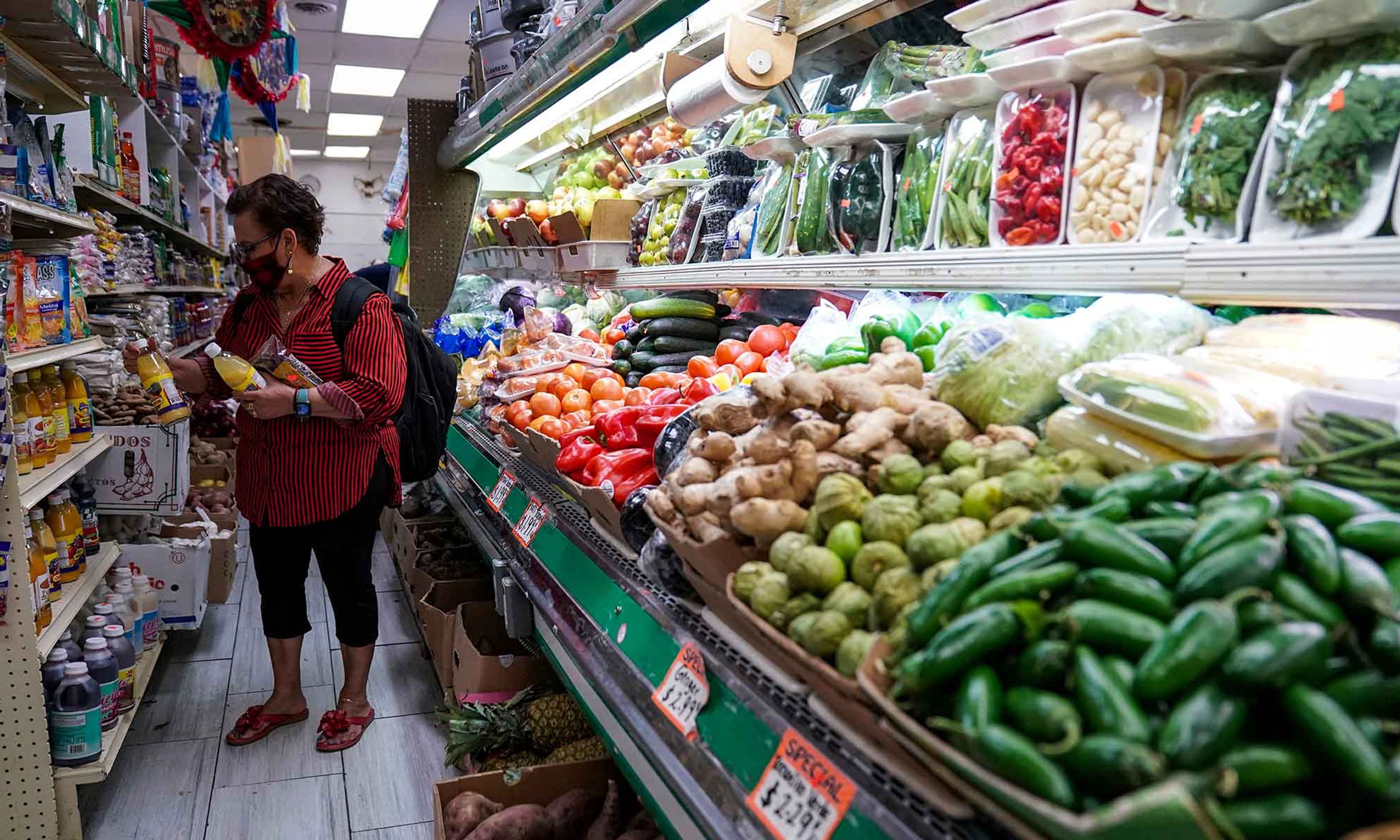
Even at this late hour, it’s not clear they do want to pivot. Ron Klain is still chest-thumping over modest decreases in the price of gas — welcome news, no doubt, but as Jim points out, “the American electorate’s complaint isn’t that gas is expensive right now, it’s that gas has been expensive all year.” Perhaps more important, grocery prices are 13 percent higher than a year ago, not to mention food costs generally. I don’t know about you, but around me a sandwich can go for a cool $20 — every week, we’re reliving that first moment we set foot in a Starbucks and saw the price of a “Tall” something or other and stormed out. Yet Klain is on Twitter chanting, “The. Price. of. Gas. is. Going. Down.” It’s his best Kent Brockman impression yet. And it’s the kind of response that makes the near-future dystopia Rich Lowry imagines here depressingly almost-plausible.
Now, on to the week’s highlights . . .
NAME. RANK. LINK.
EDITORIALS
A reckoning is due: Adults Failed the Children of the Pandemic
The case against Senator Mike Lee has been overblown considerably: Mike Lee for Senate
ARTICLES
Dan McLaughlin: How the Campaigns Are Breaking, Two Weeks Out
Dan McLaughlin: The American Way Still Beats Parliamentary Government
Ryan Mills: Fast-Food Law Could Lead to Massive Wage Hikes, Spiraling Inflation in California and Beyond
John Fund: Why Will Polls Now Show Republicans Doing Better?
Michael Brendan Dougherty: We Need a Generational Turnover
Michael Brendan Dougherty: The Coming Fight over Trumpism: Charisma or Policy?
Pradheep Shanker: Do Not Let Leaders Lie to You about Covid School Closures
Caroline Downey: New Data Show Link Between School Closures, Plummeting Math Scores
Rich Lowry: Great Art Is Not an Enemy of the Climate
Thérèse Shaheen: Don’t Follow Xi’s CCP Playbook
Madeleine Kearns: ‘Gender Affirmation’: The New Female Genital Mutilation
Brittany Bernstein: Fetterman Comes Out in Support of Using Federal Funds for Abortion Tourism during Rocky Debate Performance
Brittany Bernstein: Why Some Trump-Country Pennsylvanians Still Aren’t Sold on Dr. Oz
John McCormack: Even with Closed Captioning, Fetterman’s Impairment Is Evident at Debate
LIGHTS. CAMERA. REVIEW.
Armond White is not so impressed by a Cannes Film Festival award-winner: The Delusional Triangle of Sadness
Just in time for Halloween, Brian Allen is working the graveyard shift (so to speak). He visits a Boston cemetery that is also an early model of landscape design in America: A Walk among the Tombstones at Mount Auburn
CAPITAL MATTERS
Wayne Crews explains what “whole of government” really means: The Threat from Biden’s ‘Whole of Government’ Regulatory Approach
Dominic Pino wins the headline prize: Bono Has Found What He’s Looking For: Capitalism
FROM THE NEW, NOVEMBER 7, 2022, ISSUE OF NR
Andrew McCarthy: How to Fix the FBI
Kat Rosenfield: Why I Keep Getting Mistaken for a Conservative
Dan McLaughlin: Republicans’ Secretary-of-State Problem
Christine Rosen: Crime Is Not a Partisan ‘Narrative’
BY THE TIME YOU READ THESE EXCERPTS, THE U.K. PROBABLY WILL HAVE CHURNED THROUGH ANOTHER PM
There’s much to like and much to read in the most recent issue of NR. I humbly suggest starting with a piece by Kat Rosenfield on why she so often gets mistaken for a conservative — and, more broadly, on what is happening culturally on the left:
This is a theory I’ve had for some time, but it crystallized in the writing of this piece: In our current era, politics no longer have anything to do with policy. Nor are they about principles, or values, or a vision for the future of the country. They’re about tribalism, and aesthetics, and vibes. They’re about lockstep solidarity with your chosen team, to which you must demonstrate your loyalty through fierce and unwavering conformity. And most of all, they’re about hating the right people.
Politics in 2022 are defined not by whom you vote for, but by whom you wish to harm.
Consider this representative moment from the Covidian culture wars, the aforementioned weeks-long controversy that began when musician Neil Young attempted to muscle Joe Rogan off the Spotify streaming service. Rogan, a one-time reality-television personality whose podcast was bought in 2020 by Spotify in a $200 million deal, had sparked backlash for interviewing guests who made skeptical comments about the Covid vaccine. Young blasted Rogan for “spreading fake information about vaccines” and issued an ultimatum. Spotify, he said, could have “Rogan or Young. Not both.” . . .
Amid the kerfuffle over Rogan — which had begun to take the shape of a proxy war over independent media and free speech in times of national emergency — a list began to circulate online of all the guests Rogan had ever hosted, divided by perceived political affiliation. This list, created by journalist Matthew Sheffield of the Young Turks, attempted to undercut notions of Rogan as an equal-opportunity information-seeker by asserting that he “overwhelmingly” favored “right-wingers” as guests. Entries in Sheffield’s “right-wing” column outnumbered those in the left column by nearly four to one. But as multiple commenters (including me) began to note, a plurality of these so-called right-wingers were proponents of drug legalization, same-sex marriage, gun control, and other progressive policies. Many if not most were not just Biden supporters but longtime Democratic voters, dating back 20 years or more. One of them, Tulsi Gabbard, had been a vice chairwoman of the Democratic National Committee and then a Dem presidential hopeful in 2020. (This was before Gabbard’s recent announcement that she was leaving the Democratic Party, calling it an “elitist cabal.”)
In addition to their longtime progressive politics, many of these curiously categorized “right-wingers” had one other thing in common: In recent years, they had been critical of the Left for its censorial, carceral, and otherwise authoritarian tendencies.
As Reason’s Elizabeth Nolan Brown noted, “the whole thing makes no sense — except as an exercise in labeling anyone out of step with progressive orthodoxy in any way at all as a right-winger.”
But of course this exercise is increasingly the preferred — and perhaps only — means for sorting people into various political boxes. And on that front, the whole thing makes perfect sense: This with-us-or-against-us ethos is how I, a woman who has voted Democrat straight down the ticket in every election for the past 20 years, found myself suddenly accused of apostasy by the Left at the same time that I began receiving invitations from right-wingers to appear on Gutfeld!
I said yes to those invitations, too, of course. I even had a good time!
But this is why conservatives so often mistake me for one of their own: not because I argue for right-wing policies or from a right-wing perspective, but because progressives are often extremely, publicly mad at me for refusing to parrot the latest catechism and for criticizing the progressive dogmas that either violate my principles or make no sense. I look like a friend of the Right only because the Left wants to make me their enemy — and because I can’t bring myself to do the requisite dance, or make the requisite apologies, that might get me back in the Left’s good graces.
You may have heard about the Pennsylvania Senate debate and John Fetterman’s struggles by now, but in case you need to catch up, John McCormack has the recap here, from the scene:
After John Fetterman sat down in early October with NBC News for his first in-person interview since suffering a stroke in May, conventional wisdom has held that the Pennsylvania Democratic Senate candidate might struggle to comprehend questions without closed captioning but is basically fine so long as he has use of the technology.
“As long as I have captioning, I’m able to understand exactly what’s being asked,” Fetterman told NBC’s Dasha Burns in the interview.
After the recorded interview aired, Burns reported: “During some of those conversations before the closed captioning was rolling, it wasn’t clear that he could understand what we were saying.”
Burns was viciously attacked by left-leaning journalists and the Fetterman campaign for saying the candidate might have trouble understanding questions without captioning.
What made Tuesday night’s debate so shocking was that Fetterman raised very serious doubts about his ability to comprehend questions even with captioning.
During the debate, Fetterman was able to identify the topic of questions and was able to deliver scripted lines — sometimes those lines were delivered cleanly; at other times they looked like word salad.
But it was not clear that Fetterman could comprehend every question.
Newly released test scores prove that the children are not, in fact, as resilient as the teachers’ unions and their allies blithely claimed. More from NR’s editorial:
The first post-pandemic results of the National Assessment of Educational Progress are in. And they show that pandemic-era school shutdowns and remote schooling did enormous damage to the education of young people.
Only 26 percent of eighth-graders were proficient in math, down from 34 percent three years ago. Math proficiency in fourth-graders also declined considerably, from 41 percent before the pandemic to 36 percent after. Reading proficiency similarly declined.
Gone forever are the days when educrats assured the public that kids are resilient and will adapt and bounce back from the pandemic. . . .
Republicans have long alleged that Democrats viewed the public-school system as serving teachers more than students. In the stress test of the pandemic, Democrats proved this charge correct. Of course this is political fodder.
Republicans should use a House majority to investigate why America’s public-health response was such an outlier, with its prolonged school closures and childhood masking. And they should demonstrate how the agents of the educational status quo got showered with billions, while the nation’s schoolchildren fell disastrously behind.
As is often the case, Dan McLaughlin talks a lot of sense here — on why the American system still beats the chaotic parliamentary one:
Critics of the American system tend to advance three main arguments: that it’s not democratic enough, that it’s not efficient enough, and that it promotes a polarizing two-party duopoly. The argument about democracy is that the president is elected by 51 popular elections in the states and D.C., which are not evenly weighted, while the Senate is elected by 100 popular elections in the states, which are not close to being evenly weighted. It is therefore not only possible but expected that presidencies and Senate majorities will be built from national popular pluralities or even, at times, minorities.
The argument about efficiency is that parliamentary systems do not have divided government: A majority party or a coalition holds executive power only so long as it has a legislative majority, which is unchecked by the legislative minority and typically faces few checks from the judiciary or from the governments of states, provinces, or localities. The national majority therefore gets its way much more easily. . . .
But a glance at how alternative systems of democracy function should remind us of the many virtues of our system. A big one is stability. Sure, it’s frustrating at times when a president is obviously unpopular and incapable, as Joe Biden is today, and we have to wait two more years to be rid of him. But consider the alternative.
Truss is the fourth consecutive Tory prime minister to resign in the middle of her term, and the third of those who thus took office before having ever won a national election. The instability is not just at the top: The British have had six chancellors of the Exchequer since the beginning of 2019, four in 2022 alone — an alarming turnover for an office whose core portfolio is ensuring the confidence and stability of financial markets. The past four years have also seen five leaders of the House of Commons and four foreign secretaries. While this is a period of instability unusual for the British, it is not unprecedented; there were crises in 1782–83, 1827–35, 1846 through 1855, 1922–24, and 1963–64 that saw continuous revolving door ministries, several of which collapsed before they could even form a government.
Israel is set in November to have its fifth national election in four years. No party has received 30 percent in the vote in any of them, and the successive elections keep being called because the coalitions they form are so unstable. Italy, which is proverbial for its instability, is on its seventh prime minister in a decade. The last one, Mario Draghi, was a central banker more or less installed without popular consent. Germany is a notable exception: It had just four chancellors between Helmut Schmidt’s accession in West Germany in 1974 through Angela Merkel’s departure in 2021.
Shout-Outs
David Polansky, at UnHerd: Stop talking about American ‘fascism’
Erik Wemple, at the Washington Post: James Bennet was right
Charles Lipson, at RealClearPolitics: Violent Crime Is Driving a Red Wave
Robert Moran & Ryan W. Briggs, at the Philadelphia Inquirer: Wawa is closing 2 stores in Center City, citing safety concerns
CODA
Time for a Diwali-edition Coda. With the caveat that, as a dispositional dilettante, I am no expert in this field, I’d like to put in a good word for the classic Bollywood sound. “Yeh Dosti,” among others, captures the ’70s and early ’80s vibe of that industry. Another disclosure: I’ve never seen the movie it comes from, 1975’s Sholay, something I’ll need to remedy, and soon — but not just the song but the video is the sort of carefree, corny, uplifting sequence that stands for the attractive escapism of the movies generally. The video apparently took 21 days to shoot, and you can get an idea why by watching it. The movie itself features Amitabh Bachchan, then a rising star, today a legend. (Jay Nordlinger has a cool Amitabh Bachchan story, by the way, which you can find here.)
And a fun fact: The song, a friendship tribute, was performed for then-president Barack Obama during his 2010 visit to India.
Have a fine weekend, and thanks for reading.






Comments