Dear Weekend Jolter,
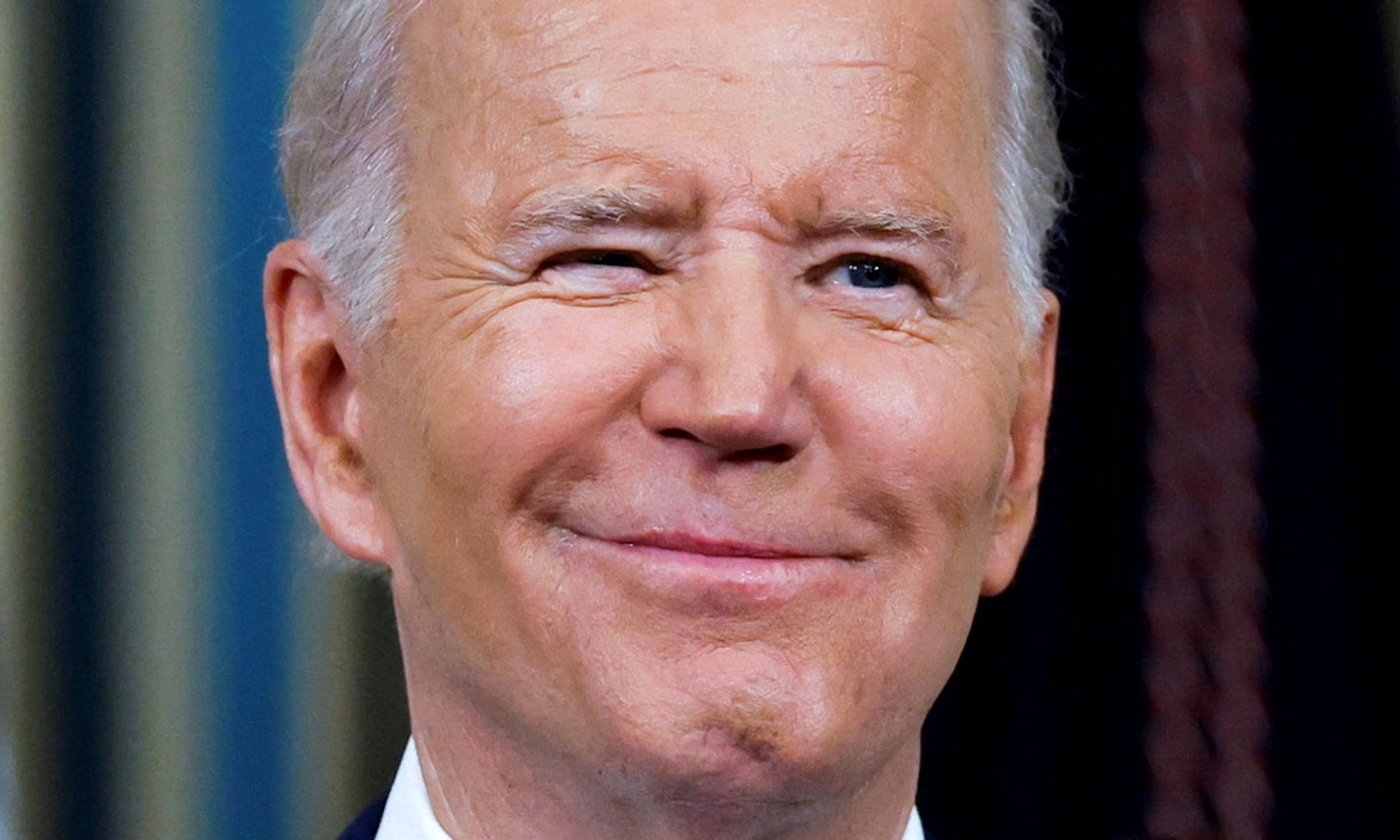
Okay, there are seemingly many valid answers to the rhetorical question above: The president is old, and he doesn’t fabulize as well as he once did, to start. Rich Lowry already made the case for why Biden 2024 is a reckless proposition.
But those are really answers to the question: Why shouldn’t Biden run? There are as many valid responses for why he would. The obvious, by now, is that his party’s better-than-expected performance in the midterms — capped off by this week’s Senate victory in Georgia — shooed away the whisper campaign in waiting that he should catch the January ’25 Amtrak to peaceful retirement, and give someone else a go. The path is clear.
His hoped-for opponent, Donald Trump, also is even more of a lunatic than he was in 2020, with each week bringing new horribles in their parade, each time repelling more voters while confirming that the no-matter-what tolerance of his core supporters is analogous to a mother’s for her son. As Rich has noted, Biden’s assumptions could be a fatal miscalculation, if Trump succumbs to a younger, fitter, smarter, and possibly tougher primary rival like Ron DeSantis — but then again, Democrats seem to be under the impression that they can pivot to make DeSantis out to be even worse than Trump somehow.
Jim Geraghty has compiled a convincing list of other reasons for Biden to plow ahead, several speaking to the president’s personal considerations with regard to legacy and public perception. He argues the decision also could help avoid a Democratic civil war:
When a president announces he isn’t running for another term, the normal development would be for his party to unite around the current vice president. But Democrats can read a poll and see that Kamala Harris is even less popular than Biden. And if it isn’t Harris, then the opportunity would be there for a bunch of Democrats with presidential ambitions: Pete Buttigieg, J. B. Pritzker, Gavin Newsom. Some African-American and women Democrats would likely resent the white male contenders attempting to dislodge Harris, making the post-primary unification of the party more difficult.
To that point, preventing Kamala Harris from coming within one election day of the presidency could be spun as a noble act of patriotism. We might be watching the leader of the free world deteriorate before our eyes, but is it worse than having to watch President Harris conduct more casual meetings with child actors or extemporize the State of the Union? Biden could singlehandedly forestall the creation of the Office of Venn Diagrams Are Awesome for a while longer, so why wouldn’t he?
Chief of Staff Ron Klain said at a summit this week that Biden probably will make his 2024 decision soon after the holidays. None too cryptically, he teased, “I expect the decision will be to do it.”
And that’s probably what will happen. The next generation of Democratic leaders . . . will wait another four years. As in the marketplace, competition can be healthy in politics, even revivifying. During a normal cycle, these midterms would have compelled Democrats to refine their product, maybe to feature less tolerance of street crime, less gaslighting over inflation. The GOP’s failure to put up adequate competition instead keeps the Left’s would-be innovators idle. The most likely play is to stick last decade’s smartphone on the shelf with a tag that says “Still Isn’t Trump” and hope the battery lasts.
NAME. RANK. LINK.
EDITORIALS
We are starting to notice a pattern here: Donald Trump Loses Georgia — Again
TikTok faces new, and welcome, scrutiny in Washington: Ban TikTok from Operating in America
New York’s social-media regulation bill is patently absurd: New York’s Assault on Free Speech
On the Musk/Taibbi news dump: Twitter’s Compromised Content Cops
ARTICLES
Philip Klein: Why Kyrsten Sinema Is Leaving the Democratic Party
Rich Lowry: DeSantis Derangement Syndrome Is Getting Stronger by the Day
Rich Lowry: ‘It Came Out of the Blue’
Madeleine Kearns: Canada’s Dystopian Death Culture
Charles C. W. Cooke: When Trump Promises to Be a Tyrant, Take Him at His Word
Jimmy Quinn: Who Punched a Protester against China Lockdowns at Columbia University?
Ari Blaff: The Unseen Faces of the Men’s Rights Movement
Caroline Downey: Meet the ‘Merchant of Death’ Freed by the Biden Administration
Seth Cropsey: A ‘Woke’ Naval Academy Hurts Our Military
Michael Brendan Dougherty: America’s Prisons Aren’t Fit for Purpose
Andrew McCarthy: The ‘Twitter Files’ Miss the Real Scandal: FBI Interference in the 2020 Election
Brittany Bernstein: Elon Musk Fires Twitter Deputy General Counsel Jim Baker over Suppression of Hunter Biden Story
Christian Schneider: Does Nobody Understand How the First Amendment Works?
Alexandra DeSanctis: When Human Life Begins
Also, a welcome update in the world of killer-robot news.
CAPITAL MATTERS
Kevin Hassett warns of the unintended consequences of Covid relief, and explains what a “put” is: The Covid Put Is the Greenspan Put on Steroids
Dominic Pino thinks this proposed regulation should be pulled over: Truckers Don’t Need to Be Tracked by the Government
LIGHTS. CAMERA. REVIEW.
Brian Allen goes to Washington, for a taste of Spain: Rarely Seen Art Charts Sargent’s Love Affair with Spanish Culture
Armond White takes on Sam Mendes: Empire of Light Sells British Sentimentality
STICK AROUND, THERE’S MORE
Michael Brendan Dougherty does what he does best here, challenging us to rethink assumptions, in this case about the American prison system:
An inspector general’s report this week showed that [Whitey] Bulger’s death was preventable and resulted from “staff and management performance failures; bureaucratic incompetence; and flawed, confusing, and insufficient policies and procedures.” Inmates at the prison were taking bets on precisely how long Bulger would live after his transfer. . . .
What the report really shows is that many prison guards and prisoners have internalized the view — common in our culture — that prisons are supposed to be madhouses of criminality, neglect, and disorder. They accept that the criminality and disorder within prisons is somehow part of the punishment meted out to convicts. While people have spent a decade denouncing “rape culture” on college campuses, a real rape culture exists in our detention facilities, where scores of thousands of men, women, and children report being sexually abused annually.
Of course fixing prisons is notoriously hard. Obviously, they’re filled with violent criminals. And guard work necessarily requires hiring hard men willing to face danger and the nastiest realities of life among the forgotten, the neglected, and the hateful.
But America has more people in prison than exist in Montana and Rhode Island combined. The cruelty of prisons and size of a prison population are among the ways we measure societies and by which they are condemned in human memory.
What this system is screaming at us is that our idea of justice has been shattered. On one side are those who want the system to be rehabilitative-restorative, and against them are those who want it to be retributive-punishing. In fact, these people are arguing past each other. Plunging a criminal into more criminality worsens him by vindicating his cynicism about society. Treating a criminal as a mere social victim worsens him by making him contemptuous of justice. A properly retributive system of justice does the work of rehabilitation. The next movement for law and order needs to start with the penitentiary.
Caroline Downey reviews the record of notorious arms dealer Viktor Bout, whose release was the price for Brittney Griner’s freedom:
Beyond sourcing the arms throughout his criminal career, Bout physically transferred them to buyers too, using a fleet of Soviet-constructed planes.
“There’s a lot of armed traffickers out there,” Rob Zachariasiewicz, a now retired DEA agent who helped apprehend Bout in Thailand, told ABC7News. “The difference with Mr. Bout was he owned his own fleet of private aircraft. People can argue: Was he the biggest arms trafficker? I look at him as one of the biggest arms transporters.”
From the fall of the USSR until his arrest in 2008, Bout violated numerous arms embargoes, including in Liberia, Afghanistan, Sierra Leone, Congo, and Libya. Jonathan Winer, a senior official in the State Department during the Clinton administration who was steeped in knowledge of Bout’s arms ventures, told Yahoo News that Bout was once the second-most-wanted man in the world, after Osama bin Laden.
Bout got his start in the arms trade by selling weapons to participants on both sides of the Angolan civil war in the late 1990s, undermining U.S. efforts to bring the conflict to a peaceful resolution. Witney Schneidman, who became aware of Bout’s involvement in the Angola conflict while serving as deputy assistant secretary of state for African affairs, called him “the personification of evil.”
Bout was “directly undermining our efforts to bring peace,” Schneidman told the New Yorker in 2014.
In 2010, John Brennan, Obama’s deputy national-security adviser for Homeland Security and Counterterrorism, said in an interview that capturing and trying Bout was crucial to thwarting the flow of illegal arms sales to dangerous terrorist entities.
Following up on the above, here’s why New York’s social-media regulation bill is patently absurd. From NR’s editorial:
The Social Media Hate Speech Accountability Act, which went into effect on Monday, requires any social-media site that operates in New York to set up a public channel via which users can report so-called hate speech, and obliges the sites’ owners to respond directly to anyone who uses it. If they refuse, they may be fined up to $1,000 per day.
New York’s law represents a direct violation of the First Amendment. There is no such thing in American law as “hate speech,” and, as a result, there is no meaningful rubric that the state of New York — or, eventually, the courts — can use to evaluate the claim that it has not been adequately regulated. New York’s definition of “hate speech” includes any language that serves to “vilify” or “humiliate” any “race, color, religion, ethnicity, national origin, disability, sex, sexual orientation, gender identity or gender expression.” But, unless such speech is likely to incite imminent illegal action, it is perfectly legal. Under the First Amendment, New York is prohibited not only from regulating such conversations directly, but also from regulating them indirectly by deputizing private actors in lieu of the police. This is not East Germany; it is America.
This problem also bedevils the second part of New York’s law: the obligation to respond to complaints. There are some narrow circumstances in which governments may compel private actors to speak against their wishes — in advertising, for example — but, because the speech about which distressed social-media users would be complaining in the first instance is beyond the scope of government regulation, no such exception obtains. Under current Supreme Court precedent, online entities may moderate their users’ legal speech as much, or as little, as they wish.
Charles C. W. Cooke writes on why Trump’s latest outbursts (about shredding the Constitution), once more, cannot — must not — be excused away:
When Trump declared his 2024 candidacy last month, he implicitly asked us to judge him and his plans for the country, and, eventually, to compare those plans to those that are on offer from other hopefuls. And so we must — including when he talks about the election of 2020. I have never believed that it was a good idea simply to ignore Trump’s ramblings as if he were just some washed-up radio host. But now? After Saturday’s post? Now, that is simply not an option. If Donald Trump gets his way, he will be president of the United States again, and, quite obviously, we cannot have a president of the United States who has called for throwing out a certified election, who has demanded his installation as a dictator, or who has proposed the “termination of all rules, regulations, and articles, even those found in the Constitution.” Ahead of time, Trump is informing us that he aspires to be a tyrant. Sic semper tyrannis.
The excuses that are being marshaled in Trump’s defense are, as ever, utterly pathetic. Trump said what he said, and he meant what he meant, and what he said and what he meant are flatly unacceptable coming from a man who was once the leader of a free country, and who aspires to be so again. No other figure would inspire the performative downplaying or studied bewilderment that Trump receives from his partisans. His meaning was clear, and — just as important — it was entirely consistent with his previous conduct. This is a guy who, in early 2021, attempted to stage a coup. Forget the riot on January 6 for a moment — in the grand scheme of things, that was a sideshow — and examine what Trump was trying to do while that riot occurred. Repeatedly, and without shame, the president of the United States made an attempt to rewrite the 1887 Electoral Count Act and the Twelfth Amendment to the Constitution so that Mike Pence could be transformed into an election-dictator and declare that he, Donald Trump, rather than the winner, Joe Biden, had prevailed in the election.
Grumble if you must, but those are the plain facts of the case, and they have not changed. . . .
American patriots do not seek to overturn legitimate election results or recommend the suspension of the United States Constitution; they respect and defend both at all costs. Donald Trump is not a patriot. He is, in his heart of hearts, a tyrant. Take note, America.
Honorable Mention
From our good friends at NRI:
December 15 Deadline for Dinner and Discussion with Friends in Miami, New York, and Philadelphia
We live in a time where discussion and debate have been quashed by the media, by corporations, and even, sadly, by our own friends and relatives. There are very few places in our society where individuals can gather, discuss big ideas, and debate the merit of these ideas — respectfully, and without fear of reprisal. Offering this kind of forum through the Burke to Buckley Program is one way that National Review Institute preserves and promotes the Buckley legacy and advances the principles of a free society.
The Burke to Buckley In-Person Program is an eight-session series designed for mid-career professionals to gain a deeper understanding of conservative thought and to build a network of talented individuals who can assist one another professionally and personally for years to come. Candidates should have between ten and 25 years of professional work experience and ideally be between 35 and 55 years old. This program is not intended for recent graduates or people working in the fields of public policy or politics.
Applications can be accessed on the NRI website. Please note that there is a $500 fee which partially offsets the cost of the program for accepted fellows. We would be grateful if you would help us expand this program by sharing this information with people in your community and network. Please contact Lynn Gibson at [email protected] if you have any questions or would like additional information.
The deadline to apply for the Spring 2023 Burke to Buckley Program in Miami, New York, and Philadelphia has been extended to December 15. Learn more and apply here.
Shout-Outs
Thomas Fazi, at UnHerd: The paradox of Degrowth Communism
Susannah Luthi, at the Washington Free Beacon: Anti-Musk Twitter Users Sic San Francisco Building Inspectors on Company’s San Francisco HQ
Michael Wilkerson, at RealClearFlorida: Five Reasons I Moved to Florida
CODA
This week saw the first morning frost on the cars in my neighborhood (yes, yes, we in the Mid-Atlantic are spoiled compared with, say, Buffalo, where generations’ worth of snow has already plummeted). It’s enough to make one pine for balmy island evenings, and Duke Ellington’s Concert in the Virgin Islands conjures that effectively. The album’s opener and part of a suite, “Island Virgin,” is practically the soundtrack to a cocktail.
Got any warm-weather music to recommend to this list? Shoot it my way, in the direction of [email protected]. Thanks for reading.




Comments