As a diehard NBA fan, I try to make a point of watching every single competitive Oklahoma City Thunder basketball game. Russell Westbrook is a force of nature, the team is a fascinating experiment in melding together three very different stars — Westbrook, Paul George, and Carmelo Anthony — and the OKC home crowd brings playoff noise even to regular-season games in the dog days of January. Yesterday, they played the Philadelphia 76ers, and the game was intense. Both teams wanted it, but OKC pulled away at the end of the fourth quarter. If you’re an NBA skeptic, games like that will win you over, fast.
This essay isn’t about the NBA. It’s inspired, however, by something Sixer coach Brett Brown said in his brief interview right after the first quarter. He said that he told his players that they were playing in a “man’s gym,” and they had to respond accordingly.
Instantly, I knew what he was talking about. The Thunder are physical. Westbrook plays with a kind of primal aggression that’s unique even in an aggressive league. At their best, the Thunder play with a level of speed, power, athleticism, and ferocity that you see in few other teams. They’re men, and they play like men.
At the same time, I couldn’t help but be just a little bit surprised by Brown’s comments. In some quarters, those words are passé, maybe even a tiny bit offensive. The wars over “toxic masculinity,” assertions that people are “gendered” more than born with dramatic and distinct sex differences, the elimination of distinctly male spaces (including the transformation of the infantry), and the contention that there are no distinctly male or female ways of being — gender is fluid and non-binary — mean that some people will hear Brown and ask, “But what does that even mean?”
In fact, as we ponder our enduring culture wars and the growing cultural and religious gap between Left and Right, we’re all understanding that our American divide increasingly isn’t over mere public-policy issues, it’s over the deepest and most profound questions in life. To take one example, thought leaders on the cultural left and cultural right now can’t even agree on the answer to one, simple question:
What is a man?
A cultural conservative would respond with simple biology and build from there. A man is a person with a distinct chromosomal and physical makeup who — from birth — is typically distinctly different from women. Men are typically physically stronger than women. They’re typically more aggressive than women. They typically have a different emotional response to events.
Thus, the raising and training of a boy is typically a different task from the raising and training of a girl. The cultural conservative looks at the male child and says, I want to train him to take care of a family, to be a provider and a protector. I want to channel his strength and aggression into duty, courage, and honor. I want to channel his drive and energy into a lifelong quest for self-improvement and service. In other words, I don’t want him to see his masculinity as a problem to be controlled but rather a gift to be properly enjoyed.
A cultural liberal — especially a secular cultural liberal — increasingly responds with a fundamentally different answer. A man is a person who believes that he’s a man. His masculinity is unrelated to his biology and instead inextricably linked to his self-conception. Since both men and women can possess stereotypically “masculine” or “feminine” traits, the terms themselves have little meaning — except as a means of understanding outdated and damaging gender stereotypes. To the extent that a man has any special responsibility, it is to combat toxic masculinity and to undermine male privilege. Masculinity, as traditionally understood, isn’t a gift to be properly enjoyed but rather a problem to be controlled.
Now, take those two different definitions, take the different parenting styles that flow from them, and then multiply by the several millions of families that live, believe, and act accordingly. Would you not create two separate worlds? Would you not start to see very different masculine ideals emerge? Would you not see different tastes, styles, and beliefs? Would you not start to lose a common language, culture, and morality?
On the right, there is a renewed emphasis on cultivating traditional manliness. Jordan Peterson’s popularity is a sign of the longing for understanding a distinctive male purpose and male way of living that is true to biology and psychology. Books and movies such as American Sniper connect at a fundamental level with men young and old who seek heroes — the men who want to be the “sheepdogs” of their families and their communities.
On the left, the war isn’t just waged against so-called toxic masculinity; increasingly it’s waged against the very concept of manhood itself. Writing in New York magazine, Andrew Sullivan lamented the increasingly radicalization of the gay-rights movement, and he singled out its view of gender as a prime culprit:
Above all, they have advocated transgenderism, an ideology that goes far beyond recognizing the dignity and humanity and civil equality of trans people into a critique of gender, masculinity, femininity, and heterosexuality. “Live and let live” became: “If you don’t believe gender is nonbinary, you’re a bigot.”
Sullivan makes the key point. The transgender moment isn’t about tolerance. Even those — like me — who understand that a man can’t become a woman do not wish any transgender person ill and are happy to live and work alongside of our transgender neighbors in a community that protects each person’s civil liberties, equally. The transgender moment is about redefinition. It’s about re-imagining. And it’s a small part of a much larger project purports to redefine and re-imagine virtually every aspect of human existence.
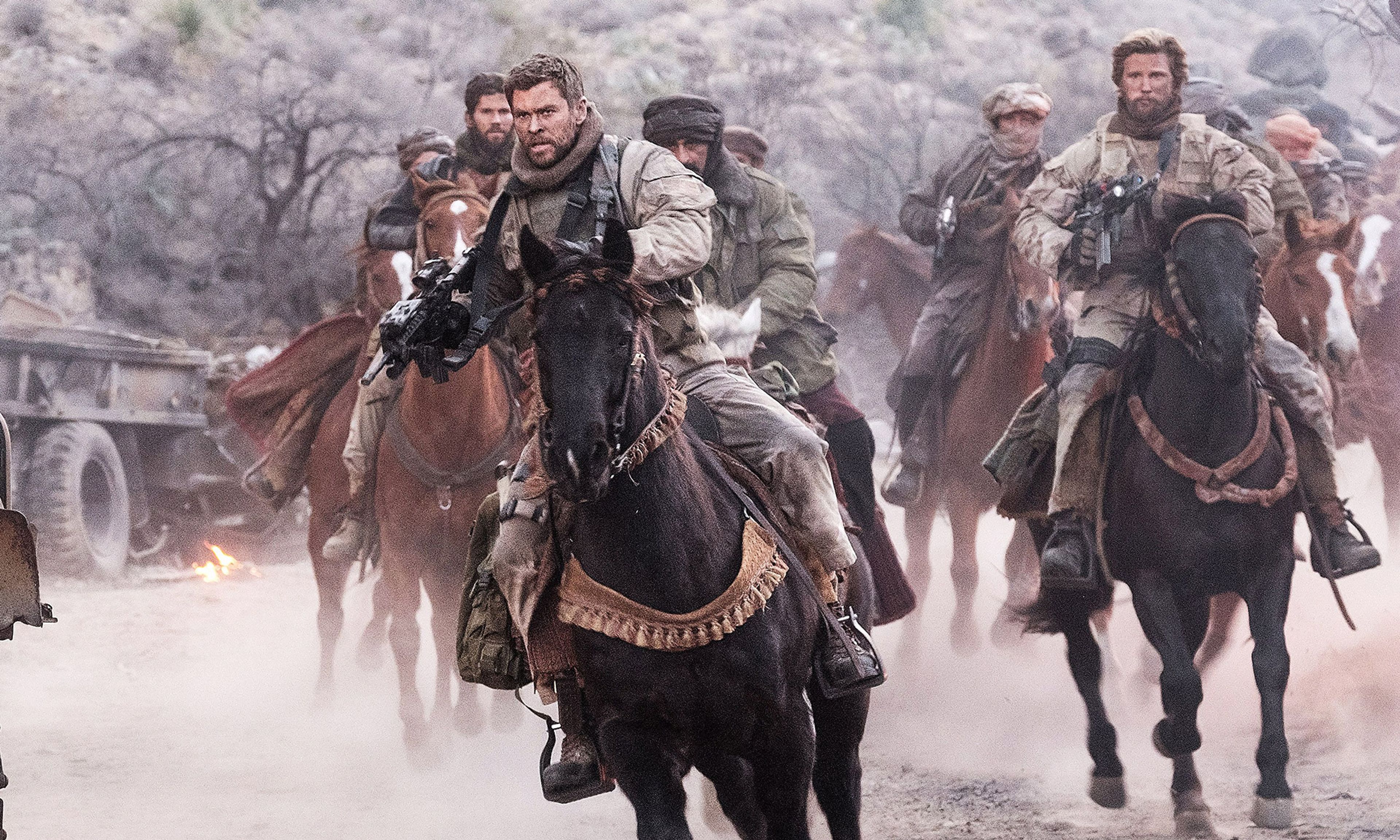
Last week in The Intercept, writer Peter Mass took direct aim at the “outdated model of masculinity” in the movie 12 Strong. The movie tells the story of one of the first special-forces teams inserted into Afghanistan after 9/11. It’s a team that helped win a key battle and liberated a community from the ultimate form of “toxic masculinity” — Taliban tyranny. And yet it’s still problematic.
The time has come for Hollywood to turn away from war movies that, while satisfying to both a studio’s bottom line and a flag-waving concept of patriotism, perpetuate a model of masculinity that does violence to us all. . . . What matters is that well into the second decade of our forever war, the combat movies that populate our multiplexes and our minds are devoted to a martial narrative of men-as-terminators that should have been strangled at its birth a long time ago.
No, it’s not about “men as terminators.” It’s about “men as protectors,” and if we don’t cultivate that virtue and advance that narrative then who, pray tell, will protect our nation, our culture, and our civilization?
We battle over reality itself, and we do so as enclaves on the cultural left increasingly brook no dissent.
Our American differences are growing so very profound. Yes, we battle over tax rates and policing tactics. But we also battle over the deepest questions in life. We battle over reality itself, and we do so as enclaves on the cultural left increasingly brook no dissent. The cultural indoctrination begins early, and it’s intense. To fully understand, talk to conservative parents and kids in our most progressive public and private schools.
What is a man? It’s a question they dare not ask. If asked, there is an answer they dare not give. That’s how wide our divide has become.
READ MORE:
On Man’s Duty to Defend the Weak and Vulnerable






Comments