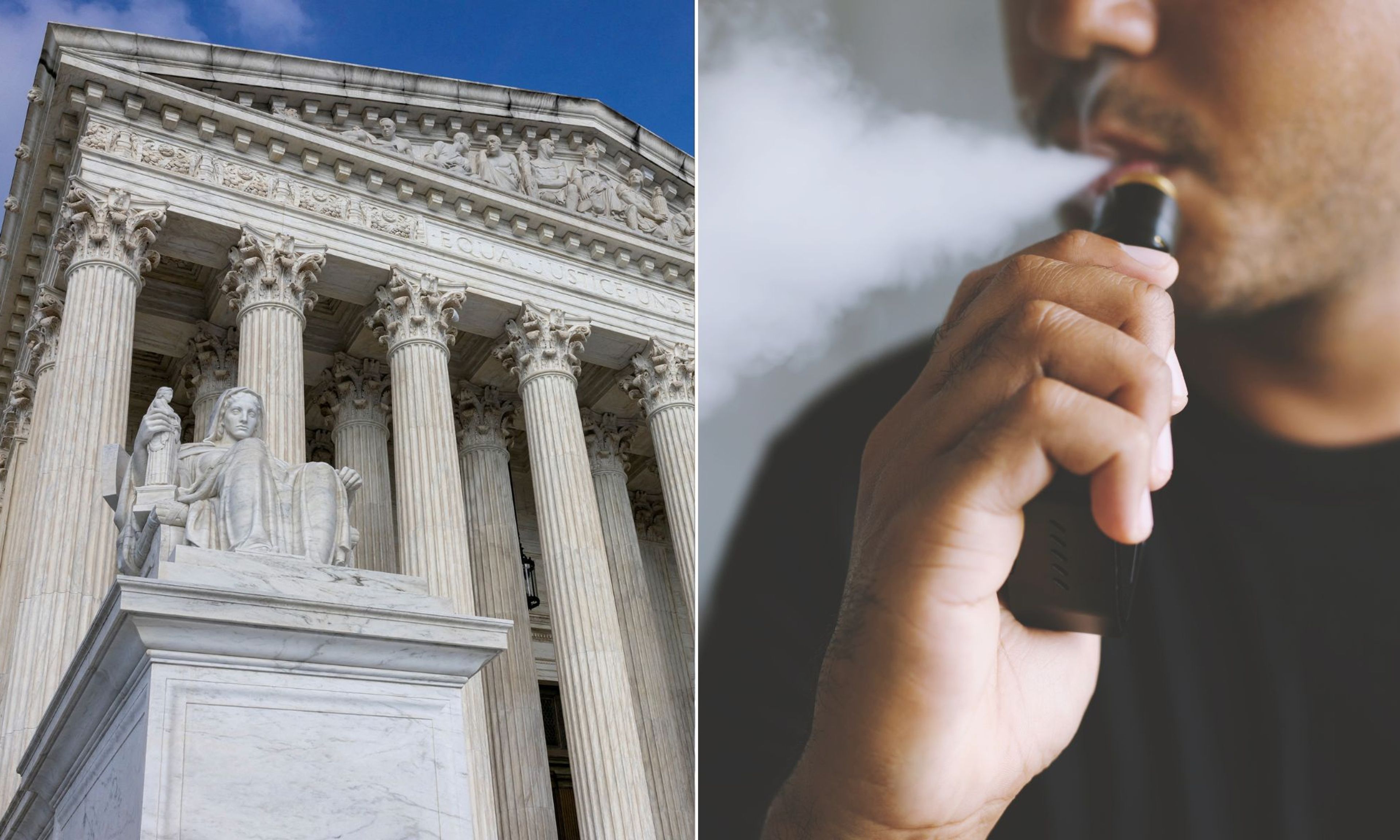
Two Supreme Court decisions this morning saw setbacks for the e-cigarette industry and for a medical marijuana company. But the issues were quite different, and only the e-cigarette case centered closely on the nature of the product. The 5–4 decision in Medical Marijuana, Inc. v. Horn revived a lawsuit by a truck driver over the loss of his job allegedly due to a falsely advertised product that caused him to fail a drug test. It involved a narrow statutory question of what sort of injuries to “business or property” can be recovered under the Racketeer Influenced and Corrupt Organizations Act (RICO). The Court emphasized that RICO claims cannot be brought for personal injuries: The statute “implicitly excludes recovery for harm to one’s person,” so “if the owner of a gas station is beaten in a robbery, he cannot recover for his pain and suffering. But if his injuries force him to shut his doors, he can recover for the loss of his business . . . regardless of whether the loss resulted from a personal injury.” The decision may not amount to much; Justice Amy Coney Barrett’s opinion noted that only “direct” causation of injury supports a RICO claim, which is hard to show in connecting advertising about ingredients to a lost job. Justice Clarence Thomas argued that the circuitous and disputed chain of causation should have persuaded the Court to steer clear of the case entirely.
By contrast, the Court’s unanimous decision in the e-cigarette case, FDA v. Wages and White Lion Investments LLC, not only has major implications for the industry; it also sends a message to lower courts in other areas to give executive agencies more space to change their policies without judicial micromanagement. District judges hearing the wave of anti-Trump lawsuits should read Justice Samuel Alito’s opinion as a warning.





Comments