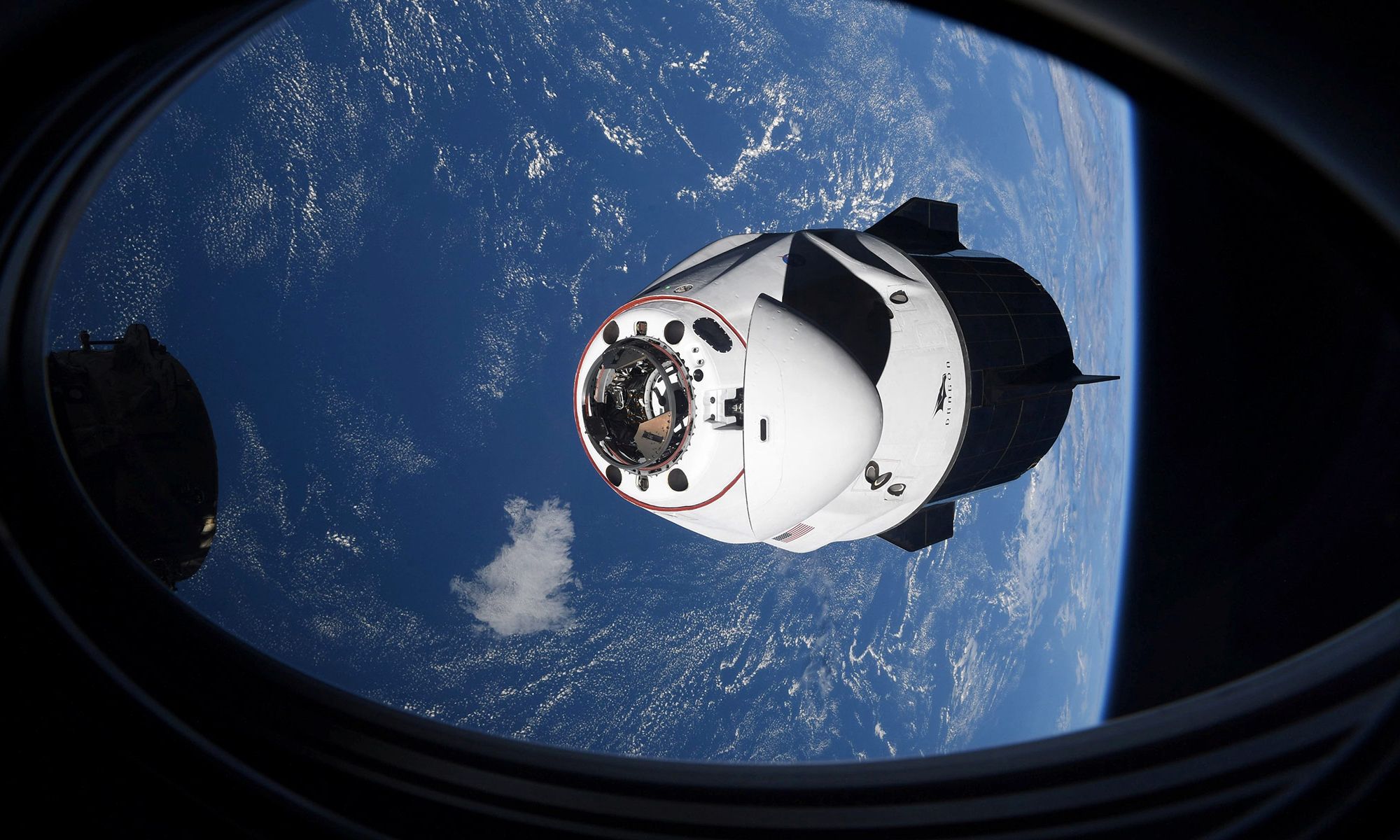
The space economy is getting lots of attention — and for good reason. The industry is valued at $600 billion and projected to reach $1.8 trillion by 2035, so the prospects for wealth creation in space are enormous. Activities once considered the purview of science fiction, including moon mining and manned deep-space missions, are on the cusp of feasibility. “Space” is no longer just about science and exploration. It also now offers a serious business opportunity. We need capable thinkers addressing questions of commercial feasibility in space, and that will involve recruiting both the private and public sectors to the tasks that best suit them.
Matthew Weinzierl and Brendan Rosseau’s new book Space to Grow: Unlocking the Final Economic Frontier (Harvard Business Review Press, 2025) offers a valuable perspective on the role of, respectively, private enterprise and government in space. Weinzierl is a professor and associate dean at Harvard Business School; Rousseau was formerly an instructor at Harvard Business School and now works in orbital launch strategy at Blue Origin. Together they bring intellectual firepower and industry experience to some of the most exciting — and challenging — economic and policy issues of the day. Their book accomplishes its mission, using economic analysis to understand the promises and perils involved in expanding markets further into the final frontier.
The framing of the book is immediately familiar and appealing to anyone with an economics background. The authors use the First Fundamental Theorem of Welfare Economics (1FTWE — “under certain conditions, using the decentralized market to organize economic activity makes the most of the resources we have”) as a lens to explore the optimal boundary between markets and governments in space, and by extension to demonstrate where the comparative advantage of businesses lies.
The book offers a three-step plan for maximizing space wealth: “establish the market,” “refine the market,” and “temper the market.” 1FTWE shows why commercial space developments, most notably the extraordinary reductions in launch costs that SpaceX has achieved, needed the blend of creative innovation and no-nonsense cost minimization that private firms alone have the information and incentives to achieve. But this still leaves an important role for government. None of this would have been possible without NASA and other public sector agencies serving as anchor customers, creating the demand that allowed revolutionary space companies to establish themselves. And it remains the government’s job to keep space accessible, especially by mitigating orbital clutter. For-profit businesses might soon be able to actively remove space debris, making orbit safer for everyone. But governments will probably be heavily involved as regulators of activities and purchasers of products. Private sector initiative ensures that the taxpayers get a good deal, so long as public sector prudence and restraint get the basic governance questions right.
The book’s twelve chapters work well both as individual case studies and an integrated narrative. The authors do an especially good job of highlighting how the economist’s tool kit clarifies ongoing changes in space. Technical microeconomic concepts, such as demand elasticity (consumer sensitivity to price changes) and returns to scale (output bang per input buck), come to life in examples covering satellite imaging and space stations. Financing, including seed-stage and venture capital, gets a fair treatment that balances optimism with pragmatism. Casual space enthusiasts, scholars, and industry practitioners alike will find something useful here.
The thing I like most about Weinzierl and Rosseau’s book is its long shelf life. Even if, years from now, the landscape of space companies looks quite different from today’s field, their paradigm will remain relevant. Their economic analysis is easily generalizable and scalable.
As an “out of sample” example, there’s currently a big policy debate about the government’s role in tracking man-made space objects. The Office of Space Commerce maintains a nascent “space situational awareness” system, the Traffic Coordination System for Space (TraCSS, pronounced “tracks”), to help satellite operators avoid collisions in orbit. The White House apparently wants to cut this program, arguing that the private sector is already doing this. Legislators want to keep it. How should we think about the roles of governments and firms in maintaining an orbital registry?
Space to Grow suggests an answer: Business’s comparative advantage is in producing the information, whereas government’s comparative advantage is in funding the information. This episode shows the feasibility of private entities producing public goods — things such as information, which are both non-rivalrous (information used by one party remains available for other parties) and non-excludable (it’s hard to prevent free riders from benefitting from the information) in consumption. Public financing plus private provision gets us the best of both worlds: The government can purchase, verify, aggregate, and disseminate information, fulfilling its responsibilitiesto its own citizens as well as other spacefaring nations, while the private sector focuses on what it does best: offering a valuable service as cheaply as possible.
Weinzierl and Rosseau deserve credit for embracing a holistic conception of wealth, one that includes basic moral commitments and not dollars and cents only. Democracy, the rule of law, and human rights matter just as much in space as they do on earth. Keeping these values means meeting the many challenges that await us in the final frontier. Figuring out a regime for celestial property rights and keeping space free from conflict, the subjects of the concluding chapters, are the two biggest. Economics alone won’t solve our problems. But the solutions absolutely depend on good economics.
Space to Grow is timely in its subject and timeless in its treatment. The economic way of thinking will always be relevant to humanity’s greatest endeavors. Even among the stars, we can’t escape scarcity. But thanks to Weinzierl and Rosseau, we can navigate the attendant trade-offs wisely.




Comments