A U.S. Navy sailor signals an F-35C Lightning II assigned to the “Argonauts” of Strike Fighter Squadron VFA-147 as it takes off from the flight deck of the Nimitz-class aircraft carrier USS George Washington (CVN-73), under way in the U.S. Fifth Fleet area of operations, October 7, 2026.
Congress reclaiming war powers would restore constitutional accountability after decades of presidential overreach.
Democratic hypocrisy could nonetheless revive essential checks on executive power.
Divided government offers a rare opening to make lawmakers answer for war and peace.
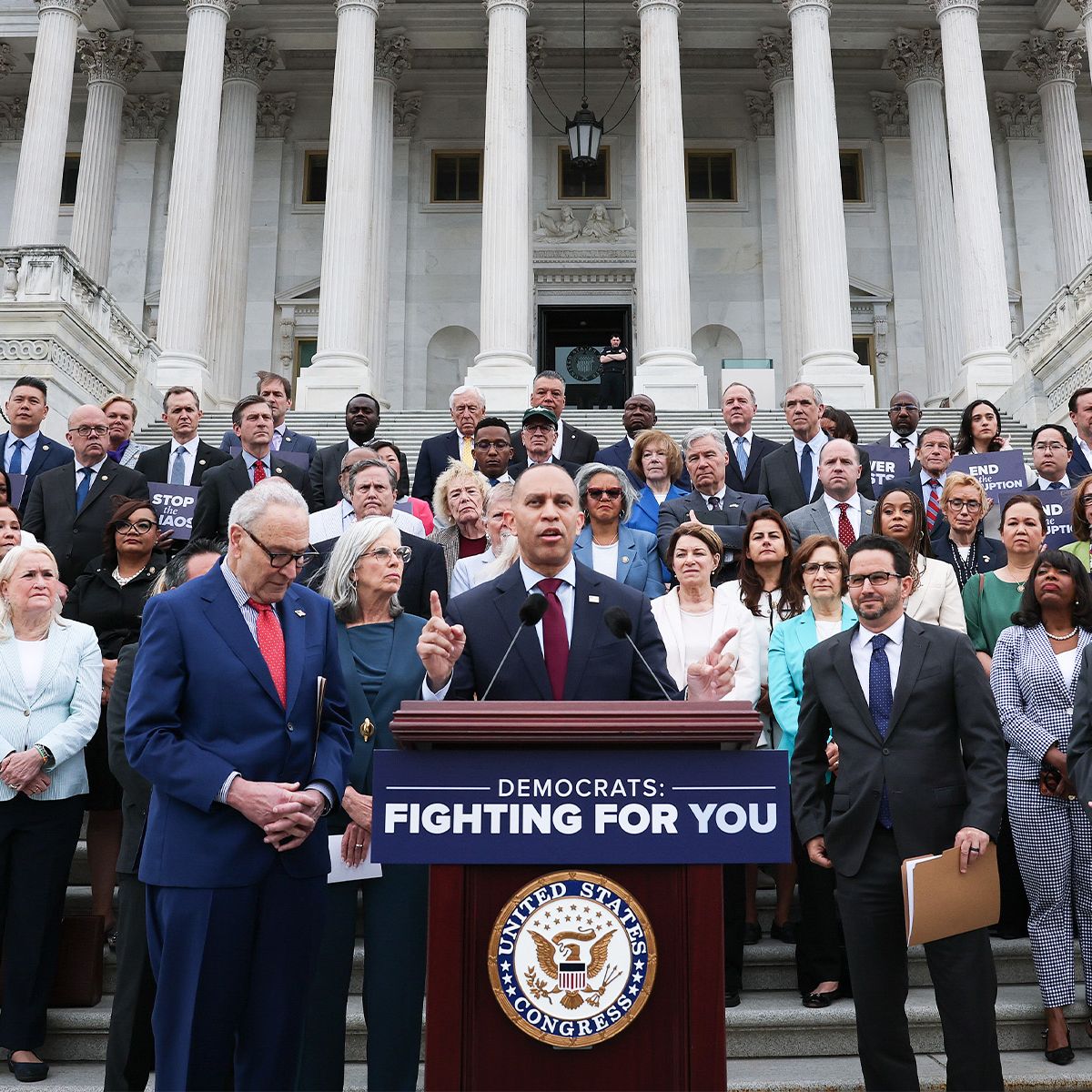
If there’s one subject that unifies the Democratic Party after their midterm election victory this month, it’s ending the war in Iran. , who will likely return as Senate Majority Leader when the next Congress is gaveled into session on January 3, declared that terminating the conflict was at the top of his to-do list. The top House Democrat, Hakeem Jeffries, echoed that sentiment: “We need to end the reckless and costly war of choice in Iran. That’s been a commitment that we’ve made.”
At first glance, none of these remarks are particularly surprising. Throughout the midterms, the Democrats pegged the nagging cost of living and higher energy prices stateside to the war that’s occurring thousands of miles away in the Persian Gulf. It turned out to be a winning political strategy. Compelling President Trump into ending hostilities by filing another War Powers Resolution on the Senate floor or by cutting off funds for the war would just be a logical extension of what the party ran on.
Congress reclaiming war powers would restore constitutional accountability after decades of presidential overreach.
Democratic hypocrisy could nonetheless revive essential checks on executive power.
If there’s one subject that unifies the Democratic Party after their midterm election victory this month, it’s ending the war in Iran. , who will likely return as Senate Majority Leader when the next Congress is gaveled into session on January 3, declared that terminating the conflict was at the top of his to-do list. The top House Democrat, Hakeem Jeffries, echoed that sentiment: “We need to end the reckless and costly war of choice in Iran. That’s been a commitment that we’ve made.”
At first glance, none of these remarks are particularly surprising. Throughout the midterms, the Democrats pegged the nagging cost of living and higher energy prices stateside to the war that’s occurring thousands of miles away in the Persian Gulf. It turned out to be a winning political strategy. Compelling President Trump into ending hostilities by filing another War Powers Resolution on the Senate floor or by cutting off funds for the war would just be a logical extension of what the party ran on.



Comments