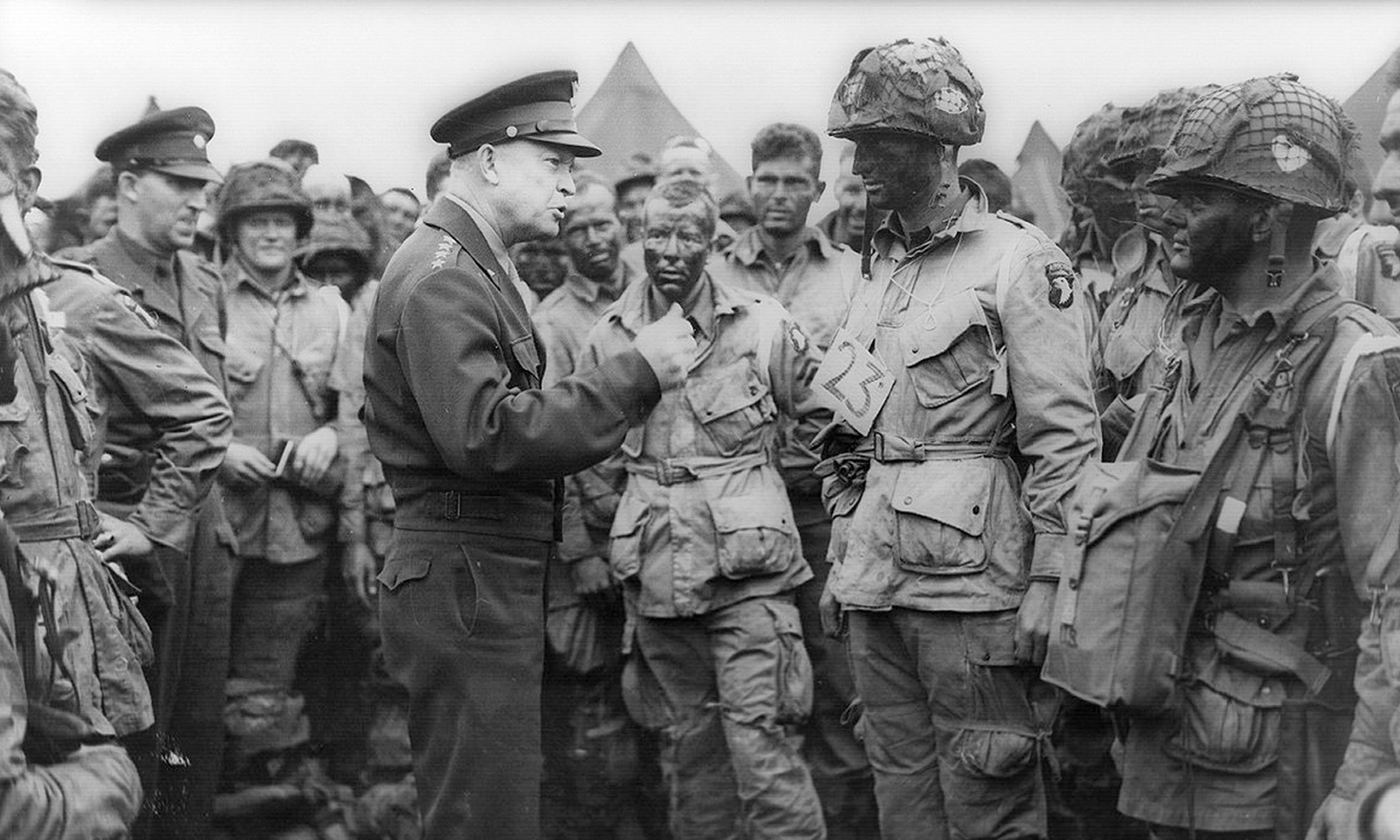
This weekend marks the 82nd anniversary of the D-Day landings. One suspects that, after the major celebrations that marked the 80th anniversary in 2024, 2026 will be a much quieter affair. This, perhaps, is appropriate. Of the 16.4 million Americans who served worldwide during World War II, only around 45,000 remain, and they die every day — the very youngest are now in their late 90s. Some 73,000 Americans actually landed in Normandy on D-Day. No one has precise figures for the number of American D-Day survivors, but if we extrapolate from the WWII figures, perhaps only approximately 200 of them are still alive — and it might be fewer.
So the “lived experience” of D-Day, to use a currently popular construction, is reaching its inevitable vanishing point. It’s now become all about remembrance, and, one hopes, honest remembrance and reflection worthy of the event’s immense historical significance. It’s good to see that D-Day still inspires thoughtful popular presentations, such as the recently released film Pressure, which dramatizes the critical role weather forecasting played in General Eisenhower’s D-Day decision-making.





Comments