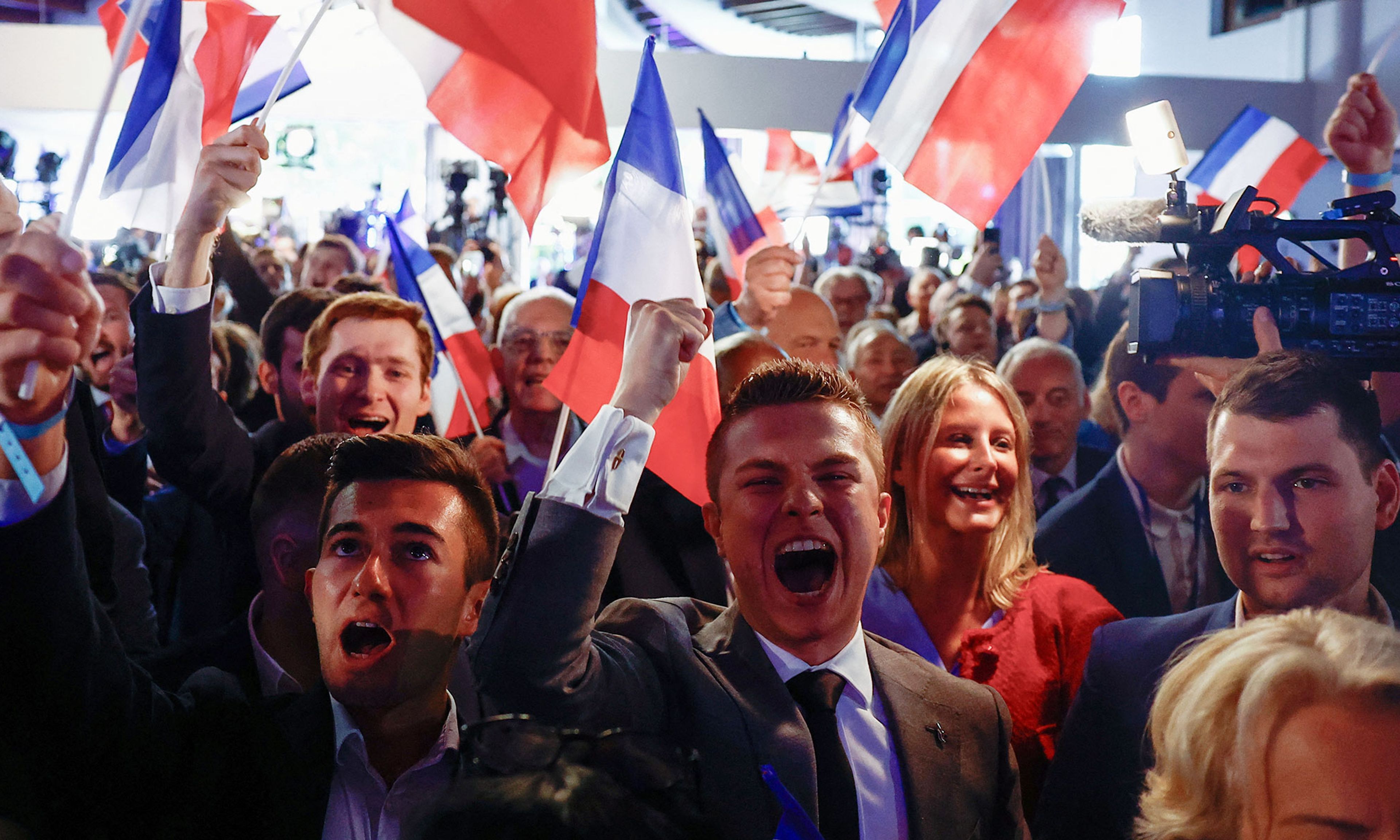
On Sunday, voters of 27 European countries headed to the polls to elect representatives to the European Parliament, the legislative branch of the European Union. These elections, held every five years, were the first since 2019, a year that now feels further in the past than it really is. Since then, a pandemic, followed by a war and a cost-of-living crisis, all have gripped Europe. Unsurprisingly, voters’ preferences and priorities have changed a lot since this decade began. As is often the case when turmoil strikes Europe, France was once again the epicenter.
Parties in the European Parliament form caucuses based on ideological alignment, currently organized into seven groups. The two largest groups are the center-right European People’s Party (EPP) and the center-left Socialists and Democrats (S&D), which traditionally form a broad coalition. Over the past five years, they have been joined by the liberal, pro-European Renew Europe in this coalition. To the right of the EPP is the European Conservatives and Reformists (ECR), which consists of “Eurorealists” who support the EU but advocate transferring many responsibilities away from the Union and back to member states. Further to the right is Identity and Democracy (ID), a hard Euroskeptic and nationalist group, which includes parties such as France’s National Rally.




Comments