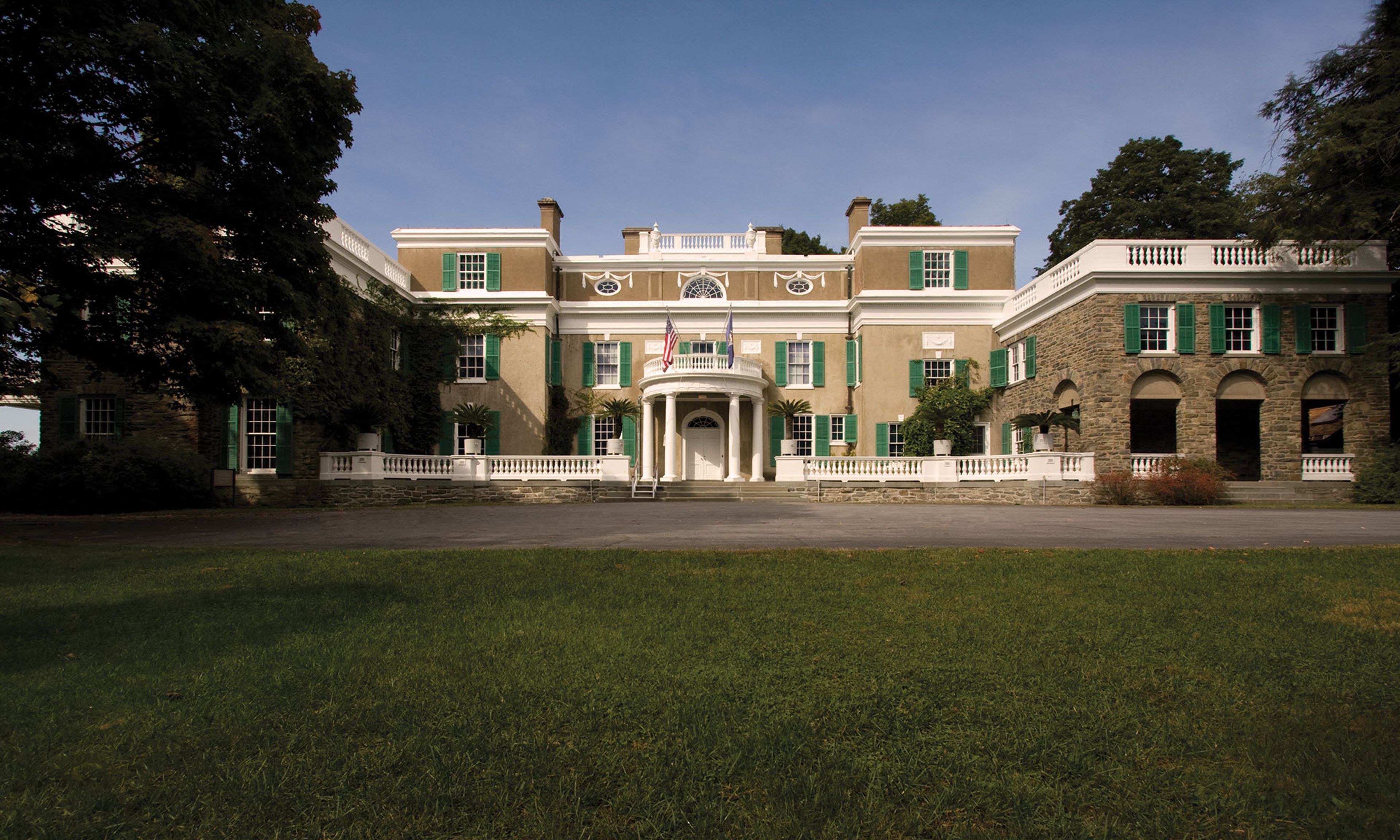
A few weeks ago, I was driving back to Vermont on Sunday morning from New York after visiting four art fairs, among them the Armory Show. I’d passed the signs pointing to Hyde Park, Franklin Roosevelt’s home in Dutchess County, a hundred times over the years yet hadn’t visited since, I believe, the early ’70s. This time, FDR’s voice rumbled through my head. I thought, “I have nothing to fear but getting home late for dinner.” In August, I’d visited the Hermitage, Andrew Jackson’s impressive home near Nashville, and James Knox Polk’s house museum in Cumberland in Tennessee. “Why not do it?”
What we call Hyde Park isn’t Roosevelt’s home — that’s called Springwood — but a village about halfway between New York City and Albany. Springwood was the summer residence of James Roosevelt, FDR’s father, who bought the land and a mongrel Italianate–Shingle Style house in 1867. The Roosevelt family, rich from New York City and sugar refining, had a summer estate in the village of Hyde Park since around 1810. The Springwood estate, under the rule of James and FDR, grew to 1,500 acres as they bought adjoining parcels along the Hudson River.





Comments