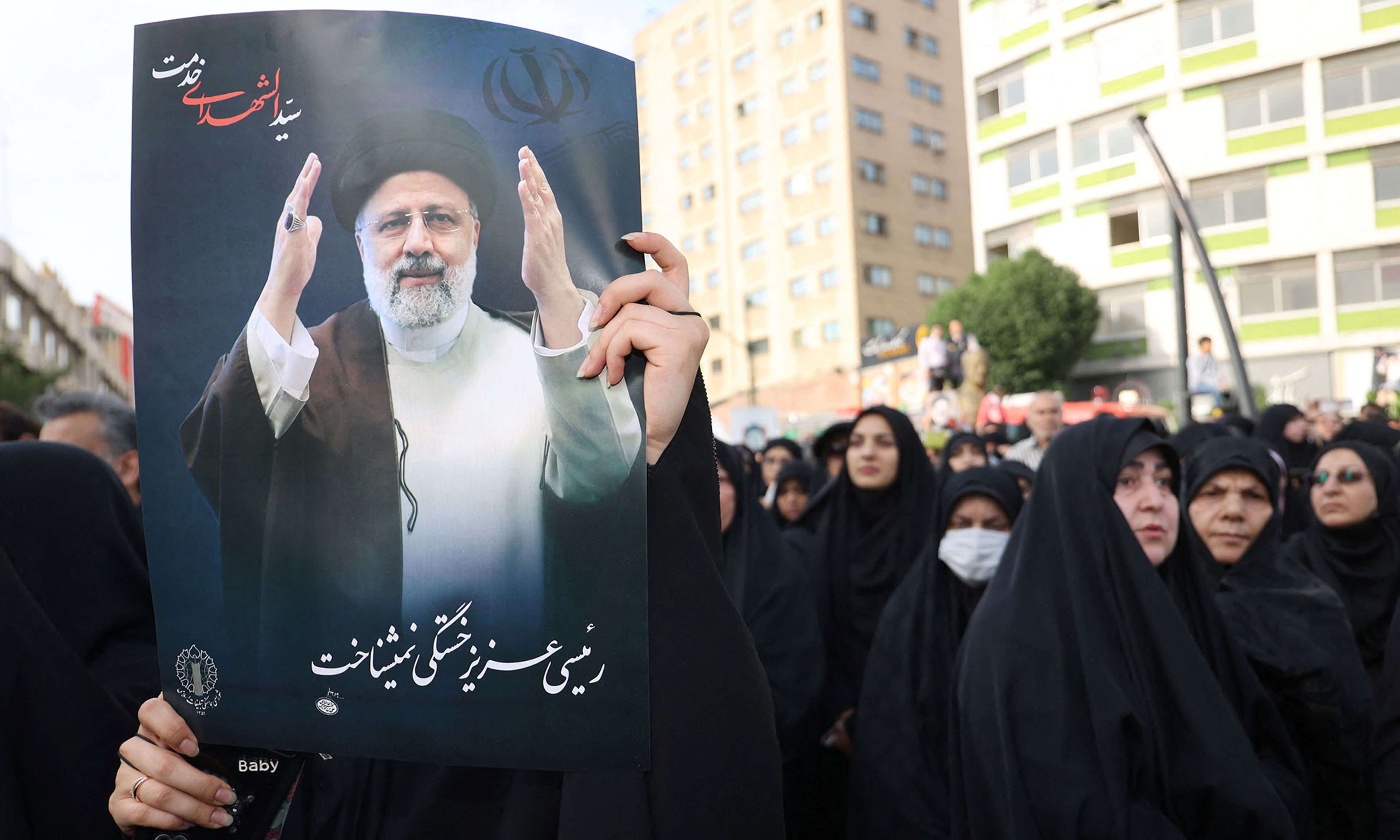
On Sunday, the Islamic Republic of Iran’s president, Ebrahim Raisi, widely referred to as the “Butcher of Tehran,” died in a helicopter crash alongside his foreign minister, Hossein Amir Abdollahian, and several other senior officials. This incident has sent shock waves through the nation, raising urgent questions about the immediate and long-term implications for the country and the region. The sudden vacancy in leadership has prompted speculation about Raisi’s presidential successor and, ultimately, the identity of the next supreme leader.
The Iranian political system is complex and opaque, making conjectures difficult. The president is in charge of the state government and its bureaucracy, while the powerful Islamic Revolutionary Guard Corps (IRGC) controls the parastatal domain, complete with huge enterprises in virtually every branch of the economy. The supreme leader is said to be the ultimate decision-maker and arbiter of the various state and parastatal interests.




Comments