
On the menu today: Today is Veterans Day; thank you, veterans. It is also the first day of the newly redesigned NationalReview.com, and our CEO Chuck DeFeo gives you a tour here. In addition to all kinds of bells and whistles — including a search engine that works! — the new site features 71 years of magazine archives now fully available in digital form to paid subscribers. If you haven’t checked it out already, you’re going to want to do so at the earliest opportunity.
There are no permanent victories in politics, and thus no permanent defeats. But in the week since the election, the president has demonstrated that the only real change he needed was making his new chief of staff. heard the message of the and interpreted it as a vast national cry of “moreso.” Read on.
Trump Didn’t Learn the Midterm Lesson
No one in his right mind expected President Trump to respond to the 2026 midterms with a declaration, “Mea culpa, mea culpa, mea maxima culpa.”
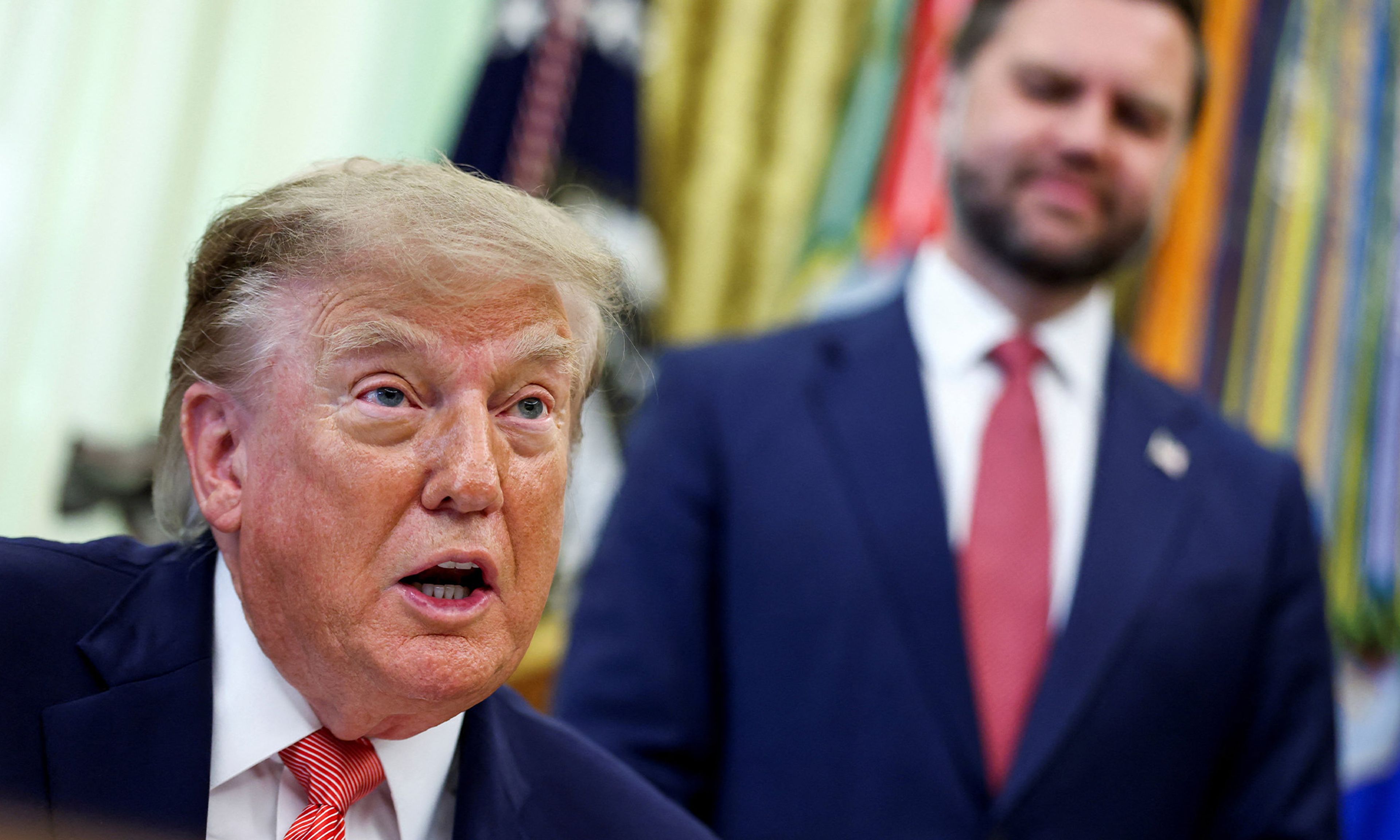
But everything we’ve seen in the past week — Stephen Miller’s promotion to chief of staff, President Trump’s 60 Minutes interview, the half-hearted return of the stolen election conspiracy-mongering — indicate that Trump is just going to be the same guy he’s always been, except older and perhaps more erratic.
Our Mark Krikorian is correct that no one should be holding their breath, waiting for Trump to reach a grand compromise with Democrats on an amnesty deal or a path to citizenship for illegal immigrants. Back in June 2024, Trump said on the All-In podcast, “You graduate from a college, I think you should get automatically, as part of your diploma, a green card to be able to stay in this country. And that includes junior colleges too.” The comment came and went, and it certainly didn’t become Trump administration policy. Trump says a lot of things, particularly when it comes to the possibilities of reaching some grand deal.
There’s a long road ahead between this moment and Election Day 2028. But if the biggest factor in the Republicans’ 2026 midterm wipeout was Trump, the way he sees the role of president, and the decisions he has made . . . and the man shows no indication of changing or even taking any responsibility for having any role in the coast-to-coast rebuke of Republicans . . . then we should not expect any significant improvement in the image of the GOP for the next two years. (As our Jeff Blehar put it, “Meet the new Trump, same as the old Trump.”)
I’ll say this for Vice President JD Vance: if Vance had made all right decisions in everything he had done in his role as vice president during the past two years, I don’t think it would have made much of a difference in the outcome of the 2026 elections. The president, and his decisions — yes, on both the Iran war and the tariffs, along with a host of other things — just drowned out any alternative perceptions of his administration.
Nor do I think there’s a huge consequence in Mike Johnson no longer leading House Republicans, and Jim Jordan becoming House minority leader, nor John Thune remaining as leader of Republicans in the Senate. In the national discourse and the perception of the parties, Johnson, Jordan, Thune — they’re minor bit players. (In any given survey, about half of Americans have an opinion on Thune, and about 70 percent of Americans had an opinion on Mike Johnson.) Leadership fights that are a huge deal to the activist class are just not that significant to most Americans.
Donald Trump sucks up just about all the oxygen in the room. For the last . . . really, eleven years, it has been extremely difficult for any other Republican to develop a national reputation while living in Trump’s shadow. That will gradually change over the course of the coming year; the 2028 presidential buzz will increase, and attention will shift to Vance and any other contenders for the Republican nomination. But Trump will not quietly and easily acquiesce to the spotlight moving on to his potential successors.
Over in the print magazine this month, I talked about the two years of trench warfare we can expect from congressional Democratic majorities and the Trump administration. The final years of a two-term presidency tend to be among the worst for presidents.
Richard Nixon had Watergate; Ronald Reagan had Iran–Contra; Bill Clinton had the Monica Lewinsky scandal; and George W. Bush had Iraq, Hurricane Katrina, and the Wall Street meltdown leading to the Great Recession. Fans of Barack Obama would like to believe their man was exempt, but he left the country in a state so beset by blue-collar economic anxiety, ISIS, racial tension, and creeping insufferable cultural progressivism that it was willing to elect Donald Trump.
By the seventh year of a presidency — even in nonconsecutive terms like Trump’s — the lowest-hanging fruit of legislative goals has been picked, the staff is exhausted, and presidents become lame ducks.
Trump will spend the next two years up against a Democratic majority that is determined to get legislation passed, will have the numbers to get them passed in many cases, and that will see his vetoes as a moral victory. Back in 2010, I wrote about the swing-district House Democrats who were signing on for a “Suicide Squad” role by voting for Obamacare, a move that was certain to cost them their seats. Most of those Democrats did it anyway. The Democrats play the long game, and understand their true legacy is in the legislation they pass, and that never gets repealed.
By contrast, Trump loves executive orders, blithely shrugging off the fact that they can be repealed by the next president, and most of his team believe that a big part of their role is “owning the libs” by putting on a show.
We have an administration led by a president who is the ultimate showman, a former television reality-show host. The education secretary was president and CEO of World Wrestling Entertainment. The secretary of defense, who won’t be impeached (at least not until a new Democratic-controlled Congress takes a shot at it in January), is a former Fox News Channel morning host. The transportation secretary had a show on Fox News Channel. The U.S. attorney for the District of Columbia had a show on Fox News Channel. The U.S. ambassador to Israel had a show on Fox News Channel. I think you can see the pattern emerging.
The Trump team think they’re in the content-creation business, when they’re really in the governing business. The Democrats and Trump-era Republicans are playing different games, with different objectives. And it will be extremely difficult for the Republicans to pitch themselves to America as a potential governing party as long as the administration keeps its current perspective and approach.
ADDENDA: Thanks to John Puri and Noah Rothman for filling in while I was gone.
One of the nice things about the new website is that everything someone does at NR, whether it’s written, audio, or video, is going to live in one “place” — very soon, you’ll be able to find podcast episodes of The Editors where I appear on my page. You can find video of our live taping of our pre-election show up in New York here.
Over in the Washington Post, I write about the scandal engulfing Nvidia CEO Jensen Huang, and the administration’s bizarre reasoning in approving the sale of advanced chips to China:
If a Democratic president had reversed his predecessor and approved the sale of advanced semiconductor chips to China, and the CEO of the company that had advocated for the sale turned out to be having an extramarital affair with a woman suspected of being a Chinese spy, and the U.S. government approved the export of the chips to Chinese companies that do not appear to exist other than on paper — then, yes, many Republicans’ heads would explode like that guy’s in “Scanners.”
Over in the Corner, John Puri spotlights this absurd detail of the Nvidia chip deal:
While the formal regulations needed to green-light Nvidia’s exports have been finalized, no regulation implementing the revenue-sharing agreement has been codified — probably because it’s so unheard of that no one knows how to write such a rule that could withstand scrutiny. So the government has not been receiving 15 percent of Nvidia’s China sales after all.
I’m glad that absurd arrangement with Nvidia is getting a lot more scrutiny now, but the Editors were warning about this deal a year ago, as did Noah Rothman, John Puri, Andrew Stuttaford, and myself. Back on October 29, this newsletter asked, “Is Jensen Huang in Bed with the Chinese Government?”
Read National Review, so you can understand the memes coming a few weeks from now.






Comments