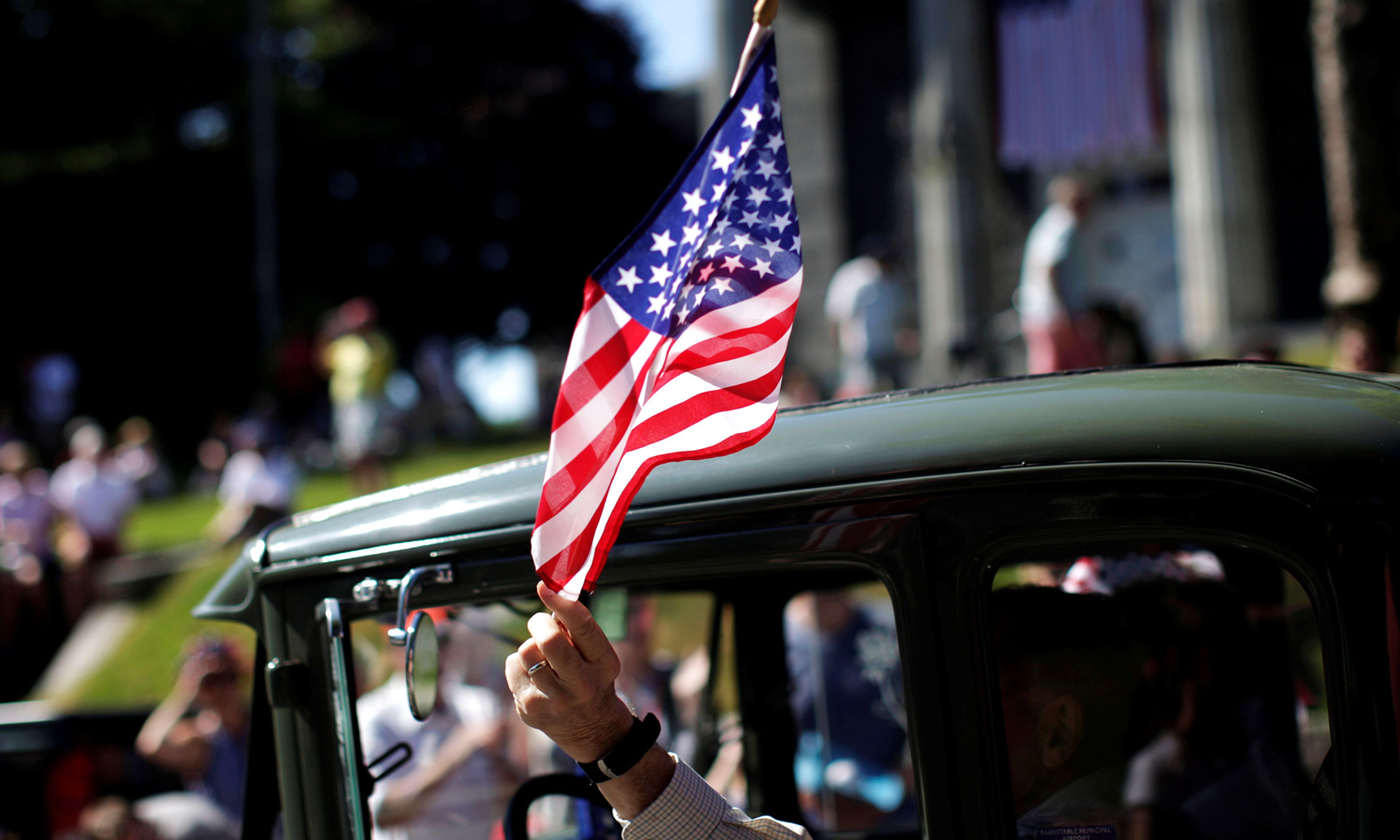
I have been meaning for a while now to complain about the way in which Americans have come to deploy their national flag, but, until today, a clean opportunity has never quite presented itself. Where I live, in North Florida, Old Glory is ubiquitous, and yet, when presented officially, it is increasingly common to see it flying at half-staff. This now happens so regularly, in fact, that I have taken to inquiring what exactly has prompted each change, and, with varying levels of irritation, to concluding from the answers that we are in grave danger of going soft. Certainly, the reasons for the flag having been lowered are often defensible per se — a tragedy has occurred, an important figure has died, it is the anniversary of a momentous national scar, etc. — but, with a handful of exceptions, I am nevertheless left feeling that to drop the ensign even an inch is to send the incorrect message out into the world. The poem that became our national anthem is admirably defiant in tone: The “the rockets’ red glare, the bombs bursting in air, gave” the “proof through the night” that “our flag was still there,” just as it was in Stalag VII and at Iwo Jima and in the smoldering rubble of downtown Manhattan. To pull it to half-staff every time something terrible happens is, I’m afraid, to considerably diminish that defiance. As a rule of thumb, if the public has to be informed why the flag sits halfway down the pole, then there is insufficient reason for the flag to sit halfway down the pole.
A similar problem is caused by our regrettable profligacy with other flags — which, when flown alongside the Star-Spangled Banner, have the unfortunate effect of diluting its unifying power. There is only one flag to which we all pledge allegiance, and only one flag that stands as the emblem of the Republic, and, irrespective of their intrinsic value, to display any other standard in the same array as that flag — especially at the same height — is to imply a false equivalence of the type that we ought assiduously to avoid. With its federal system, and the shared sovereignty that results, the United States has an unusual structural makeup, but its flag conveys this nuance nicely by including all 50 stars within the whole. At the state level, it is appropriate for state flags to be displayed prominently — equally, even. At the federal level, anything other than Old Glory serves as an unpleasant distraction — or worse. There, our flag is our flag is our flag, and a wonderful flag it is, too.




Comments