America’s Incoherent Mideast Policy

Three presidents have diverted resources to other regions, only for the Middle East to consume more attention than it would have had the U.S. stayed engaged.

Share this story

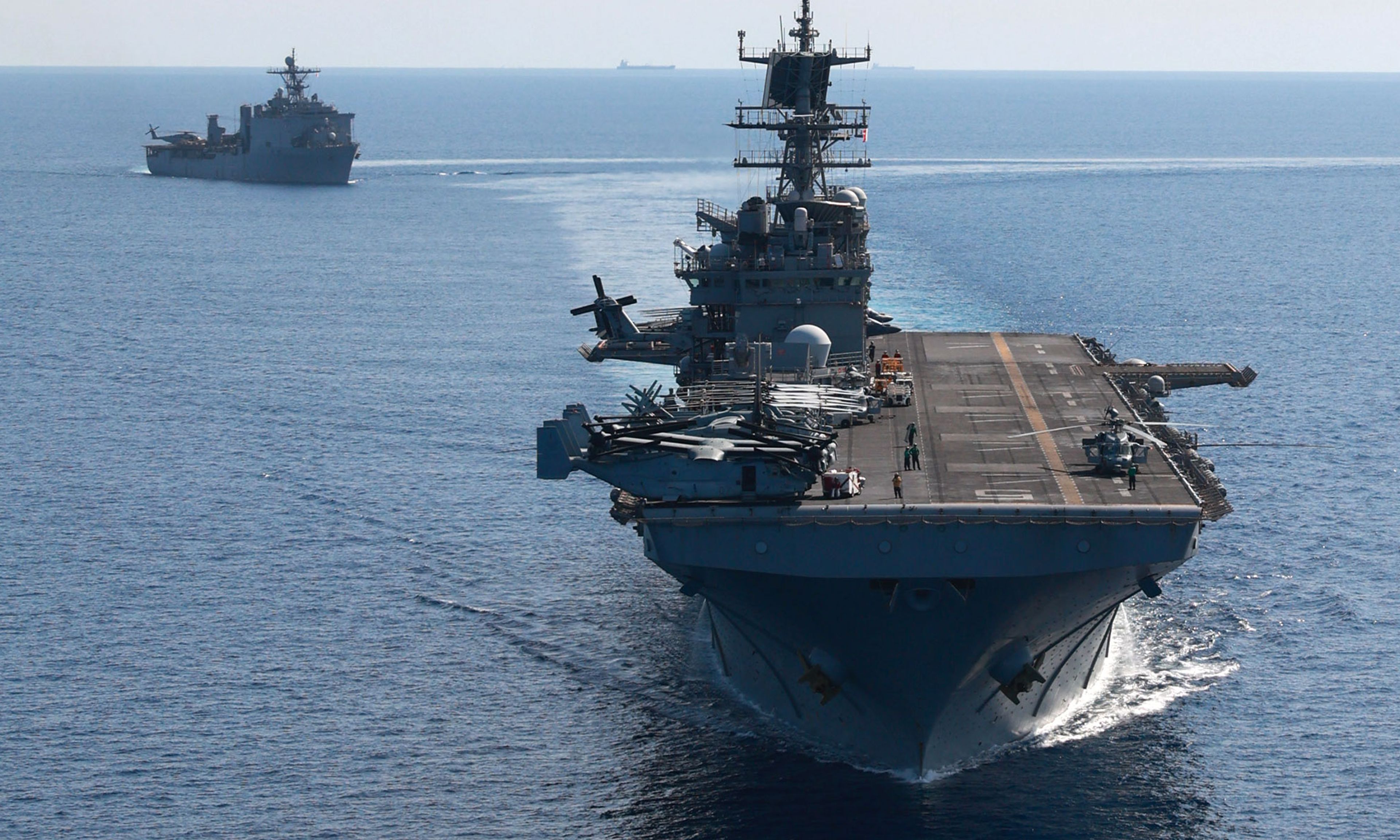
The U.S. Navy Wasp-class amphibious assault ship USS Bataan (LHD-5), front, and Harpers Ferry-class dock landing ship USS Carter Hall (LSD-50) transit in formation through the Red Sea, August 8, 2023.

Mass Communication Specialist Third Class Riley Gasdia/U.S. Navy

On December 18, the Department of Defense announced the multinational Operation Prosperity Guardian, a U.S.-led, multinational force meant to restore commercial freedom of navigation in the Red Sea and through the Suez Canal against Yemen-based Houthi attacks. The operation is yet another violation of the United States’s own Middle East policy.

President Joe Biden’s administration went along with its two immediate predecessors in promising to reduce U.S. engagement in the Middle East. Facing events, he now joins the other two to violate this promise. Equally troublesome, all three administrations have saddled the Central Command (CENTCOM), which oversees U.S. military presence in the region, with fewer military resources. This matches their policies and contradicts their actions.


Seth Cropsey

About the Author

Seth Cropsey

Seth Cropsey is president of Yorktown Institute. He served as a naval officer and as deputy undersecretary of the Navy. The U.S. Naval Institute Press published his most recent book, co-authored with Harry Halem, Breaking the New Axis: A U.S. Grand Strategy for Eurasia, in April.

Shay Khatiri

About the Author

Shay Khatiri

Shay Khatiri is a researcher at the Committee for Accuracy in Middle East Reporting and Analysis.

Comments

Advertisement

Advertisement